

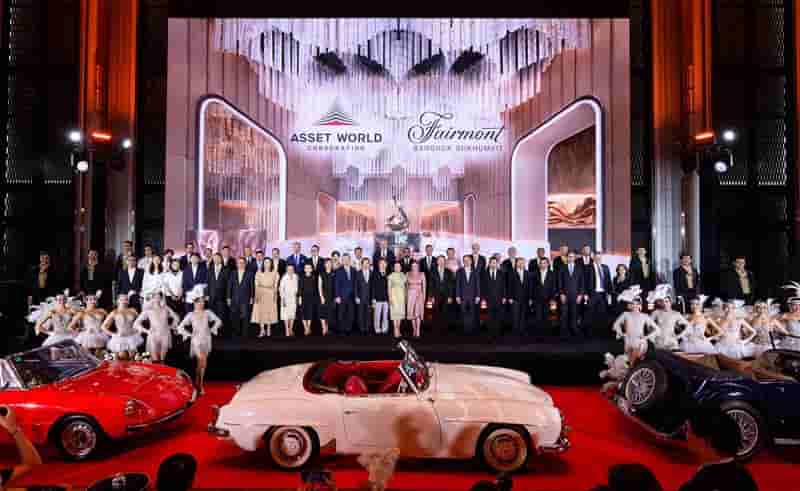
BANGKOK has never been a city that slips quietly into the background, and its newest luxury hotel appears to have taken the hint.
Fairmont Hotels & Resorts, part of global hospitality group Accor, has officially made its Thailand debut with the opening of Fairmont Bangkok Sukhumvit, a major new luxury address created in partnership with Asset World Corp Public Company Limited (AWC).
The hotel began welcoming guests from 18 August 2026, planting the Fairmont flag in one of Bangkok’s most competitive, energetic and internationally recognised hospitality districts.
For travellers, travel advisers and corporate buyers, the significance goes well beyond another five-star opening.
Fairmont arrives with a substantial MICE proposition, an ambitious food and beverage programme, extensive wellness facilities, family-friendly features and a phased entertainment rollout designed to keep the property evolving through the end of 2026.
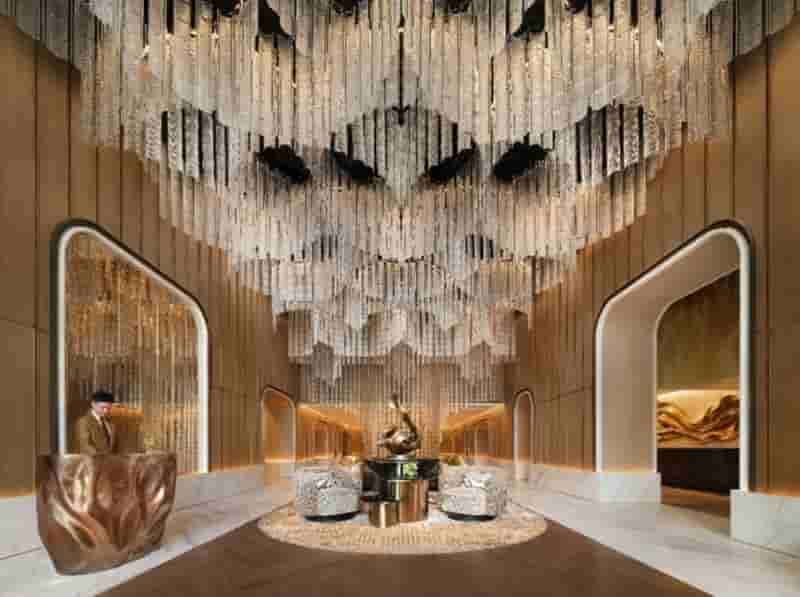
The hotel also has a distinctly Thai visual identity.
The hotel’s “Blooming Stage” concept draws on Thailand’s floral heritage, using contemporary design rather than literal ornamentation to create a strong sense of place.
In a city already blessed with more luxury hotels than most travellers have annual leave, differentiation matters.
Fairmont has clearly decided that subtlety should not be confused with invisibility.
A Fairmont first for Thailand
Setting a ‘Blooming Stage’ for Celebration in the Heart of Bangkok
The opening marks Fairmont’s first hotel in Thailand and represents another step in the brand’s expansion across Asia.
However, one unusual numerical wrinkle in the official opening information deserves transparent reporting.
Accor’s official Fairmont opening material lists 416 guestrooms alongside 58 suites, while AWC’s simultaneous opening announcement describes Fairmont Bangkok Sukhumvit as a 416-room hotel.
Because those two primary sources use different room-count descriptions, it would be unwise to present a combined 474-key figure as an independently settled fact.
The development’s scale and ambition are not in dispute.
Fairmont Bangkok Sukhumvit has been conceived as a full-service luxury destination rather than simply another accommodation tower.
Guests will find extensive dining, meeting, wellness, and social spaces, while the hotel also targets Bangkok residents seeking restaurants, bars, entertainment, events, and celebrations.
The property’s location at 10/1 Sukhumvit 20 places it within reach of BTS Asok, BTS Phrom Phong and MRT Sukhumvit, giving leisure and corporate guests useful access to Bangkok’s wider rail network.
That’s more than a footnote in Sukhumvit.
Anyone who has watched a Bangkok traffic jam mature from mild inconvenience into a philosophical experience will understand why rail access can feel like a genuine luxury-hotel amenity.
Thailand’s floral heritage gets the luxury treatment
The hotel’s design narrative is built around the idea of a “Blooming Stage”, a place where people gather, celebrate and connect.
Thai design practice PIA curated the interiors, while A49 handled the architecture, bringing significant home-grown creative expertise to Fairmont’s first Thai property.
Signature uniforms by leading Thai fashion house ASAVA add another domestic design element to the presentation.
The centrepiece is the lobby chandelier inspired by the golden ratchaphruek, Thailand’s national flower.
According to Fairmont’s opening material, it comprises an extraordinary 4,166 glass pieces and more than 35,000 crystal balls.
That is quite a lot of sparkle before anyone has even reached the bar.
Floral references continue through bespoke artworks, sculptural forms and more restrained botanical motifs across guestrooms and public spaces.
The intention is to combine polished international luxury with recognisable Thai character without allowing the property to drift into decorative cliché.
That balance is important.
Bangkok’s strongest luxury hotels tend to succeed because they understand that global standards and local identity are not competing ideas. They are most convincing when each strengthens the other.
Fairmont Hotels & Resorts CEO Omer Acar described Thailand as “a natural home for Fairmont”, citing the country’s hospitality, cultural heritage and emphasis on human connection.
The sentiment makes commercial and cultural sense.
Thailand remains one of Asia’s great hospitality markets, but that strength means any new international luxury brand must arrive with more than a handsome lobby and a famous name above the door.
Fairmont appears well aware of that challenge.
Dining rolls out in stages
Food and drink sit at the centre of Fairmont Bangkok Sukhumvit’s lifestyle strategy, although travel sellers should note one important point: the full dining collection is being introduced progressively.
Seven dining and entertainment venues are scheduled to unfold through 2026.
Harper’s is the hotel’s North American-French brasserie, blending Parisian cues with a more contemporary New York sensibility. It currently operates daily from 6.30 am to 10.30 pm.
AELA Social Bar moves from daytime lounge to cocktail destination after dark, while CAYA Pool Club takes inspiration from Bangkok’s street-food and night-market culture.
Then there is Wiggle Room, due to open in mid-September 2026.
With a private entrance from Sukhumvit Soi 18, the venue is designed as an immersive supper club that combines live music, performance, cocktails, and dining around a dedicated stage.
In other words, this is not intended to be a restaurant where someone happens to be playing the piano quietly in the corner.
The concept leans into Bangkok’s long relationship with nightlife and theatrical entertainment while giving Fairmont a venue that can appeal to hotel guests and the local market alike.
More is scheduled for December.
Two additional dining concepts are planned across levels 32 and 33.
One will combine Italian and Japanese influences, while another will focus on contemporary Thai cuisine with panoramic views of Bangkok.
Bangkok is hardly short of rooftop restaurants, so those venues will enter a very glamorous and very crowded field.
Still, the ability to reach dinner without first negotiating Bangkok’s evening traffic should never be underestimated.
MICE is not an afterthought
For the travel trade, one of the hotel’s strongest commercial cards is its meetings and events proposition.
Fairmont Bangkok Sukhumvit offers more than 2,000 square metres of flexible event space across three dedicated floors.
At its centre is the Signature Grand Ballroom, featuring a dramatic 12-metre-high ceiling and a dedicated arrival forecourt.
The hotel also includes a second ballroom, seven breakout rooms, Couture Hall and additional adaptable meeting spaces.
That gives the property the capacity to target international conferences, incentive groups, executive meetings, gala dinners, weddings, product launches and major social events.
The message is clear: MICE has been built into the hotel’s identity from the outset, not added as an afterthought.
That matters in Bangkok, a city with serious ambitions in the regional meetings, incentives, conferences and exhibitions market.
The hotel also introduces flexible co-living and social spaces where guests and delegates can work, relax, play games, watch movies or simply spend time together outside the formal meeting programme.
For event organisers, that is increasingly relevant.
Modern conferences no longer begin when the first presentation slide appears and end when the ballroom doors close.
Networking often happens in the spaces between scheduled sessions, and hotels that understand that behaviour can create a considerably stronger delegate experience.
AWC chief executive and president Wallapa Traisorat called Fairmont’s arrival in Thailand a “significant milestone” for the company and its long-standing partnership with Accor.
The property is intended to bring together international travellers, business visitors and Bangkok residents while strengthening the Thai capital’s position as a global destination for leisure and business travel.
Wellness beyond the treatment room
Wellness is another major part of the hotel’s positioning.
Fairmont’s Wellness Without Walls philosophy extends wellbeing beyond a single spa treatment and into the wider guest journey.
The Fairmont Spa, which AWC says spans more than 1,000 square metres, takes inspiration from jasmine, a flower associated with Thai hospitality and purity.
Treatments are complemented by Fairmont Studio, which offers space for yoga, cardio and strength training, and Fairmont Fit, intended to help travellers maintain their normal fitness routines away from home.
It is a sensible response to the way luxury travel has changed.
A good spa remains important, but many guests now want practical wellness: decent training facilities, movement, sleep, sensible food choices and enough flexibility to avoid returning home feeling as though the holiday requires another holiday.
Families are also part of the equation.
The hotel offers family accommodation and a Kids Club, while cats and dogs weighing up to 30 kilograms are welcome under the hotel’s pet policy.
That broadens the property’s appeal beyond traditional business and luxury-leisure travellers.
Guests seeking a more private service layer can book Fairmont Gold, the brand’s established “hotel within a hotel” concept.
It includes dedicated reception, lounge access, tailored food and beverage offerings and more personalised service.
For frequent luxury travellers, Fairmont Gold is likely to be one of the property’s more familiar brand signatures, the sort of product designed to make a large hotel feel considerably smaller when desired.
Sustainability claims grounded in building design
Fairmont Bangkok Sukhumvit’s sustainability story deserves careful wording.
The hotel has been designed to LEED Gold standards.
That is not the same thing as claiming current LEED Gold certification, and the distinction should remain explicit unless formal certification is independently confirmed.
The development incorporates biophilic design, water recycling, smart energy systems, measures intended to improve indoor air quality, EV charging and a heat-reduction façade.
These features support AWC’s “Building Better Future” strategy as well as the wider sustainability goals of Fairmont and Accor.
As always, no large luxury hotel operates without an environmental footprint.
The useful question is whether meaningful environmental measures have been designed into the building itself rather than added later as marketing decoration.
Here, the emphasis on energy, water, heat reduction and transport infrastructure gives the sustainability story considerably more substance than the traditional card asking guests whether they really need their towels washed.
That matters more and more to the corporate travel market.
Businesses scrutinising environmental performance throughout their travel supply chains are paying greater attention to hotels, venues and conference facilities.
Sustainability is therefore moving steadily away from being a public-relations extra and towards becoming a procurement consideration.
Bangkok’s local market matters too
One of the more interesting elements of Fairmont Bangkok Sukhumvit is its obvious effort to appeal beyond overnight guests.
Luxury hotels in Bangkok increasingly operate as social destinations in their own right.
Restaurants, bars, wellness facilities, weddings, conferences and entertainment can be just as commercially important as the guestrooms upstairs.
That is particularly true in Sukhumvit, where Bangkok residents, expatriates, corporate travellers and international visitors regularly overlap.
Fairmont’s combination of brasserie dining, poolside hospitality, cocktails, theatrical entertainment and future rooftop venues appears designed to capture precisely that crossover.
The strategy is sensible.
A hotel that depends solely on in-house guests risks becoming an island. A property that successfully attracts locals can become part of the social fabric of its neighbourhood.
That is a far more valuable position.
A strong Bangkok debut with more still to come
General Manager Jerome Lobier has described the property as being shaped by “the energy of Bangkok and the spirit of Sukhumvit”.
That is a fair summary of what Fairmont appears to be attempting.
The hotel must serve international leisure guests, corporate travellers, major events and local residents while still creating an identity strong enough to distinguish it from Bangkok’s formidable luxury competition.
Its opening package is already substantial: high-end accommodation, major MICE facilities, extensive wellness space, family features, Fairmont Gold and a dining and entertainment programme that will continue growing in the months ahead.
But the phased opening remains important.
Wiggle Room is scheduled for September, while the upper-level dining concepts are planned for December 2026.
The complete Fairmont Bangkok Sukhumvit experience will therefore emerge progressively rather than appearing fully formed on opening day.
That is not necessarily a weakness.
In fact, a staged rollout can give a new hotel several moments of attention rather than one enormous opening splash followed by silence.
For travel advisers, however, accuracy matters.
Clients booking in August should not be sold facilities that will not arrive until later in the year.
Fairmont’s Thailand debut therefore deserves attention both for what is open now and for what is still coming.
The brand has entered Bangkok with scale, confidence and a clear sense of purpose.
It has also respected the city’s appetite for social energy, good food, meetings, celebration and just enough visual drama to remind everyone they are most certainly not checking into an airport motel.
Bangkok did not need another anonymous luxury hotel.
Fairmont appears determined not to become one.
And in a city where a major hotel opening can resemble competitive sport played with chefs, chandeliers, ballrooms, spas and rooftop bars, Fairmont Bangkok Sukhumvit has arrived looking very ready for the game.
By: May Marclay – © 2026.
Read Time: 11 minutes.
Author Bio:
 May Marclay’s career hasn’t followed a straight line, and she’s better for it. She began in real estate, then moved into hospitality, finding her rhythm with Centara in the Maldives. There, she worked the Asian markets the old-fashioned way: building trust, closing deals, and turning conversations into lasting business.
The UAE sharpened its focus. At IHG, supporting an Area General Manager, she saw the machinery of a major travel hub from the inside, no gloss, just how things actually get done.
Now, with her sights set on healthcare, May brings a broader lens than most. She speaks three languages, reads widely, travels with intent, and writes with the calm assurance of someone who understands both the detail and the bigger picture without needing to say so too loudly.











