

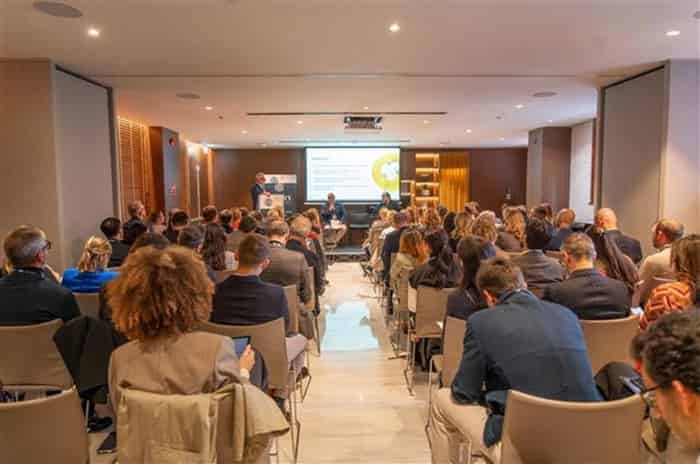
 Milan will swap catwalks for check-in desks on 23 October when the Luxury Hospitality Conference brings some of the world’s most influential hotel leaders to Italy’s capital of style.
Staged at Meliá Milan, the one-day gathering is expected to welcome about 1,000 general managers, chief executives, owners, investors and hospitality specialists from across Europe. Organisers also forecast more than 70 international speakers, creating a formidable rollcall of people who know that true luxury involves rather more than a marble lobby and an enthusiastic pillow menu.
The conference is organised by Teamwork Hospitality and has become a major Italian forum for examining where high-end accommodation is heading, who is funding it and what tomorrow’s affluent traveller will expect when the suite door opens. The official event website confirms the 23 October 2026 date and Meliá Milan venue.
Heavyweights take the Milan stage
At the top of the bill is Horst Schulze, a founding member of The Ritz-Carlton Hotel Company and founder of Capella Hotel Group. Schulze will be joined by Shannon Knapp, president and chief executive officer of The Leading Hotels of the World, and Laurent Gardinier, president of Relais & Châteaux.
Their appearance gives the program considerable weight. More importantly, it places the changing meaning of luxury under a bright, unforgiving spotlight.
For years, the luxury hotel formula appeared straightforward: polished service, prime real estate, excellent food and a bill discreetly delivered in a leather folder. That formula still matters. Yet today’s guest also wants character, cultural connection, privacy, personalisation and a convincing sense that the property belongs to its destination rather than having been lowered into it by helicopter.
Knapp and Gardinier will examine how global reach can coexist with local identity and bespoke experiences. Schulze, meanwhile, is scheduled to discuss excellence, leadership and service three words often displayed in corporate foyers, but rather harder to deliver consistently before breakfast.
Hotel investment moves to centre stage
Investment and expansion will also command attention. Development executives from Accor, Marriott International and Hilton are due to discuss the capital demands, market conditions and rising expectations shaping luxury hotel growth. Their session should be closely watched by owners and investors navigating higher development costs, brand proliferation and increasingly selective guests.
Italian hospitality investment will receive its own examination, with representatives from Lefay Resorts & Residences, LDC Hotels & Residences and Egnazia Ospitalità Italiana considering the next phase of the country’s high-end market.
Italy is hardly short of natural advantages. It has history, food, design, fashion, coastlines and cities that can make even a hurried espresso feel like a cultural event. The commercial challenge is turning those assets into profitable, distinctive hotels without sanding away the very authenticity guests have travelled to find.
Operational leadership will be another major theme. Senior figures connected with Mandarin Oriental, Park Hyatt Milan, Orient Express Venice, Royal Mansour Collection, Dorchester Collection, One&Only and other luxury names will share their approaches to service, leadership and guest experience. The published program includes senior executives and general managers from several of these international brands.
AI joins design, sales and education
The program also moves beyond the main ballroom. Parallel sessions will address hotel architecture and design, luxury sales, Virtuoso travel trends, artificial intelligence in the guest journey and executive education. EHL, Glion, Istituto Marangoni and ALMA are among the institutions represented.
Artificial intelligence is likely to provoke particular interest. Used well, it can help hotels recognise preferences, respond faster and remove friction from a stay.
Used badly, it can make a guest feel as though the concierge has been replaced by a cheerful spreadsheet.
The winners will be operators that use technology quietly while keeping judgement, warmth and accountability firmly human. After all, a computer may remember a guest’s preferred pillow, but it still takes a well-trained hotelier to notice when that guest would rather not be asked about it in front of the entire lobby.
Mauro Santinato, founder of the conference and president of Teamwork Hospitality, said the event was created to bring leading international thinking to Italy and encourage frank industry exchange.
“The Luxury Hospitality Conference was created to bring the very best international thinking on luxury hospitality to Italy and provide a platform where the industry’s leading players can exchange ideas,” says Mauro Santinato, Founder of the conference and President of Teamwork Hospitality. “Today, luxury is no longer defined solely by service excellence. It is about the ability to innovate, create value and build authentic relationships with guests. These are the challenges that the world’s leading hospitality executives will address during the conference.”
Milan awards set the scene
The formal proceedings will be preceded on 22 October by the third Best Luxury Hotel Awards at Milan’s historic Hotel Principe di Savoia.
The ceremony will recognise achievement across 10 categories, including guest service, design, restaurant, sustainability, wellness and new openings. The official awards program confirms the date, venue and categories, with finalists scheduled to be announced on 7 September.
Together, the conference and awards give Milan two consecutive days at the centre of the luxury hotel conversation.
The timing is apt. Luxury hospitality remains one of tourism’s most competitive and closely watched sectors. Brands are expanding, independent operators are sharpening their identities, and guests are demanding both flawless delivery and genuine emotional value.
That leaves the industry with a useful contradiction to solve.
Luxury must become more intelligent and more efficient, yet never feel mechanical. It must grow internationally, yet remain rooted locally. And it must use data without allowing hospitality’s oldest truth to disappear beneath the dashboard: people remember how they were treated.
On 23 October, Milan will not settle every argument about the future of luxury. It will, however, put many of the people capable of shaping that future in the same building, which is usually where the interesting business begins.
Editor’s note: The conference organiser states that the published program remains subject to change.
By: Bridget Gomez – © 2026.
Read Time: 4 minutes.
Author Bio:
Bridget has never been built for stillness. Of Portuguese heritage, she began as a nurse, tending veterans at the Repatriation Hospital, listening to stories as colourful as the life she was yet to live. It was worthy, steady work, but wanderlust, as always, proved louder than routine.
So, she traded starch for a backpack and disappeared for a year, chasing trains, sunsets and the occasional regrettable glass of wine. She wrote everything down: the dust, the laughter, the missteps, the magic. Those notebooks became a travel blog, then a habit, then a calling.
Eventually she found Global Travel Media, or perhaps it found her.
Today Bridget writes with heart, humour and a dash of mischief, still travelling, just now with words.











