

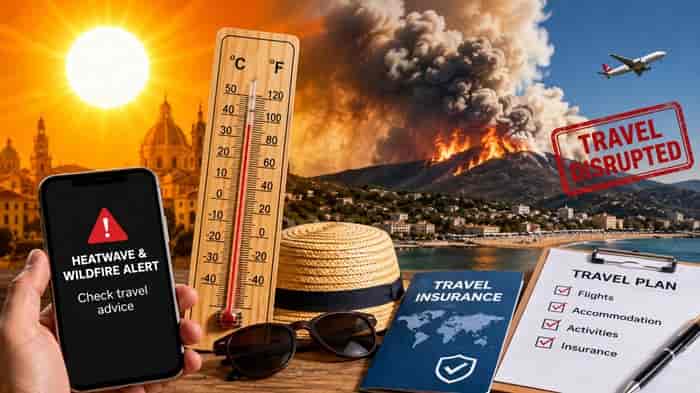
Australians planning a northern summer escape now face a hotter question than which shoes to pack: can a holiday be cancelled because the destination is simply too hot?
Usually, the answer is no.
Extreme heat can be dangerous and deeply unpleasant. Yet a heatwave on its own is not normally a covered reason to cancel a trip. Travel insurance responds to events listed in the policy. It does not usually cover a traveller who decides the forecast has become unbearable.
That distinction matters as wildfires and extreme temperatures affect popular destinations. Smartraveller’s France advice, current on 27 July 2026, warns of wildfires and large-scale evacuations in south-west France, including tourist areas. Spain’s advice reports wildfires and localised evacuations. Greece warns that summer fires can begin with little notice and spread quickly.
Natalie Smith, spokesperson for Comparetravelinsurance.com.au, says travellers are right to be concerned.
“As heatwaves and wildfires affect parts of the Northern Hemisphere, travellers heading overseas are understandably concerned about the impact on their plans.”
“That being said, a heatwave alone is generally not a valid reason to cancel or reschedule a trip under travel insurance. Unless your destination becomes uninhabitable or the Australian Government issues a ‘Do Not Travel’ warning, choosing not to travel due to extreme heat is unlikely to be covered.”
Heat is not usually a cancellation trigger
A holiday may no longer look inviting when temperatures climb above 40 degrees. Even so, discomfort, worry or a change of mind will rarely activate cancellation cover.
“A change of mind would generally not be covered by travel insurance,” notes Smith. “Travellers concerned about high temperatures should speak directly with their travel providers to explore any flexibility, as changes will depend on their individual terms and conditions”
The practical first step is to contact the airline, hotel, cruise line or tour operator. Some may offer a date change, travel credit or refund under their own booking conditions. Travellers should check those options before cancelling anything themselves.
Smartraveller says most policies will not cover cancellation for safety reasons unless the official travel advice level changes. It also stresses that policies differ. Travellers must ask their insurer what applies to their own booking.
In other words, the neighbour who once claimed for a missing suitcase is not a substitute for the Product Disclosure Statement.
Wildfires may be covered
A heatwave and a wildfire are not the same insurance event.
A policy may respond when a fire directly prevents travel. Examples could include an evacuation order, closed accommodation, blocked roads, cancelled transport or an area becoming unsafe or uninhabitable.
“While a heatwave itself is generally not a claimable event, travel insurance may provide cover if it leads to a natural disaster, such as a wildfire, that directly disrupts your trip. Depending on your policy, this could include cancellation costs, additional travel expenses or compensation for unused prepaid bookings if your destination becomes uninhabitable or your travel plans are significantly affected.”
“Likewise, if a prepaid travel booking, such as a sightseeing tour or day trip, is cancelled by an operator due to extreme weather, travellers may be able to claim for any non-refundable costs, depending on the terms of their policy.”
The Smartraveller and CHOICE insurance guide says many policies cover natural disasters if the insurance was bought before the event became known. Possible benefits may include medical costs, cancellation, travel delays and emergency expenses. The guide also warns that some policies exclude these losses or impose limits.
Timing is crucial. Buying cover after a fire is widely reported may be rather like buying an umbrella after the carpet is wet: sensible in spirit, but late in execution.
Heat-related illness may qualify
The position changes if extreme heat causes illness.
“If you become ill during your trip, including from heat-related conditions such as heatstroke, a comprehensive travel insurance policy would cover for your medical treatment, as well it may cover cancellation costs or unused prepaid travel arrangements, provided a medical practitioner advises that you are unable to travel or continue your trip. Travellers with pre-existing medical conditions should ensure they have declared any relevant conditions to their insurer.”
The World Health Organisation treats extreme heat as a serious public-health risk. It advises people to avoid strenuous activity during the hottest part of the day, stay in cool places where possible and take extra care if they are vulnerable.
Travellers making a claim should keep medical reports, receipts, booking confirmations and written notices from travel providers. An insurer will want evidence, not merely a vivid account of how the hotel balcony felt like a pizza oven.
Check the policy before cancelling
Smith’s final advice is the most important.
“As always, coverage varies between policies and all claims are assessed on an individual basis. Travellers should carefully review their policy inclusions, exclusions and eligibility requirements before they depart.”
France currently remains at “exercise a high degree of caution”, while Spain and Greece remain at “exercise normal safety precautions”. Their wildfire warnings have not created a blanket right for every Australian traveller to cancel and claim.
The rule is simple. Heat alone will rarely be enough. A wildfire, evacuation, closure, cancellation or medically confirmed illness may activate cover, depending on the policy and when it was purchased.
Before changing any booking, speak to the travel provider and insurer. In travel insurance, the fine print still has the last word, and unlike the traveller, it never breaks a sweat.
Useful links
- Smartraveller travel advice for France
- Smartraveller travel advice for Spain
- Smartraveller travel advice for Greece
- Smartraveller and CHOICE travel insurance guide
- World Health Organisation heatwave information
By: Soo James – © 2026.
Read Time: 4 minutes.
Author Bio:
 There’s nothing rehearsed about Soo James, and that’s precisely the point. Malaysian by heritage, Sydney by schooling, she arrived at UNSW to study Arts, then took a left turn into IT, not out of ambition, but curiosity. Somewhere among systems and schedules, she worked out what really held her attention: people, language, and the quiet spaces between them.
Writing followed naturally. Travel and lifestyle gave her room to observe, to listen, to notice the details others rush past. Soo writes the way good travellers move, watching the room before admiring the view, catching the gesture before chasing the headline.
At Global Travel Media, her stories don’t shout or sell. They linger. They slow you down, open a door, and gently suggest there’s more to see if you’re willing to look.













