

There are some places that leave footprints on your soul long after the sand has disappeared from your shoes.
Seychelles is one of them.
Ask anyone fortunate enough to have visited this scattering of emerald islands in the Indian Ocean, and chances are they’ll pause for a moment, smile wistfully and say something along the lines of: “One day, I’ll go back.”
They usually do.
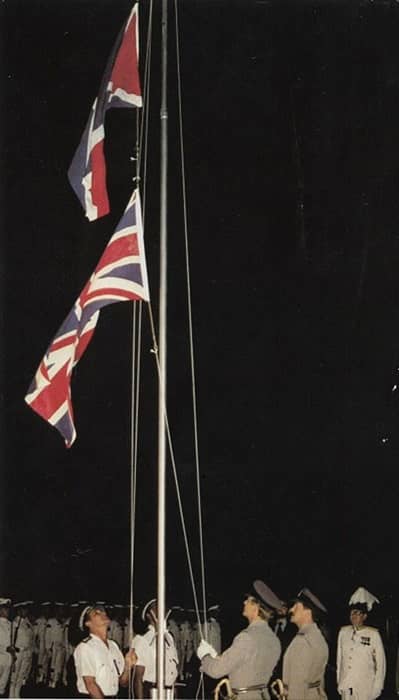
1976 Photo as the Seychelles 1st Republic Flag was raised for the 1st time
I know people who’ve returned five, six, even ten times. One travel agent friend cheerfully admits that every visit to Seychelles costs him a small fortune and his waistline another notch courtesy of Creole cuisine. Yet, like many hopeless romantics, he keeps returning. Paradise, it seems, can be habit-forming.
On 29 June, this extraordinary island nation celebrates something rather more significant than repeat visitation.
Seychelles turns 50.
Fifty years ago today, the islands quietly slipped the colonial apron strings, bade farewell to 165 years of British rule and emerged onto the world stage as an independent republic.
No fireworks on the scale of Sydney Harbour. No military flypasts to rattle the coconuts from the palms. Just a proud people taking charge of their own destiny.
And what a journey it has been.
Today, Seychelles is routinely featured on lists of the world’s most desirable destinations. Newlyweds dream of it. Luxury travellers save for it. Instagram, naturally, adores it.
But before the overwater villas, celebrity hideaways and honeymoon brochures, there was politics.
Plenty of it.
Like many former colonies, the path to independence was occasionally bumpy, sometimes passionate and always deeply personal.
The political contest between James Richard Mancham and France Albert René dominated the islands throughout the 1960s and early 1970s. One favoured continued links with Britain. The other pushed for full independence.
The debates could be fierce. The personality is larger than life.
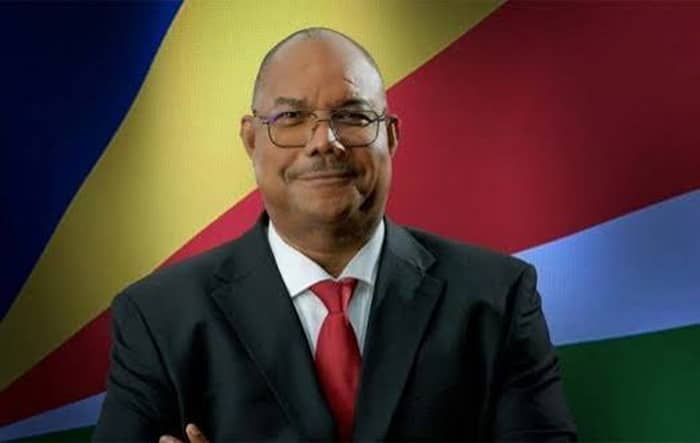
Dr Patrick Herminie – President of the Republic of Seychelles
Yet history occasionally has a way of bringing rivals together.
By June 1975, the Seychelles Democratic Party (SDP) and the Seychelles People’s United Party (SPUP) had formed a coalition government, setting the stage for the historic events that would follow.
The decisive moment came during the third Constitutional Conference at London’s Marlborough House in January 1976. Present were Governor Collin Hamilton Allen, James Mancham, France Albert René and representatives of the Legislative Assembly.
The decision was made.
Independence would come in June.
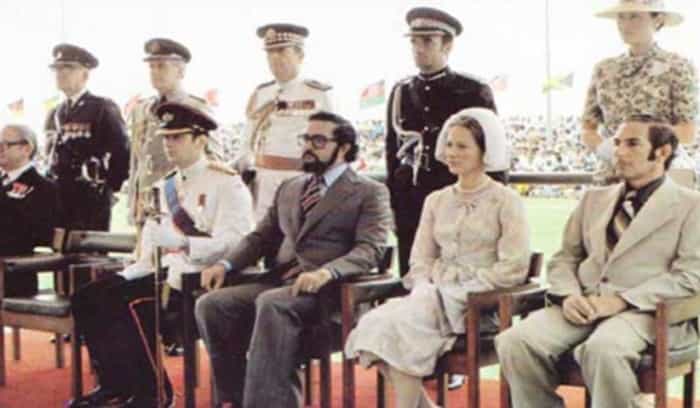
And so, on 29 June 1976, before dignitaries gathered in Victoria and with the Duke and Duchess of Gloucester representing Queen Elizabeth II, the Republic of Seychelles was born.
James Mancham became the nation’s first President.
France Albert René became Prime Minister.
A population of just over 60,000 suddenly found itself writing a new chapter in its history.
Few, if any, could have predicted what lay ahead.
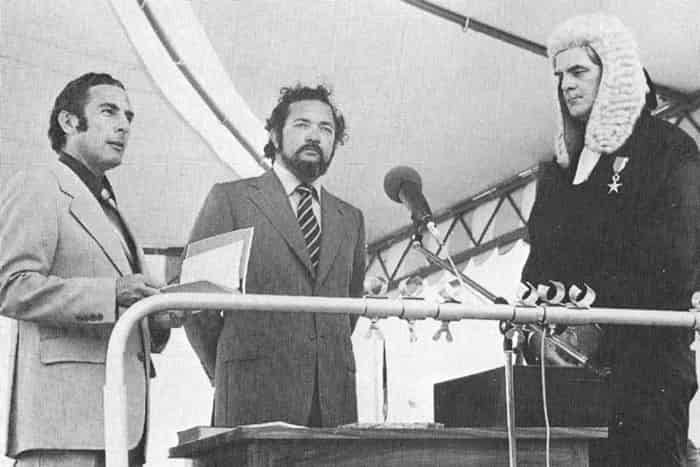
Independence Day 1976 with James Mancham & Albert Rene taking the oath of office
Certainly not Britain’s colonial administrators.
And probably not the giant Aldabra tortoises either, although they have always struck me as creatures possessing an enviable ability to look wise while doing very little.
Today, tourism is the economic engine that powers Seychelles.
Yet unlike many destinations that have loved themselves almost to death, Seychelles has managed something rather remarkable.
It has largely protected the very assets that made travellers fall in love with the islands in the first place.
Marine parks remain pristine. Nature reserves flourish. Conservation is not merely a marketing slogan; it is woven into national identity.
For the travel industry, Seychelles stands as something of a masterclass.
It proves that sustainability and profitability need not be sworn enemies.
As President Dr Patrick Herminie leads this year’s golden jubilee celebrations, Seychellois have every reason to celebrate.
Not simply because their nation turns fifty.
But because, against considerable odds, this tiny republic has built a thriving democracy, a respected international profile and one of tourism’s most admired brands.
That’s no small achievement.
Especially for a country, many travellers still struggle to locate it on a map.
Mind you, perhaps that’s part of the secret.
Paradise rarely advertises too loudly.
By: Michelle Warner – © 2026.
Read Time: 6 minutes.
Author Bio:
 Michelle Warner has always carried stories the way others carry passports lightly, faithfully, and with purpose. She learned her craft in newsrooms, shaping sentences with care, before swapping deadlines for departures as a flight attendant with some of the world’s great airlines. Years aloft sharpened her eye for character and deepened her fondness for the small, dignified rituals of travel, the quiet kindness of strangers, the poetry of arrival, the patience learned between time zones.
Now grounded by choice, Michelle has come home to writing with the same calm authority she once brought to turbulent cabins. Her prose blends an editor’s discipline with a traveller’s wonder, tinged with humour and reverence for the golden age of travel. Each piece feels like a handwritten boarding pass, gracious, observant, and unmistakably alive.











