

There comes a point every northern summer when Europe begins to resemble a particularly ambitious game of human Tetris.
Venice sinks beneath selfie sticks, Santorini groans under the weight of cruise passengers, and somewhere in Rome, another weary tourist is wondering whether standing in a queue for 90 minutes to photograph a fountain really counts as a holiday.
Increasingly, travellers are deciding it doesn’t.
Instead, many are looking south and discovering that while Europe swelters, Southern Africa quietly slips into what many safari veterans consider its finest season.
From June through August, South Africa and Zimbabwe trade summer heat for crisp mornings, blue skies and some of the best wildlife viewing on the planet. The bush thins, water sources shrink, and animals become considerably easier to spot. Even first-time safari-goers suddenly find themselves channelling their inner David Attenborough.
According to South African Tourism and South African National Parks (SANParks), winter remains one of the best times for wildlife encounters in many of the country’s premier reserves.
And unlike Europe’s high season, nobody is elbowing you out of the way to photograph a lion.
The shift reflects something bigger happening across global travel.
Travellers are increasingly abandoning frantic “see-it-all” itineraries in favour of slower, more meaningful experiences. Nature, conservation, culture and authenticity have become the new luxury buzzwords, and Southern Africa happens to deliver all four in spades.
Take the Karoo.
Often overlooked by international visitors rushing between Cape Town and Kruger, South Africa’s vast semi-desert interior offers a strikingly different experience.
At the heart of it sits the beautifully restored Drostdy Hotel in the historic town of Graaff-Reinet, recently renamed Robert Sobukwe. The property blends Cape Dutch elegance with genuine Karoo hospitality, the sort where locals still stop for a chat, and nobody appears in a hurry.
Guests can wander the dramatic Valley of Desolation, browse galleries in nearby Nieu-Bethesda or simply settle onto a veranda with a local wine and watch the Karoo work its magic.
It is, frankly, the antidote to modern life.
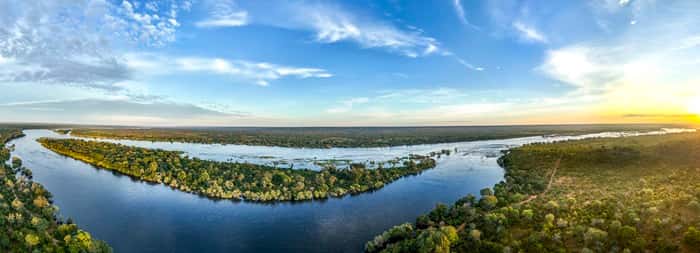
Further north, Zimbabwe’s Tsowa Safari Island is tapping into another fast-growing trend: river safaris.
Set on a private island within Zambezi National Park, the camp offers an altogether gentler pace. Yes, there are game drives, but there are also canoe excursions, birdwatching, sunset cruises and front-row access to mighty Victoria Falls.
The Zambezi has a way of slowing people down. Mobile phones mysteriously become less important. Sunsets somehow last longer.
Funny that.
Private travel is also booming, particularly among families and multigenerational groups.
After years of navigating airport chaos, many travellers now want holidays on their own terms. Enter Shiviko Kruger, where exclusive-use villas near Kruger National Park allow families and friends to create their own schedules, dine when they please and explore with private guides.
Anyone who has attempted to organise breakfast for three generations will appreciate the value of flexibility.
Conservation, meanwhile, is no longer a niche consideration.
Travellers increasingly want to know that their holiday dollars are helping protect wildlife and support local communities.
Rhino Ridge Safari Lodge, located within Hluhluwe-iMfolozi Park, South Africa’s oldest proclaimed game reserve, has placed conservation squarely at the centre of its offering. The lodge supports rhino protection initiatives and community ownership programmes while delivering malaria-free Big Five safaris.
For many guests, seeing a rhino in the wild now carries added significance.
You are not simply ticking another species off a list. You are witnessing one of conservation’s ongoing battles.
Then there is the coast.
While much of inland Southern Africa enters its dry winter phase, KwaZulu-Natal’s subtropical coastline remains pleasantly mild. At Thonga Beach Lodge, located within UNESCO-listed iSimangaliso Wetland Park, winter coincides with one of nature’s great migrations.
Between June and October, humpback whales pass offshore in remarkable numbers.
Few travel experiences rival watching a 40-tonne whale launch itself skyward before crashing back into the Indian Ocean.
Even seasoned travellers struggle to remain coolly journalistic when that happens.
Tourism operators across the region say Southern Africa’s winter season increasingly aligns with what travellers are actively seeking: fewer crowds, extraordinary wildlife, meaningful experiences and holidays that leave visitors with stories rather than simply photographs.
Europe will always have its charms.
But for travellers weary of overtourism, inflated prices and battling crowds for a dinner reservation, Southern Africa offers something increasingly rare in modern travel.
Space.
And these days, that may be the ultimate luxury.
For more information, visit:
• Drostdy Hotel: https://www.drostdy.co.za
• Shiviko Kruger: https://www.shiviko.com
• Isibindi Africa (Tsowa Safari Island, Rhino Ridge Safari Lodge and Thonga Beach Lodge): https://www.isibindi.co.za
By: My Thanh Pham – © 2026.
Read Time: 5 minutes.
Author Bio:
 My Thanh Pham has led a life of travel more than most people ever do. After studying tourism, she went straight into the work of building journeys across South-East Asia, temples, beaches, night trains, and all, quietly fixing the messy bits so others could enjoy the ride.
She was never meant to stay behind a desk. Airline life followed, dividing her days between reservations and the airport floor, right where travel shows its true colours. Missed flights, tight hugs, frayed tempers, sudden joy, she saw it all, close up.
Now at Global Travel Media, My Thanh has traded ticket stubs for a keyboard. She writes the way she once worked: steady, clear-eyed and respectful of the road’s unpredictable rhythm, guiding readers through a world she knows from the inside.











