

PATTAYA, Thailand: For most tourism destinations, success is measured by one thing.
More.
More arrivals.
More flights.
More hotel rooms.
More passengers are squeezing through airport terminals carrying duty-free bags and holiday expectations.
For decades, that formula worked beautifully. Governments loved the numbers. Tourism boards loved the headlines. Hotel owners loved the occupancy rates.
Then something changed.
The world became crowded.
Travellers became choosier.
Communities began asking harder questions.
And destinations started realising that chasing bigger visitor numbers sometimes creates bigger problems.
Thailand has been paying close attention.
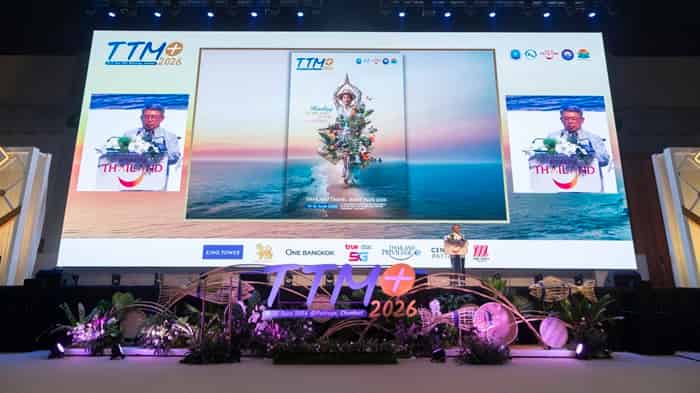
At Thailand Travel Mart Plus (TTM+) 2026 in Pattaya last week, the Tourism Authority of Thailand (TAT) effectively signalled the country’s next tourism chapter. It wasn’t a dramatic announcement delivered with fireworks or fanfare. In fact, it was something far more significant.
It was a strategic shift.
The message was simple.
Thailand wants better tourism, not just more tourism.
That distinction could prove enormously important for the future of one of the world’s most successful visitor economies.
Speaking at TTM+ 2026, TAT Deputy Governor for Marketing Communications Mr Nithee Seeprae outlined the philosophy behind the agency’s increasingly influential “Value over Volume” strategy.
“As Thailand’s flagship travel trade event hosted by TAT, TTM+ brings together global buyers, Thai tourism businesses, media, and partners to turn Thailand’s tourism direction into business opportunities,” he said.
“Through Value over Volume, TAT is presenting products and experiences that create stronger economic value, meaningful journeys, and wider benefits for communities and businesses, while reinforcing Thailand’s position as a leading destination for balanced, responsible, and sustainable tourism.”
Behind the carefully chosen words sits a reality confronting destinations worldwide.
The old tourism playbook is being rewritten.
Thailand welcomed more than 14 million international visitors by 2 June this year, generating approximately 679 billion baht in tourism revenue. Those are healthy figures by any measure.
Yet TAT’s focus is increasingly centred on yield, resilience and visitor quality rather than simply setting new arrival records.
The target for 2026 remains ambitious: approximately 33 million international visitors and total tourism revenue of 2.65 trillion baht.
The difference is how Thailand intends to get there.
Rather than competing solely on volume, the kingdom is leveraging assets many destinations would envy: wellness, gastronomy, culture, hospitality and authenticity.
Healing Becomes the New Luxury
Tourism marketing slogans come and go.
Some disappear faster than complimentary hotel slippers.
Others capture the mood of a moment.
TAT believes “Healing is the New Luxury” falls firmly into the second category.
And there is evidence to support that claim.
Today’s travellers are increasingly searching for something beyond sightseeing checklists and social media bragging rights. They want restoration. Balance. Meaning. Connection.
Thailand has spent centuries refining exactly those experiences.
Whether it’s a meditation retreat overlooking northern mountain ranges, a luxury spa hidden among tropical gardens, traditional herbal treatments passed down through generations or cutting-edge preventative healthcare, Thailand is positioning itself as a destination where travel leaves visitors feeling better than when they arrived.
In an age of burnout, that’s proving remarkably attractive.
Wellness Becomes Big Business
The numbers tell their own story.
Thailand’s wellness economy reached US$42.7 billion in 2024 and continues to expand rapidly.
Globally, the wellness economy is expected to approach US$7.9 trillion by 2026.
Those figures explain why wellness is no longer considered a niche market.
It’s mainstream.
And Thailand intends to remain a global leader.
The country’s unique combination of medical excellence, traditional healing wisdom, world-class hospitality and competitive pricing creates a proposition few competitors can easily replicate.
Food Still Opens More Doors Than Advertising
If wellness is driving future growth, gastronomy remains one of Thailand’s most powerful tourism ambassadors.
Long before influencers discovered Thailand, travellers were crossing continents for flavours they couldn’t find elsewhere.
Bangkok continues to enjoy worldwide recognition as one of the planet’s great food cities, while Songkhla’s inclusion in UNESCO’s Creative Cities Network for Gastronomy adds another layer of international credibility.
The expansion of Michelin Guide recognition beyond Bangkok is also helping distribute tourism revenue into regional communities.
That’s good news for travellers.
And even better news for local economies.
Festivals, Pride and Tomorrowland
Thailand has also become exceptionally skilled at using major events to stimulate year-round visitation.
The upcoming calendar reads like a global bucket list.
InterPride 2026.
The Global Wellness Summit in Phuket.
The IMF–World Bank Group Annual Meetings.
Tomorrowland Thailand.
Wonderfruit.
HYROX.
Spartan Race.
The Amazing Thailand Marathon Bangkok.
Each attracts different audiences, spending patterns, and travel motivations.
Together, they help reduce seasonality and strengthen Thailand’s position as one of Asia’s most dynamic tourism destinations.
Sustainability Gets Serious
Perhaps the most encouraging development is TAT’s increasing focus on responsible tourism.
Around the world, sustainability has become one of tourism’s most overused words.
Thailand appears determined to make it one of its most measurable.
Nineteen Thai destinations are now recognised by the Green Destinations Foundation.
Projects in Krabi, Ko Lanta, and other regions are demonstrating how tourism can simultaneously support conservation, community development, and long-term destination management.
For an industry often accused of taking more than it gives back, that’s a welcome shift.
The Bigger Picture
What emerged from TTM+ 2026 wasn’t simply another destination marketing campaign.
It was a recognition that tourism has entered a new era.
Visitors increasingly want purpose.
Communities increasingly demand benefits.
Governments increasingly expect sustainable returns.
Thailand believes those goals can coexist.
Whether every destination can achieve that balance remains uncertain.
What is certain is that Thailand has identified where global tourism is heading.
The race is no longer about attracting the most visitors.
It’s about creating the most value from every visitor who arrives.
Judging by the conversations echoing through Pattaya’s exhibition halls last week, Thailand is determined to lead that race.
By: Yves Thomas – © 2026.
Read Time: 6 Minutes.
About the Author.
 There’s a quiet pull about Yves Thomas, the kind you only notice after a moment. It comes from having lived and travelled from both sides of the reception desk. A graduate of Bangkok University International, she stepped straight into Thailand’s tourism industry, learning early how much care goes into making someone else’s holiday feel effortless.
She worked with some of the country’s best destination management teams, polishing the details most travellers never see but always remember. Eventually, the road began calling louder than meetings and schedules. Yves packed a bag and went looking again, trading conference calls for compass points.
Somewhere between Chiang Mai and Copenhagen, she started writing it down. Those reflections became a blog, warm and observant.
Now based in Hua Hin and writing for Global Travel Media, Yves shares travel not as a publicist, but as a traveller, attentive, thoughtful, and deeply human.











