

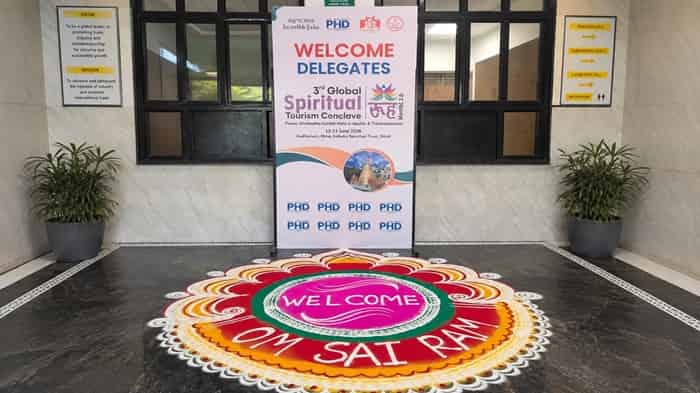
Maharashtra Tourism, along with India Tourism, is preparing for the Ardh Kumbh Mela in Nashik and Trimbakeshwar, which will take place from October 2026 to July 2028. The third Global Spiritual Tourism Conclave by the PHD Chamber of Commerce and Industry, held at the sacred town of Shirdi on Friday, provided a platform to discuss various subjects pertaining to its preparations.
After successfully handling the mass turnover of 650 million visitors at the Maha Kumbh in Uttar Pradesh last year, Governments are anticipating 120 million visitors at a similar event in Nashik, near Shirdi. The event of faith, practised in India since ancient times, attracts visitors from across the country and around the world for a holy dip at the sacred confluence of rivers. The banks of the river Godavari at Nashik and its confluence with rivers Aruna and Varuna at Trimbakeshwar will have their peak holy dip dates from July 2027 to September 2027.
Mangesh Joshi, Director, Maharashtra Tourism, said: “Spiritual tourism is growing globally and India has a significant share in it. What’s surprising is the profound demographic shift we are witnessing. It’s no longer a niche segment reserved for elderly but 35 percent of visitors constitute younger travellers and women. Driven by digital reach, our inbound arrivals for spiritual tourism grew by 17 percent last year. Spiritual tourism brings tolerance, harmony, inner peace and wellbeing and profound energy and self-discovery.”
India’s religious tourism revenue is expected to reach $223.55bn in 2026, up from $202.85bn in 2025.

Tourism leaders unite in Shirdi as Nashik’s Kumbh preparations gather momentum.
Goraksha Gadilkar, CEO, Shirdi Saibaba Sansthan Trust, said: “Upgraded air, railway, and highway connections are facilitating Saibaba devotees from 61 countries to visit Shirdi. Our institution provides clean, hygienic accommodation for 18,000 people. 50,000 devotees avail free hot meals service at our prasadalaya every day. We have made facilities of water, tea and biscuits for devotees waiting at our 12 halls, for their turn of darshan(praying) at the mandir. We also provide low-cost treatment at our 500-bed hospital that has all modern facilities.” Shirdi lies 92 kms away from Nashik and 257 kms from Mumbai, and is connected by the new Samruddhi expressway, which makes road travel quick, smooth, and easy. 400 hotels across categories can together accommodate 35,000 guests in Shirdi. Temple Tree Hotel Shirdi, a member of Radisson Individuals, is the latest to open with 87 rooms and a 250-person banquet space.
Neelesh R Gatne, Managing Director, Maharashtra Tourism Development Corporation (MTDC) said: “We have entered into an MOU with Shirdi Sansthan and will do so with Destination Management Companies for facilitation during upcoming Kumbh Mela. We are open to collaborate with a private hotel operator to run our 23 room resort adjacent to the Saibaba temple. We’ll curate tours to Pandharpur, Ashtavinayak and other place in the state to engage devotees coming for Kumbh.”
-
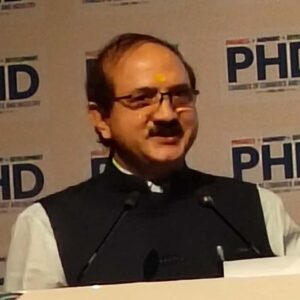
- Bhuvnesh Kumar, Secretary Ministry of Tourism Government of India
-
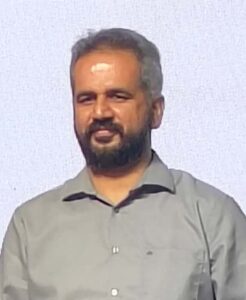
- Shekhar Singh, Commissioner, Nashik-Trimbakashwar Kumbh Committee
Bhuvnesh Kumar, Secretary, Ministry of Tourism, Government of India, said: “There are many more popular places like 5 jyothirlings and 3 shakti peeths. Trips can also be arranged to the World Heritage Sites of Ajanta-Ellora and nature getaways in the Western Ghats. India is a living civilisation in continuity for 3000 years. Spiritual tourism is a way of life here. We’ve had tremendous improvement in infrastructure in this decade domestic tourism is growing at 16 percent every year. 65 to 70 percent of this is spiritual tourism. Cleanliness and optimal management of masses also attracts international visitors. Spiritual tourism can dissolve borders.”
Kumbh has been an ecosystem in which the shared ritual fosters positive emotional well-being. UP Tourism Additional Chief Secretary Amrit Abhijit said during his online presentation that 10,000 institutions were involved in the Maha Kumbh Mela 2025. 80,000 tents were erected, and 1,14,500 toilets with regular water supply and manned by 25,000 sanitation personnel were made available to visitors. 75 percent of the infrastructure built during Kumbh has continued as a permanent facility. The Indian and UP governments together spent INR 150bn on the 2025 Kumbh Mela, which drew 650 million visitors from 183 nationalities.

Goraksh Gadilkar CEO Shirdi Saibaba Sanstan Trust
Kumbh Melas are beyond religion and caste. These have been followed since 1000 BCE and are based on precise astronomical alignments that occur when Earth’s geomagnetic energy fields are heightened at river confluences. River dynamics at the confluence site are then believed to have highly oxygenated water flows. Additionally, holy dip timings post-monsoon flows have purer water, as pollutants have been naturally filtered, and hence offer health benefits. Nashik Kumbh Mela’s spiritual season will begin as the Sun enters Leo on 31 October 2026. There will be a Nasik city circumambulation(14 km) event on 29 July 2027. Royal bathing dates will be on 2nd August, 31 August, 11 September and 12 September 2027.
Shekhar Singh, Commissioner, Nashik-Trimbakeshwar Kumbh Mela Authority, said: “We’re expecting 120 mn visitors to Nashik during Kumbh. 40 mn of them will be to Trimbakeshwar. 12 ghats (bathing berths) will be restored to handle bigger capacity during peak period in 2027. We’ll facilitate off-trips to Shirdi, Shani Shingnapur and more. We’re training 15,000 volunteers at different levels. 1000 of them will be on regular basis. Some corporates have already come forward to extend their CSR initiative at Kumbh and we’ll explore the opportunity with others as well.”
Kumbh has been a strategic meeting point since there were no communication tools. Last year’s Mela turned out to be a major marketing platform where consumer brands met visitors’ needs and captured their attention. Holy artis, bhajan and mantra chanting, and other sacred offerings will go on throughout the Kumbh season.
By: Madhura Katti – © 2026.
Read Time: 6 minutes.
About the Author.
 Madhura Katti never simply chose travel; she chose her. Trained in hotel management in Bangalore, she came to understand early that journeys are really about people, not places. By the nineties, she was writing on travel and food with a natural authority, later earning a Best Travel Writer award that surprised no one who had read her work.
Storytelling soon moved to film. Her documentary work with Indigenous India captured the spirit of a country in motion and won a National Award for Best Tourism Film.
After years with TTG Asia and Aviation International News, she brought her seasoned judgement to Global Travel Media, where she now guides coverage across India and South Asia steadily, perceptive, and unmistakably human.











