

Twenty years is a long time in any industry. In wellness, it’s practically a lifetime.
Back in 2007, when the spa economy was pegged at around US$60 billion, the idea of a US$6.8 trillion global wellness juggernaut would have sounded ambitious, if not faintly optimistic. Fast forward to today, and the Global Wellness Summit, arguably the sector’s most influential annual gathering, is preparing to mark its 20th anniversary with the sort of confidence that only comes from having seen the whole show evolve from the wings.
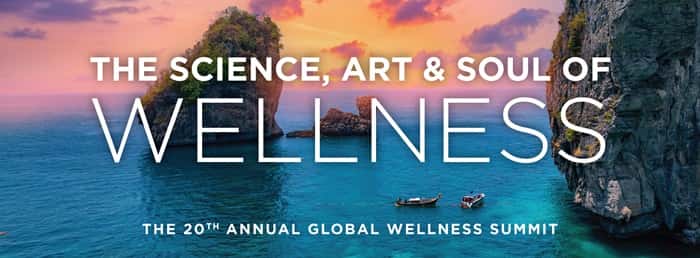
This year, the Summit heads to Angsana Laguna Phuket from 10 to 13 November, and it’s not just another date on the calendar. It’s a statement of intent.
A Theme That Actually Means Something
Under the banner “The Science, Art and Soul of Wellness,” organisers are trying something slightly more ambitious than the usual industry shorthand. Rather than leaning entirely on clinical breakthroughs or lifestyle trends, the 2026 programme attempts to stitch together three threads that don’t always sit comfortably together: hard science, creative expression, and something a little less tangible but no less important.
Nancy Davis, the Summit’s executive director, put it plainly: “We’re building an exciting agenda that unpacks the many powerful lessons learned from these last 20 years of wellness while gathering high-profile experts to explore what the next 20 years might hold.”
It’s a neat line and, crucially, one that doesn’t overpromise. The real question isn’t whether wellness will keep growing. It will. The question is what shape that growth takes, and whether the industry can keep its footing while doing it.
The Heavyweights Step In
If the theme hints at ambition, the speaker line-up confirms it.
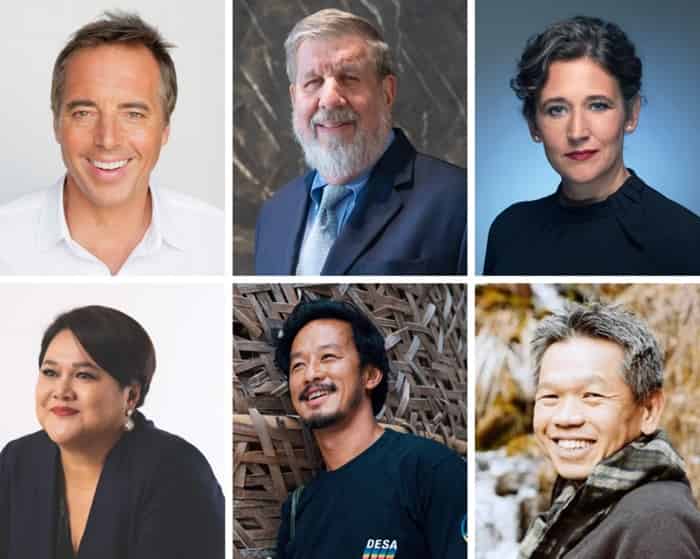
Dan Buettner leads the keynote slate, bringing with him the enduring appeal of the “Blue Zones”, those rare communities where longevity is less theory and more lived reality. His work has always had a reassuring simplicity: move more, eat well, stay connected. Not revolutionary, perhaps, but remarkably effective.
Alongside him is William Heinecke, the man who turned Minor International into a global hospitality powerhouse. Heinecke’s presence signals something important: wellness is no longer an add-on for hotels. It’s the product.
Then there’s Andrea Maier, a leading authority in geroscience whose work sits at the sharper end of the conversation. If Buettner speaks to how we live, Maier speaks to how long and how well we might continue to do so.
Between them, they cover the spectrum: lifestyle, industry and science. It’s not a bad place to start.
Theme and First Keynote Speakers Announced for 20th-Anniversary Global Wellness Summit in Phuket, Thailand
Asia’s Quiet Confidence
One of the more telling sessions won’t come from the main stage but from a conversation led by Cathy Feliciano-Chon that brings together Ronald Akili and Huy Huong.
On paper, they couldn’t be more different. One runs a high-energy creative village in Bali that blends sustainability with cultural programming. The other has developed a quiet retreat concept in Japan’s Alps, where luxury is defined by what’s left out rather than what’s added.
Yet both point in the same direction: a more thoughtful, less transactional approach to wellness travel. Less “fix me”, more “feel this”.
And that, increasingly, is where Asia is setting the pace.
Not Just Science, Not Just Soul
The Summit’s programme leans heavily into the idea that wellness is no longer just about the body. Mental health, emotional balance and even creative engagement are stepping into the spotlight.
Expect discussions on neurowellness, neuroaesthetics and the role of the arts not as a sideshow, but as a serious part of the equation. Music, film and performance will feature more prominently than ever before, which might raise an eyebrow or two among the more clinically minded delegates.
But it’s a fair bet that the industry can no longer afford to ignore the “softer” edges. They’re where much of the real impact sits.
Phuket: More Than a Backdrop
Choosing Phuket as the host isn’t just a nod to its resort credentials. Thailand has spent decades refining a wellness offering that blends traditional healing with modern medical expertise.
From herbal therapies passed down through generations to sophisticated longevity clinics, the country has managed to do something many destinations talk about but rarely achieve: balance.
Phuket, in particular, has become a natural meeting point for luxury, healthcare and holistic wellbeing. In other words, it doesn’t just host the conversation; it embodies it.
The Next 20 Years
There’s a temptation, at a 20-year milestone, to look backwards. The Summit could easily fill its programme with retrospectives and victory laps.
To its credit, it hasn’t.
Instead, the focus is firmly on what comes next. And that’s where things get interesting. The wellness industry is growing at a pace, but growth puts pressure on credibility, sustainability, and the ability to deliver outcomes that go beyond good intentions.
If this year’s Summit gets anything right, it will be in asking the harder questions. Not just how big can wellness get? But how good can it be?
Because after two decades, the industry no longer needs to prove it exists.
Now it needs to prove it matters.
And for those inclined to see where that future is being shaped rather than simply reported, registration for the Summit is now open.
Register for the Global Wellness Summit 2026.
Places, as ever with this crowd, won’t linger.
by May Marclay – (c) 2026.
Read Time: 6 minutes.
About the Author.
 May Marclay’s career hasn’t followed a straight line, and she’s better for it. She began in real estate, then moved into hospitality, finding her rhythm with Centara in the Maldives. There, she worked the Asian markets the old-fashioned way: building trust, closing deals, and turning conversations into lasting business.
The UAE sharpened its focus. At IHG, supporting an Area General Manager, she saw the machinery of a major travel hub from the inside, no gloss, just how things actually get done.
Now, with her sights set on healthcare, May brings a broader lens than most. She speaks three languages, reads widely, travels with intent, and writes with the calm assurance of someone who understands both the detail and the bigger picture without needing to say so too loudly.











