

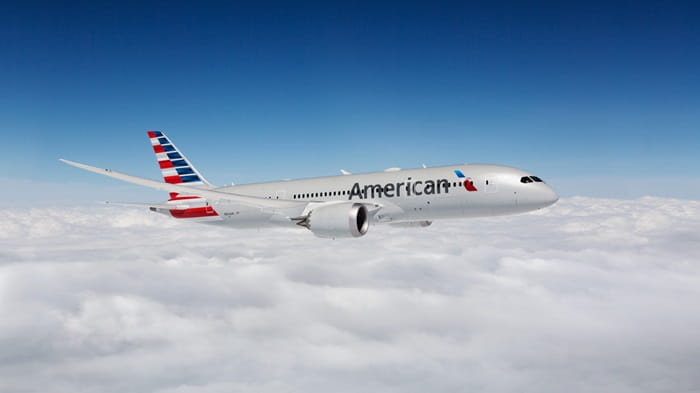
If ever there were proof that bigger doesn’t always mean better, at least not straight away, it arrived this week courtesy of American Airlines Group Inc.
The carrier has chalked up a record-breaking US$13.9 billion in first-quarter revenue, a figure that would make most industries quietly envious. Yet, in a turn that feels entirely on-brand for aviation in 2026, the quarter still slipped into the red.
A net loss of US$382 million under GAAP rules is not catastrophic, but not exactly something to frame either.
That, in a nutshell, is the airline business: a sector where you can fill the seats, sell the upgrades, and still find the ledger stubbornly unimpressed.
A Strong Top Line, a Stubborn Bottom One
There’s no question American’s commercial engine is humming. Revenue climbed 10.8% year-on-year, with the airline logging nine of the highest booking weeks in its 100-year history, a statistic that carries a certain gravitas.
Strip out special items, and the loss narrows to US$267 million, or US$0.40 per share. Not ideal, but hardly alarming in context.
After all, winter storms alone carved out roughly US$320 million in lost revenue, a reminder that in aviation, Mother Nature still holds a controlling stake.
Isom’s Steady Hand on the Controls
Chief executive Robert Isom isn’t losing sleep over the headline loss—and, to be fair, neither are most seasoned observers.
“American delivered record revenue in the first quarter, and we’re on track for another record in the second quarter,” he said, with the sort of calm assurance that suggests the long game is firmly in sight.
His playbook is refreshingly orthodox: improve the customer experience, grow the network, lean into premium revenue, and double down on loyalty.
No gimmicks. Just the fundamentals executed properly.
Premium: Where the Real Money Sits
If the past few years have taught airlines anything, it’s that not all seats are created equal.
American is leaning hard into that reality, expanding premium seating at more than twice the rate of economy capacity. Lie-flat beds, Premium Economy cabins, the works.
And passengers, it seems, are willing to pay.
Corporate travel—written off in some quarters not long ago—has edged back into relevance, with managed corporate revenue up 13%. Meanwhile, premium leisure travellers continue to trade up, chasing comfort even as broader economic nerves linger.
In plain English: the back of the plane fills the aircraft, but the front keeps the lights on.
The Quiet Art of Keeping Customers Happy
Airlines have long known that loyalty is earned in the details, not the slogans. American appears to be taking that to heart.
There’s ongoing investment in lounges across key hubs, from Chicago to Miami, hardly headline-grabbing, but quietly influential. Then there’s connectivity, with free high-speed Wi-Fi rolled out for AAdvantage members, backed by AT&T.
It’s the sort of move that would have been considered generous a decade ago. Today, it’s simply expected.
The airline’s app has also been polished, offering real-time updates and self-service tools. Again, not glamorous—but in a business built on moving parts, reliability is currency.
Network Tweaks That Actually Matter
Behind the scenes, American has been refining its operations with a degree of discipline that rarely gets the applause it deserves.
Rebanking its schedules at Dallas-Fort Worth and Philadelphia might sound like industry jargon, and it is, but the outcome is tangible: better connections, improved punctuality, and fewer missed flights.
Across the Atlantic, the payoff is already visible, with unit revenue up 16.7%, a healthy sign in a competitive market.
And with plans to run around 500 daily flights from Chicago this summer, the airline is making it clear it intends to stay on the front foot.
Loyalty: The Sleeper Hit
If premium cabins are the showpiece, loyalty is the steady earner working backstage.
American, AAdvantage® program continues to pull its weight, with enrolments up 25% and credit card spending up 9%, helped by its expanded partnership with Citigroup.
It’s not particularly glamorous, but it is immensely profitable. And in aviation, predictability is worth its weight in jet fuel.
Debt Down, Confidence Up
One figure that deserves more attention than it’s likely to get: total debt down to US$34.7 billion, the lowest level since 2015.
That’s not just housekeeping, it’s strategic breathing room.
With US$10.8 billion in liquidity and substantial unencumbered assets, American has given itself options. In a sector where shocks are never far away, that flexibility matters.
Fuel: The Uninvited Guest
Of course, there’s always something waiting to spoil the party.
This time, it’s fuel.
The airline is facing a US$4 billion increase in fuel-related expenses, with prices hovering around US$4 per gallon. It’s a familiar headache and one that refuses to go quietly.
American expects to claw back some of that cost through stronger revenue, but there’s no escaping the reality: fuel remains the industry’s most unpredictable line item.
The View Ahead
Looking forward, the tone is cautiously optimistic.
Second-quarter revenue is forecast to rise between 13.5% and 16.5%, while earnings are expected to land somewhere between a small loss and break-even.
For the full year, guidance points to results broadly in line with 2025, hardly spectacular, but respectable given the cost pressures at play.
Final Word
There’s a certain discipline to American Airlines’ current approach—one that harks back to a more traditional view of the business.
Grow revenue sensibly. Invest where it counts. Keep the balance sheet under control. And accept that some quarters will be better than others.
It’s not flashy. It’s not particularly new. But it works more often than not.
And in an industry that has seen its fair share of turbulence, that kind of steady hand is worth its weight in gold.
by Prae Lee – (c) 2026.
Read Time: 6 minutes.
About the Author.
 You can tell a great deal about a person by how they meet a Bangkok morning. Prae Lee doesn’t charge into it; she glides, unhurried, as if time itself has agreed to behave. There is a calm assurance about her, the sort earned by knowing both your roots and your destination.
A graduate of Chulalongkorn University, she earned her business degree with quiet pride, then further polished it in Singapore and Australia. Travel didn’t change her. It refined what was already there: curiosity, discipline, grace.
Back in Bangkok, she slipped modern life into the family business, mastering social media with an instinct for listening and selling with Thai gentleness.
Prae never seeks attention, yet everything she touches grows brighter.
Now with Global Travel Media, she writes with authenticity, drawing on culture, travel and a rare, steady confidence.











