

Airports rarely win affection. At best, they earn tolerance. At worst, they test one’s patience to the breaking point somewhere between security queues and a delayed boarding call.
So when one quietly gets things right, it’s worth paying attention.
That’s precisely what’s unfolding at Mactan-Cebu International Airport (MCIA), where the business of moving people from one plane to another has been stripped back to something approaching common sense. No fanfare. No over-engineered theatrics. Just a system that works and works well.
The industry, not known for handing out compliments lightly, has taken notice. The airport has again secured top honours from Airports Council International, taking out the 2025 Airport Service Quality award for its category in Asia-Pacific. Two years running. Not luck habit.
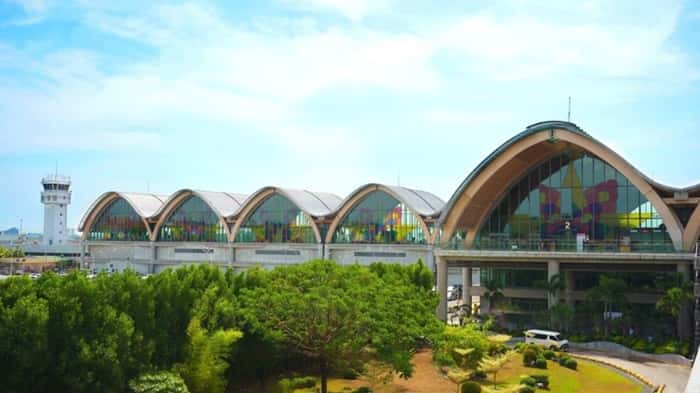
The gateway of choice: MCIA stands as a benchmark for Philippine aviation, blending world-class efficiency with authentic local character.
The Quiet Return of Efficiency
There was a time when air travel felt organised. Predictable, even. Somewhere along the line, that gave way to sprawling terminals and connection times that seemed to require a small miracle.
Cebu appears to have ignored that trend.
Through its CEB Connects program, MCIA has delivered something refreshingly old-fashioned: transfers that don’t require a degree in logistics. Domestic connections can be turned around in roughly 35 minutes. International ones in about an hour.
In airport terms, that’s not just efficient, it’s disciplined.
More importantly, it’s consistent. Travellers aren’t left gambling on whether their connection will hold. The process is contained within a single terminal environment, meaning fewer variables, fewer surprises, and far less unnecessary stress.
It’s the sort of operational thinking that used to be standard practice. Now, it feels almost revolutionary.
Design That Knows Its Place

Where journeys begin: Mactan-Cebu International Airport connects travellers to Cebu’s vibrant beaches, rich culture, and island adventures.
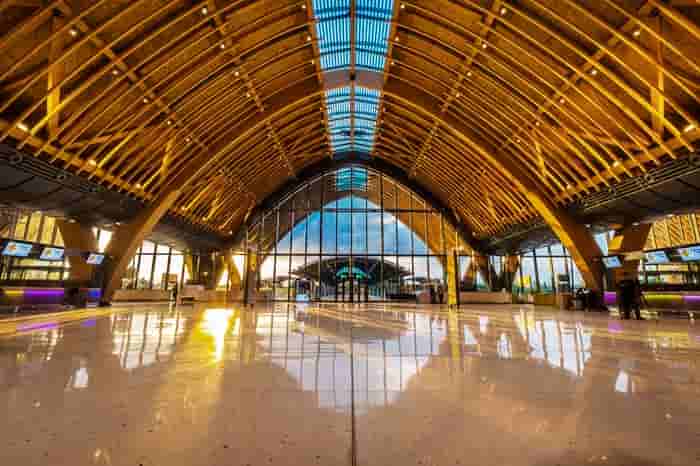
MCIA’s architecture has been widely admired and rightly so. Timber arches, open spaces, and a distinctly local feel give it a sense of place that many airports, in their pursuit of global sameness, have long abandoned.
But here’s the thing: good design in an airport should never get in the way.
In Cebu, it doesn’t.
The layout is intuitive. Sightlines are clear. You don’t need to hunt for your gate like you’re solving a puzzle. It’s all there, where you expect it to be.
That might sound like faint praise. It isn’t.
A Network with Purpose
Behind the scenes, Aboitiz InfraCapital Airports has taken a measured approach to expanding its airport network. Less noise, more substance.
CEO Athanasios Titonis sums it up neatly:
“Our focus is on making Cebu the most efficient gateway in the region.”
It’s a statement that could easily drift into marketing fluff. In this case, it doesn’t. The numbers—and the experience—back it up.
Efficiency here isn’t about rushing people through like cattle. It’s about removing friction. Smoother transfers. Clearer pathways. Better coordination once you land.
Simple ideas, executed properly.
Out of the Terminal, Into the Water
What makes Cebu particularly compelling is what happens after you leave the airport.
Or rather, how quickly it happens.

From depths to heights: Whether exploring the famous sardine run in Moalboal or enjoying the rolling greens of Cebu’s premier golf courses, discovery is always within reach.
Within minutes of arrival, travellers can be in the water off Mactan Island, where dive sites and marine sanctuaries sit practically on the airport’s doorstep. No long-haul transfers. No logistical gymnastics. Just a short hop and you’re there.
Further north, Malapascua continues to draw divers seeking its famous thresher sharks, an experience that remains among the more distinctive underwater encounters in the region.
Head south, and Moalboal offers its own spectacle, the sardine run, where vast schools move in synchronised formations that seem almost choreographed.
For those who prefer dry land, the fairways at Cebu Country Club and Alta Vista Golf and Country Club provide a different kind of rhythm, slower, certainly, but no less deliberate.
The point is this: Cebu doesn’t make you work hard to enjoy it.
A Shift in How We Travel
There’s a broader lesson here.
Travellers are becoming less tolerant of wasted time. Long layovers, unnecessary detours, and convoluted itineraries are no longer badges of honour; they’re irritations.
MCIA’s model leans into that reality. Plan ahead. Travel directly. Pack sensibly. None of it is groundbreaking, but all of it is effective.
It also aligns with a more sustainable approach to travel. Fewer connections mean fewer emissions. Better coordination reduces congestion. Efficiency, it turns out, has a ripple effect.
Getting the Basics Right
Where many airports stumble is the final stretch, the bit after baggage claim, where confusion tends to creep in.
Cebu has made a point of tightening that link.
Improved wayfinding, better coordination with local transport, and a general sense that someone has actually thought about the passenger journey beyond the terminal doors all contribute to a smoother arrival.
It shouldn’t be remarkable. Yet, in many parts of the world, it still is.
No Grand Claims, Just Consistency
There’s no shortage of airports promising to reinvent travel. Most fall short.
Cebu hasn’t tried to reinvent anything. It has simply focused on doing the fundamentals properly and doing them every day.
That, more than awards or architecture, is what sets it apart.
Because in the end, travellers don’t remember slogans. They remember whether the journey was easy.
In Cebu, increasingly so.
And that’s a standard others might do well to revisit.
by Soo James – (c) 2026.
Read Time: 6 minutes.
About the Author.
There’s nothing rehearsed about Soo James, and that’s precisely the point. Malaysian by heritage, Sydney by schooling, she arrived at UNSW to study Arts, then took a left turn into IT, not out of ambition, but curiosity. Somewhere among systems and schedules, she worked out what really held her attention: people, language, and the quiet spaces between them.
Writing followed naturally. Travel and lifestyle gave her room to observe, to listen, to notice the details others rush past. Soo writes the way good travellers move, watching the room before admiring the view, catching the gesture before chasing the headline.
At Global Travel Media, her stories don’t shout or sell. They linger. They slow you down, open a door, and gently suggest there’s more to see if you’re willing to look.











