

Bangkok has long been accused, usually with admiration, of knowing exactly how to put on a show. But every so often, the city trades spectacle for substance. This week is one of those moments.
The Russian-Thai Gastronomic Festival 2026 has landed in the Thai capital, and rather than chasing crowds or Instagram theatrics, it’s taken a more deliberate path: smaller rooms, sharper ideas, and a quiet confidence that good food still speaks for itself.
Running from 30 March to 3 April, the festival arrives in Thailand after its earlier success in Moscow. The move is no coincidence. Bangkok has become one of the region’s most credible culinary crossroads, and if you’re looking to start a serious conversation about food, it’s as good a place as any to pull up a chair.
This isn’t just about what’s on the plate. It’s about what sits behind it.
A Diplomatic Exercise With Better Catering

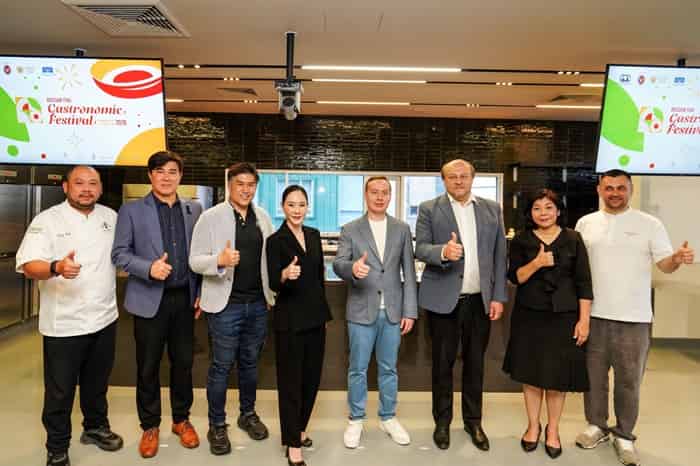
Vladimir Kovalev, Executive Director of RTBC
The festival is backed by a coalition that reads more like a diplomatic guest list than a hospitality line-up: the Russian-Thai Business Council, the Royal Thai Embassy in Moscow, and the Embassy of the Russian Federation in Thailand. That combination tells you everything you need to know. This is as much about relationships as it is about recipes.
Food, after all, has always done what policy sometimes struggles to achieve. It opens doors. It softens edges. It gets people talking.
And here, it’s doing exactly that.
When Kitchens Become Meeting Rooms
The real work is happening behind the pass, where Russian chefs from Pinskiy & Co. have joined forces with leading Thai counterparts. There’s no gimmickry here, just a careful blending of technique, produce, and perspective.
Russian cuisine, often misunderstood as heavy and austere, is being reinterpreted with a lighter touch. Thai ingredients, meanwhile, are stepping into unfamiliar territory, proving they can carry just as much weight in a European context.
The result is not a clash of cultures, but a conversation. And a rather enjoyable one at that.
Importantly, the festival hasn’t tried to be all things to all people. Attendance is capped at around 200 invited participants, industry figures, chefs, restaurateurs, and media, ensuring that discussions go beyond pleasantries and into something more useful.
Less Noise, More Substance

Russian chefs from the Pinskiy & Co.
The opening at The Food School Bangkok set the tone early. No grandstanding, no overblown theatrics, just chefs at work, explaining what they do and why they do it.
The masterclasses offered a rare chance to look past the finished dish and into the thinking behind it. For culinary students and professionals alike, it was less a performance and more a working session.
“This festival is more than a celebration of food; it is a cultural bridge between Russia and Thailand,” said Vladimir Kovalev, Executive Director of the Russian-Thai Business Council. “Through shared culinary experiences, we spark creativity, encourage dialogue, and cultivate long-term collaboration. We are proud to bring this festival to Thailand and look forward to its continued growth.”
It’s a neat line, but in this case, it happens to be true.
The Ingredients Tell Their Own Story
No serious food gathering can avoid the lure of premium produce, and here the organisers have made sure the raw materials hold up their end of the bargain.

Master Class
Black caviar from Thai Sturgeon Caviar and king crab supplied by ZAAP Alaska feature prominently, but they’re not there simply for show. Used properly, they add depth without overwhelming the broader narrative.
That narrative, ultimately, is about compatibility. About proving that two distinct culinary traditions can sit at the same table without one dominating the other.
Dining With Intent
The festival’s dining component leans heavily into intimacy. Venues including Wang Hinghoi, Baannok BKK City Edition, and Brass House are hosting a series of limited-seat dinners, 40 to 60 guests at a time.
It’s a sensible approach. Large crowds dilute the experience. Smaller rooms sharpen it.
Each menu is a collaboration, not a compromise. Traditional flavours are present, but they’ve been given room to evolve. Add a touch of live music and the result is an evening that feels considered rather than constructed.
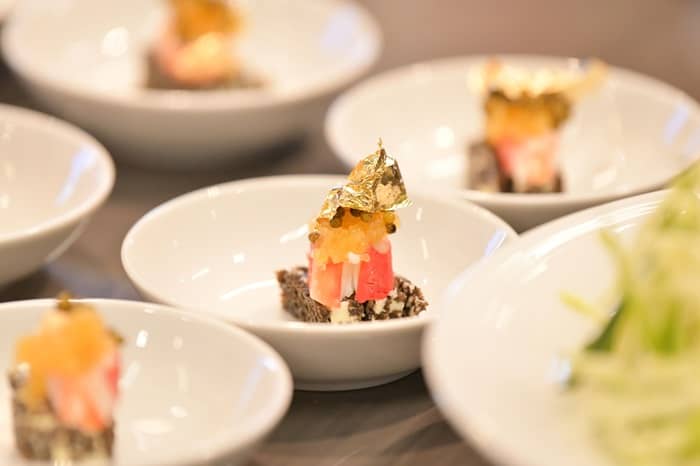
Borodinsky Bread-Black Caviar-Crab
Bangkok Knows Its Role
For Thailand, the festival reinforces a position it has quietly built over the years: not just as a destination for great food, but as a place where culinary ideas can be tested, challenged, and refined.
For Russia, it’s an opportunity to present its cuisine in a new, less stereotypical, and more substantial light.
And for the industry, it’s a useful reminder. Strip away the noise, the trends, the endless chase for novelty, and what you’re left with is this: good ingredients, capable hands, and a willingness to listen.
That, more than anything, is what this festival is really serving.
by Supaporn Pholrach – (c) 2026.
Read Time: 3 minutes.
About the Author.
 Supaporn Pholrach came up in advertising when deals were sealed with a handshake, and deadlines lived on scraps of paper, not dashboards. She learned early that people mattered more than process, and it stuck. Armed with solid training and a stubborn work ethic, she built a reputation for getting results without turning hard or hollow.
Fifteen years at Bangkok Shuho would test anyone’s stamina. Supaporn stayed the distance. These days, as Sales Manager at Global Travel Media, she helps tourism brands cut through the noise with common sense, good humour and genuine warmth.
She doesn’t chase quick wins. She earns trust, builds loyalty and keeps her word. In an industry that rarely slows down, Supaporn is someone you’re quietly glad to have on your side.











