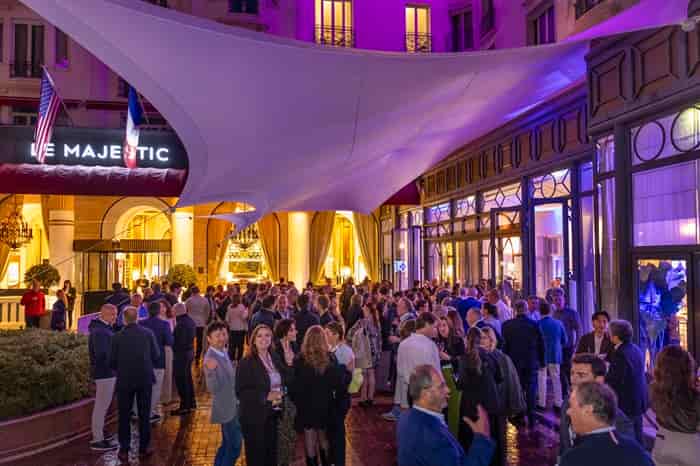
Golf, for all its traditions and stubborn adherence to etiquette, has quietly become one of travel’s more lucrative export industries. Not that it makes much noise about it. There are no neon signs or last-minute seat sales here, just a steady stream of well-heeled travellers, clubs in tow, heading somewhere sunnier, greener and, ideally, just exclusive enough to justify the airfare.
That steady stream is turning into something closer to a tide, and the organisers of the International Golf Travel Market (IGTM) are positioning themselves squarely in its path.
Set to return to Cannes’ Palais des Festivals from 19–22 October 2026, IGTM isn’t so much a trade show as it is a carefully curated marketplace where the business of golf travel is done with quiet efficiency and the occasional glass of something French.
The Americans Are Coming Again
The numbers tell the story, but they don’t quite capture the mood. Around 2.7 million Americans now travel overseas each year to play golf. That’s roughly a quarter of the US golf travelling population and, crucially, it’s the segment with the appetite (and the means) to spend.
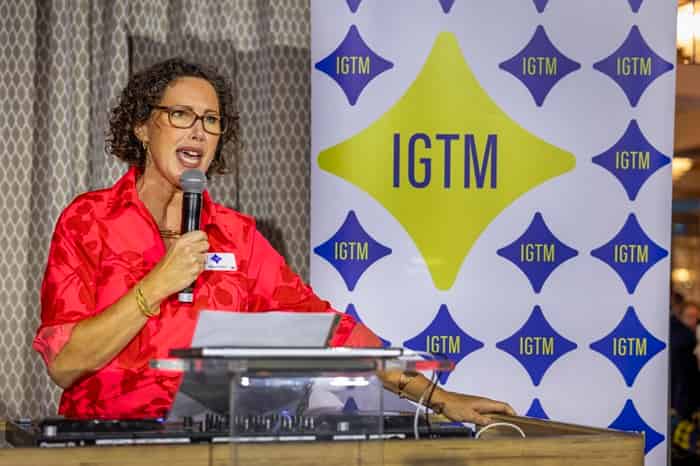
IGTM Welcome Reception 2025
This isn’t about squeezing in 18 holes between meetings. It’s about the experience of the course, certainly, but also the resort, the spa, the dining, and the small luxuries that sit comfortably alongside a well-struck drive.
In other words, golf travel has grown up. Or perhaps more accurately, it’s become unapologetically indulgent.
Forecasts from Future Market Insights suggest the global golf tourism sector will reach USD 24.8 billion in 2026. That’s not a rounding error. That’s a signal.
More Than Just a Trade Show
IGTM’s enduring appeal lies in its ability to connect the dots across an industry that doesn’t always speak with one voice. Tourism boards, resorts, tour operators, and equipment brands all target the same clientele, often without quite coordinating their efforts.
The ongoing partnership between IGTM and the PGA Show, both under the RX umbrella, is an attempt to tidy that up. It’s a sensible move. The modern golfer doesn’t compartmentalise their experience, so why should the industry?
Fiona Ashton, who oversees both IGTM and the newly introduced IGTM Discovery, is refreshingly direct about it:
“North America represents one of the most significant sources of outbound golf tourism spend globally, and appetite from that market for distinctive and premium experiences continues to accelerate.”
No spin required. The demand is there, and growing.

Golf’s greener future arrives quietly, one clever cart at a time today.
IGTM Discovery: A Broader Swing
The 2026 edition introduces IGTM Discovery, effectively an expansion designed to bring the wider golf industry into the fold. Less about tee times, more about the machinery behind them.
Suppliers, facility operators and decision-makers now have a dedicated platform alongside the traditional tourism focus. It’s a recognition that golf travel doesn’t exist in isolation; it’s part of a broader ecosystem that includes technology, retail and infrastructure.
For buyers, it means a more complete picture. For suppliers, a wider audience. For everyone else, more meetings.
Old Favourites Hold, But Curiosity Creeps In
For American golfers, some habits die hard and not without reason. Ireland, Portugal and Andalucía continue to dominate the long-haul wish list. These are destinations that understand their audience and have spent years refining the offer.
Closer to home, the Caribbean and Mexico remain reliable performers. The Yucatán and Riviera Maya, in particular, are gaining traction not just for convenience but for the increasingly polished resort experiences now on offer.
But there’s a shift, subtle but unmistakable.
Melanie Halpert from Desert Mountain Club, who attended IGTM as a buyer in 2025, summed it up neatly:
“They want the unexpected, the experiential the places they couldn’t have discovered on their own.”
Morocco. Vietnam. Not obvious choices, perhaps, which is precisely why they’re gaining attention.
A Different Crowd on the Tee Sheet
One of the more interesting developments is the rise of women’s golf travel not as a niche, but as a meaningful segment with its own expectations.
These travellers aren’t just booking rounds; they’re curating experiences. Golf, yes, but also wellness, culture and connection. It’s a different lens, and one that the industry is beginning to understand.
As Halpert notes:
“These are discerning travellers who want it all expertly curated for them.”
No half measures, then.
Why Cannes Still Matters
Last year’s event drew more than 50 buyers from the US and Canada, a modest number on paper, but one that carries considerable weight in practice. These are the people shaping itineraries, directing spend, and quietly influencing where the next wave of travellers will land.
That’s IGTM’s strength. It’s not about volume. It’s about relevance.
As the market edges towards that USD 24.8 billion mark, Cannes remains the place where conversations turn into contracts and where destinations get their moment in front of the buyers who matter.
A Final Thought
Golf doesn’t chase trends. It absorbs them, slowly, carefully, and usually on its own terms.
But travel is different. It moves faster. And right now, it’s being pulled forward by a North American market that’s looking further afield, spending more freely, and expecting more in return.
IGTM 2026 won’t change that trajectory, but it will certainly help define where it goes next.
And if you happen to close a deal along the way, well, there are worse places to do it than Cannes in October.
by Jason Smith – (c) 2026.
Read Time: 4 minutes.
About the Writer.
 Jason Smith was educated in terminals, taxis and hotel corridors, the sort of schooling no classroom could hope to provide. Half American, half Asian, he grew up inside the quiet machinery of tourism, watching his family send strangers into the world long before he travelled himself.
Bangkok came first, then the Asian Institute of Hospitality & Management, followed by a career stitched together across Singapore, Malaysia and Vietnam. Each city left a mark. Thailand eventually claimed him, along with a corner office, as Director of Sales for one of the country’s leading hotel groups.
Then the world paused. Borders closed, skies emptied, and Jason returned to America carrying time, memory and a lifetime of stories.
Now at Global Travel Media, he writes about the human side of travel check-ins, departures, and everything in between with warmth, clarity, and an instinct for connection.