

Some deals land quietly. Others carry a sense of inevitability, the kind that feels less like a takeover and more like a passing of the baton. Journey Beyond’s acquisition of Voyages Tourism Australia sits squarely in the latter camp.
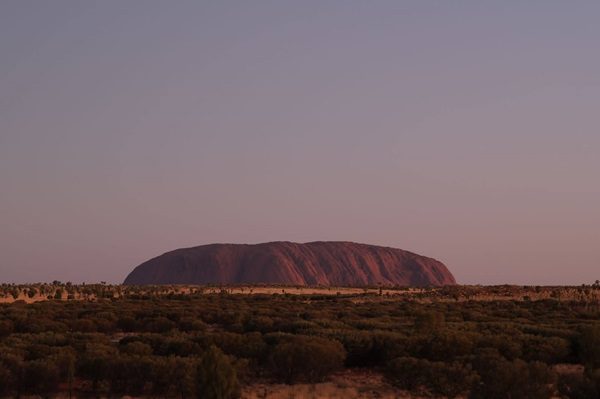
The experiential tourism heavyweight has officially welcomed Voyages into its portfolio, bringing with it two of the country’s most culturally significant tourism assets: Ayers Rock Resort in Yulara and the Mossman Gorge Cultural Centre in Tropical North Queensland.
For an industry that increasingly trades on meaning as much as margin, the move feels well-timed.
The transaction follows months of consultation led by the Indigenous Land and Sea Corporation (ILSC) with Traditional Owners, the Anangu of Yulara and the Kuku Yalanji people of Mossman Gorge. At its heart, the deal is tied to a broader ambition: progressing the long-term return of these lands to Community ownership.
That context matters. In a sector where cultural tourism can too easily tip into tokenism, this is one of those rare moments where ownership structures and storytelling begin to align.
Journey Beyond CEO Chris Tallent didn’t dress it up.
“This is an incredibly important and exciting moment for Journey Beyond,” he said. “Voyages aligns perfectly with our purpose to create amazing, connected and authentic experiences. Our ambition continues to bring together the most distinctive, experience-led brands that celebrate the very best of Australia’s and New Zealand’s landscapes and cultures.”
Corporate language, yes, but the strategic logic is hard to miss.
Journey Beyond has spent the better part of the last decade assembling a portfolio built around immersion rather than inventory. From luxury rail journeys like The Ghan and Indian Pacific to wilderness lodges and Outback Spirit touring, the through-line has always been place-first storytelling. Adding Voyages simply deepens that narrative.
It also strengthens the group’s credentials in First Nations partnerships, an area where the industry has been steadily lifting its expectations. Journey Beyond already works closely with communities across its Outback Spirit network and remote lodges, and that framework is expected to carry across the expanded portfolio.
Central to that continuity is the National Indigenous Training Academy (NITA), which will remain in place as a pipeline for education and employment. For years, NITA has been one of tourism’s quieter success stories, practical, grounded and genuinely impactful in building long-term career pathways.
There is, however, one visible change. With the business no longer owned by the ILSC, the word “Indigenous” will be dropped from the corporate name. Voyages Indigenous Tourism Australia becomes Voyages Tourism Australia, a subtle shift that reflects governance reality rather than philosophical retreat.
Both sides have been careful to stress that cultural commitments remain intact. If anything, the expectation is that the partnership model will mature rather than dilute.
For the trade, the acquisition signals a deeper consolidation at the premium end of the market but not the kind driven purely by scale. This is consolidation with a narrative spine, anchored in experiences that are difficult, if not impossible, to replicate elsewhere.
And perhaps that’s the real story here.
At a time when global travellers are chasing depth over distance, Australia’s most powerful tourism assets remain the ones rooted in culture, custodianship and country. By bringing Voyages into the fold, Journey Beyond hasn’t just expanded its footprint; it has tightened its grip on the kind of storytelling modern travellers are increasingly willing to cross oceans for.
Not flashy. Not loud. But quietly significant and very on brand.
by Octavia Koo – (c) 2026.
Read time: 3 minutes.
About the Writer.
 Octavia Koo arrived in Australia from Indonesia in the early eighties, drawn by Sydney’s creative pull and a place at UNSW. Studying Arts, she quickly developed an eye for visual storytelling, starting in graphic design before naturally moving into web development and crafting copy that invited people in and kept them there.
Singapore came next. There, she ran blogs for tourism platforms and developed an instinct for SEO well before it had a name, working the corridors of ITB Asia and learning how stories travel online. There, she met Stephen, who suggested Global Travel Media.
A few years later, she joined.
Today, Octavia is part of GTM’s editorial family, bringing a quiet brilliance to every piece blending art, technology, and intuition to make travel stories both charming and effective, much like their author.











