

If you’ve been in the travel game long enough, you’ll know Singapore has a habit of quietly reinventing itself just when you think you’ve got it figured out.
The Lion City doesn’t shout about change. It just rolls up its sleeves, tweaks the formula, adds a dash of wow, and suddenly there’s a new reason to go back.
That’s exactly what’s happening now.
With a steady pipeline of attractions and events landing through to March 2026, Singapore is once again giving the trade something it values enormously: a destination that sells itself, but never stays still.
And in a region where repeat visitation is the real gold standard, that matters.
Smart timing, smart messaging
The push is being led by the Singapore Tourism Board, with a clear focus on short-haul regional markets, Hong Kong, Southeast Asia, and yes, Australia.
The positioning is classic Singapore: innovation meets heritage, wrapped in experiences that feel curated without being contrived.
Layered on top is a consumer campaign from ShopBack, the “Singapore, Made for More” push, which cleverly nudges travellers to swap rigid itineraries for a more spontaneous approach. Not something Singapore was traditionally known for, but that’s part of the evolution.
The cashback mechanics are straightforward enough: up to 25 per cent back on Singapore bookings via major platforms through April. Add bonus incentives tied to minimum spend, and you’ve got a neat little nudge for fence-sitters.
It’s not revolutionary marketing, but it is effective.
Where Singapore still leads: immersive everything
If there’s one thread running through the new lineup, it’s immersion.
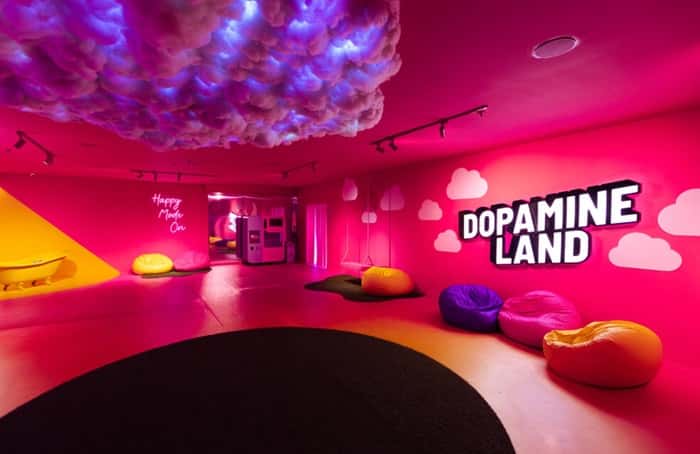
Feel the Rush at Dopamine Land, Sentosa
Singapore has been leaning into this space for years, but the latest crop of experiences pushes even further beyond passive sightseeing.
At the National Museum, SKULLPANDA: CAGE-UNCAGE takes what could have been a niche collectible showcase and turns it into something surprisingly thoughtful. Interactive zones explore identity, culture and creativity, and yes, it’s far more interesting than the name suggests.
On Sentosa, Dopamine Land delivers the kind of sensory overload that modern travellers seem to love: bright, tactile, and unapologetically joyful. If you’ve seen it in Europe, you’ll know the drill. If not, think of it as part art installation, part playground for grown-ups.
Then there’s the ArtScience Museum, which continues to punch well above its weight in the global exhibition circuit. NOX, by digital artist Lawrence Lek, blends gaming, architecture and AI storytelling into a futuristic rabbit hole that’s equal parts clever and slightly unsettling.
Alongside it, Insects: Microsculptures Magnified offers something quieter but no less striking hyper-detailed insect photography scaled up to towering proportions. The kind of exhibition that stops people in their tracks.
And threading through it all is the Singapore Biennale, once again spilling out of traditional galleries and into the city itself, Orchard Road, Fort Canning, public spaces reimagined as art.
It’s a reminder that Singapore’s real strength isn’t individual attractions. It’s how the whole city becomes part of the experience.
Nature gets a bigger voice
Of course, Singapore knows it can’t live on glass and steel alone.
The next phase of its tourism story leans heavily into nature, but in a distinctly Singaporean way: nature with design credentials.
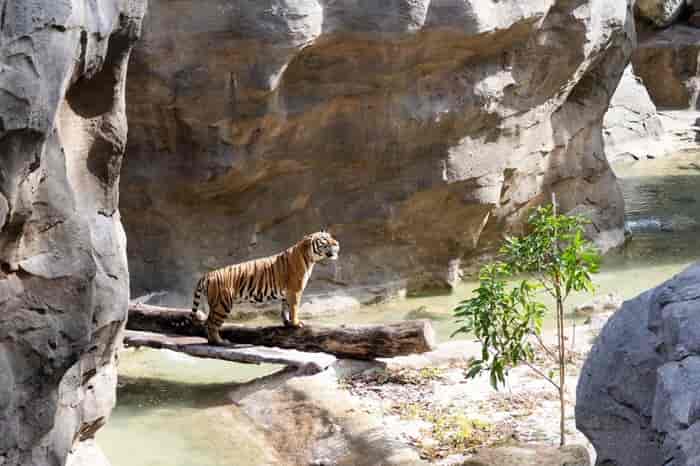
Rainforest Wild Asia is the headline act here. Part wildlife park, part adventure playground, it blends conservation messaging with genuine adrenaline. Canopy walks, cave descents, unexpected animal encounters, it’s all carefully choreographed, but still feels adventurous.
Meanwhile, Sentosa Sensoryscape quietly showcases how infrastructure can double as an attraction. A lush, multi-sensory connector that blends sound, lighting and landscaping, it’s less about ticking a box and more about shifting a mood.
Not headline-grabbing, perhaps, but quietly impressive.
Events still drive urgency
Singapore has long understood something many destinations forget: people travel for moments, not monuments.
Cue a steady calendar of high-energy events.
Singapore Smash returns as Asia’s flagship table tennis showdown, but the real draw isn’t just sport. It’s the lifestyle wrapper dining, nightlife and that polished Singapore hospitality that turns tournaments into mini festivals.
LIV Golf’s return to Sentosa adds a different flavour. The Serapong course remains a stunner, and the mix of elite players and dramatic scenery makes for compelling theatre, whether you’re a golfer or not.
Together, these events do what Singapore does best: create urgency without chaos.
Entertainment that leans into fun
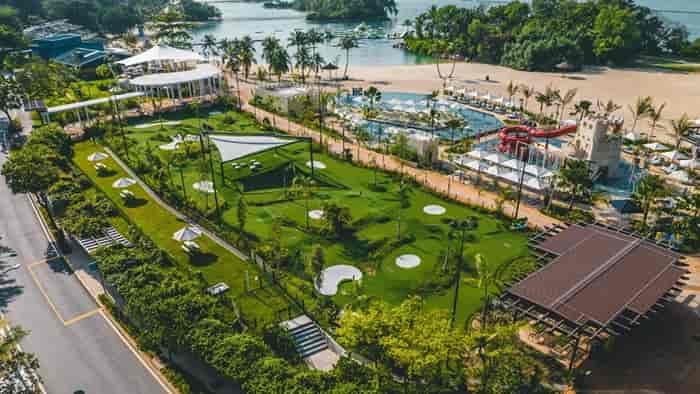
Entertainment From Day to Night at The Palawan @ Sentosa
On the lighter side, Singapore is leaning harder into pop culture, and frankly, it works.
The Palawan @ Sentosa is shaping up as a new lifestyle anchor, mixing gamified karting with beach club indulgence. It’s playful, a little flashy, and very now.
Cirque du Soleil’s KOOZA brings dependable spectacle back into the mix, delivering the acrobatics and theatrical flair audiences expect.
And for younger travellers, the Demon Slayer exhibition proves Singapore still has its finger firmly on the pulse of global fandom.
Not every experience needs to be profound. Sometimes, fun sells just fine.
Why this matters for the trade
From an industry perspective, Singapore’s latest refresh ticks several important boxes.
It gives agents something new to talk about without requiring a complete re-education on destinations. It offers layered experiences that suit both first-timers and repeat visitors. And crucially, it reinforces Singapore’s role as an easy sell, short flight, reliable infrastructure, and consistent quality.
In uncertain travel cycles, reliability is an underrated currency.
The quiet genius of Singapore
If there’s a takeaway here, it’s this: Singapore rarely tries to be the loudest destination in the room.
Instead, it focuses on staying relevant.
A new exhibition here. A reimagined precinct there. A fresh reason to return, almost every year.
It’s not a flashy reinvention. It’s disciplined evolution.
And for the travel trade and travellers alike, that’s often exactly what keeps a destination front of mind.
Useful links:
Singapore Tourism Board — https://www.stb.gov.sg.
ArtScience Museum — https://www.marinabaysands.com/museum.
ShopBack campaign — https://www.shopback.com.
by Christine Nguyen – (c) 2026.
Read time: 6 minutes.
About the Writer.
 Christine’s story is one of quiet courage, told without fuss and lived with remarkable grace. She arrived in Australia as a young refugee from Vietnam, carrying little more than hope, family, and a curiosity that refused to be extinguished. Sydney became home, built patiently, brick by careful brick.
She studied Tourism at TAFE and soon found her place in inbound travel, working with one of the city’s leading destination companies. Christine loved showing visitors the Australia that lives beyond postcards, warmer, truer, and far more interesting.
When the sea began to whisper, and life asked for a gentler rhythm, she listened. Designing brochures, writing blogs, she discovered storytelling waiting quietly inside her.
Today, at Global Travel Media, Christine writes with warmth and wisdom, reminding us, softly and persuasively, why travel still matters.













