

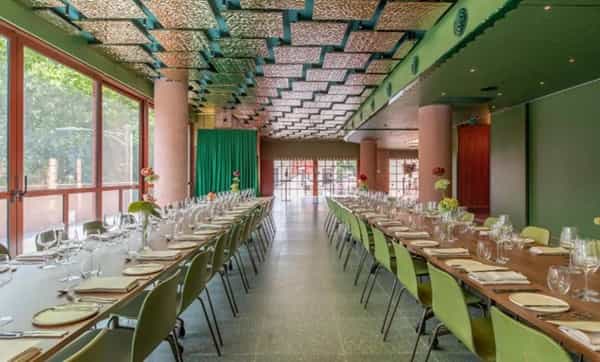
In an industry where a handshake can still close a deal faster than a dozen emails, the humble meeting has evolved into something far more theatrical, immersive spaces, sustainability credentials, loyalty perks, and just enough culinary theatre to keep delegates awake after lunch. If proof were needed that business events are no longer the quiet achievers of the travel sector, Accor provided it in abundance at AIME 2026, where the hotel heavyweight laid out a confident blueprint for the Pacific.
And it is not a modest one.
“Meetings and events are a cornerstone of our growth strategy in the Pacific,” said Adrian Williams, Chief Operating Officer for Accor in the Pacific region. “We are seeing strong, sustained demand from corporate and incentive planners who are looking for venues that go beyond traditional function spaces, places that inspire connection, creativity and impact. With ALL Accor Meetings & Events, we’ve embedded meetings and events into our broader loyalty ecosystem, recognising the pivotal role organisers play and ensuring their impact is rewarded well beyond the event itself.”
For seasoned observers of the hotel sector, this reads less like optimism and more like momentum.
Reinventing the modern conference address
Across Australia and New Zealand, Accor has been quietly refining its meetings portfolio, upgrading established properties while unveiling new venues designed to meet the expectations of a workforce that increasingly refuses to sit beneath fluorescent lighting.
Take Eden at Shadow Play Melbourne by Peppers, perched on Level 46 above Southbank. With panoramic skyline views and contemporary interiors, the venue accommodates up to 120 guests standing or 60 seated, a reminder that sometimes altitude alone can elevate a conversation.
Meanwhile, in Perth’s CBD, The Adnate Perth Art Series has introduced Alma Events by BAHA, a boutique venue where art, culture and culinary craft mingle comfortably with business agendas. Hosting 20 to 150 guests, the space is flooded with natural light and designed for flexibility, two attributes planners now regard as essential rather than decorative.
Further north, Novotel Sunshine Coast Resort is undergoing a substantial transformation, refreshing guest rooms while enhancing conference facilities. The upgrades reinforce the Sunshine Coast Convention Centre precinct as one of Australia’s premier coastal conference destinations, capable of hosting up to 1,400 delegates, large enough to matter, yet scenic enough to tempt attendance.
New openings, sharper appeal
Recent launches have only strengthened Accor’s hand.
Elysium Noosa Resort MGallery Collection positions itself as a refined coastal retreat for executive gatherings, offering light-filled meeting rooms, polished dining, and resort accommodation suited to leadership off-sites and luxury incentive programs.
Then there is The Brighton Hotel Sydney MGallery Collection, a waterfront landmark boasting 11 flexible event spaces, including two statement ballrooms. It is precisely the sort of venue that allows organisers to blend spectacle with strategy and perhaps justify the budget.
Western Sydney has not been overlooked either. Novotel Sydney Cabramatta introduces contemporary facilities for up to 650 delegates, broadening the region’s appeal as infrastructure and corporate presence continue to drift westward.
Behind the scenes, Accor has also been expanding its network through signings such as Mercure Sydney St Leonards, Saint Kilda Beach Hotel, Mantra Meridien Adelaide, Mantra Hobart Airport and Mantra Mount Gambier, each equipped with natural-light meeting spaces that quietly signal the end of the windowless boardroom era.
The pipeline points forward
If 2025 strengthened the foundation, 2026 appears poised to extend the skyline.
Mercure Melbourne La Trobe Street, opening in March, will deliver an intimate CBD event space tailored to smaller, high-value gatherings, the sort where decisions are made rather than merely discussed.
Across the Tasman, Pullman Hamilton will embody the brand’s blended-business philosophy, offering contemporary environments designed to support collaboration and modern working rhythms.
Yet perhaps the most intriguing evolution comes via Ennismore Accor’s lifestyle joint venture and, by most accounts, hospitality’s fastest-growing creative engine.
Lifestyle hotels step into the spotlight
Lifestyle brands have shifted from novelty to necessity, and Accor is leaning in.
The design-led Mondrian Gold Coast offers elevated meeting experiences, wellness facilities, and resort accommodation. Its Mondrian Ballroom seats up to 340 guests, proving that productivity and pleasure need not be mutually exclusive.
HYDE Melbourne Place injects cultural energy into the CBD with five dedicated venues crafted for creative gatherings, less corporate, more curated.
Then there is 25hours Hotel The Olympia Sydney, described as “Sydney’s cultural playground,” where heritage architecture meets playful, flexible spaces intended for workshops and unconventional assemblies. Expect fewer rigid agendas and more animated conversations.
Looking ahead, HYDE Perth, opening March 2026, will bring lifestyle-led events to Western Australia. Its Green Room, which seats up to 75 guests, is purpose-built for launches, receptions, and corporate occasions that favour personality over protocol.
Loyalty finally courts the organiser
For decades, loyalty programs largely ignored the individual responsible for organising the event, an oversight that Accor now appears determined to correct.
Through ALL Accor Meetings & Events, planners can earn Reward and Status points simply by registering at ALL.com and booking eligible events. Points do not expire provided there is at least one qualifying stay or event every 12 months, and they can be redeemed across future meetings, hotel stays and curated experiences.
There is also a timely incentive: the “Let’s Make It Rewarding” offer grants double Reward points on eligible meetings held and paid before 31 May 2026 across Asia Pacific, the Middle East and Africa, a practical nudge for organisers weighing their options.
More information is available at https://www.accorevents.com, where the group outlines its expanding portfolio.
Sustainability moves from promise to practice
If the modern delegate expects fast Wi-Fi and good coffee, they increasingly expect environmental responsibility as well.
Accor reports that more than 230 hotels, or 60 per cent of its Pacific network, are now eco-certified. Initiatives include waste reduction, energy-efficient venues, responsible sourcing and pathways for lower-impact events aligned with corporate ESG objectives.
“Planners are increasingly looking for partners who can help them meet their own ESG commitments without compromising on experience,” Williams said. “That is why we are embedding sustainability into how our venues operate and how events are delivered. From large convention centres to boutique lifestyle venues, we are focused on giving organisers practical, credible ways to host more responsible events.”
It is a pragmatic stance, less rhetoric, more operational detail and one that suggests sustainability has matured into a competitive differentiator rather than a marketing flourish.
A regional footprint with global intent
Accor’s Pacific portfolio now stretches from the Barossa Valley to Queenstown, encompassing leisure strongholds and corporate hubs alike. The group operates 23 international brands across the region, including Sofitel, Pullman, MGallery, Art Series, Swissôtel, Mövenpick, Grand Mercure, Peppers, Novotel, TRIBE, Mercure and ibis, alongside Ennismore’s SO/, Hyde, Mondrian and 25hours.
It is a breadth that gives planners both choice and consistency, a combination that tends to win repeat business.
The quiet rise of the experience economy
What emerges from Accor’s AIME showing is not merely a catalogue of new hotels, but a reflection of how business travel itself is changing. Delegates want inspiration, organisers want recognition, and companies want measurable impact, preferably delivered in settings that encourage creativity rather than compliance.
In other words, the meeting has become an experience.
For Accor, the strategy appears straightforward: invest in design, reward loyalty, embed sustainability, and ensure the venues themselves are compelling enough that attendance feels less like an obligation and more like an opportunity.
Not long ago, conferences were defined by beige carpets and lukewarm buffets. Today, they are just as likely to unfold beneath coastal sunsets or inside art-filled salons.
If Accor’s Pacific ambitions hold their course, the future of meetings may look rather less like business as usual and rather more like business worth travelling for.
by Susan Ng – (c) 2026.
Read Time: 6 minutes.
About the Writer.
 With the polish of an international hotel professional and the instincts of a born storyteller, Susan Ng learned hospitality where it truly lives behind reception desks, in banquet halls, beside linen carts. She understands that excellence isn’t announced; it’s felt, in the small, quiet gestures that linger long after checkout.
Away from the bustle, her curiosity found a new front desk: the blank page. Her blog, candid and gently wry, drew readers who recognised truth when they saw it. She wrote about grace and imperfection with the steady eye of someone who had lived both.
Today, at Global Travel Media, Susan brings that same warmth and insight to her stories. Expect writing that is polished, generous, and reassuring, like the perfect welcome after a long journey.











