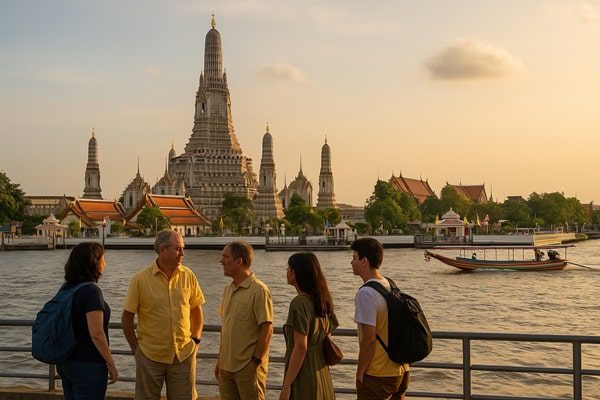
Whenever I land at Suvarnabhumi and hear the soft “sawasdee khrap” from an immigration officer who looks barely awake but still manages a smile, I think: Yes, this is home.
Say what you like about the global economy, the wars, the strikes, and the queues at Heathrow. Thailand still knows how to make you feel welcome. It’s the Kingdom’s greatest export.
A Nation That Breathes Tourism
Sunrise at the famous Maya Bay, Thailand
Tourism in Thailand isn’t a line on a balance sheet; it’s a heartbeat. It keeps families fed, children educated, and entire villages alive. It’s everyone’s business and pride, from the smiling boatman on the Chao Phraya to the mango-seller outside a Chiang Mai temple.
Roughly 12 per cent of Thailand’s GDP comes from tourism, which means four and a half million livelihoods depend on the steady rhythm of visitors. That’s not small talk; that’s survival.
Even after a few chaotic years that made the industry dizzy, Thailand’s pulse is steady again: 26 million visitors have arrived this year and counting.
Resilience, Thy Name Is Thailand
If resilience were a national sport, Thailand would be a world champion. Floods, coups, pandemics, pick your crisis. The country’s seen it, smiled, and opened a new café afterwards.
Inflation? Still smiling.
High fuel prices? Mai pen rai.
Airline strikes in Europe? More mango sticky rice for us, then.
The thing about Thailand is it refuses to mope. It finds joy even in the waiting.
More Than Numbers – It’s People
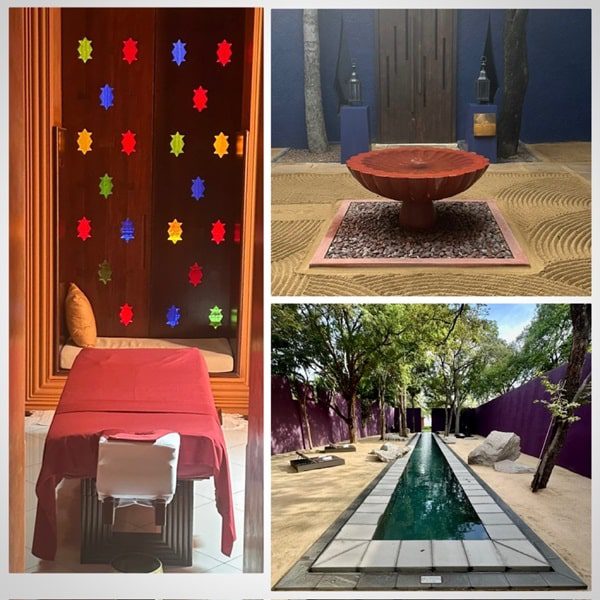
One of Thailand’s finest: The Barai Spa at the Hyatt Regency Hua Hin – Credit AJ Wood
I once met a fisherman in Krabi who told me, in perfect English, “Tourism is our school, our hospital, our teacher.” I thought that was poetic. But it’s also true.
Every baht spent on a pad thai in a backstreet stall, every massage on a beach, every market trinket bought in good humour flows somewhere meaningful.
Tourism here is a living ecosystem, not an industry. When it’s strong, everyone thrives. When it struggles, the whole nation feels the pinch.
The Changing Face of Travel
Of course, travel is changing. Gone are the days when visitors came for the cheap cocktails and elephant selfies (thank heavens). Now, they come for quiet corners, rice terraces, and cooking classes with aunties who laugh louder than they cook.
The Tourism Authority of Thailand (TAT) has pivoted cleverly, encouraging community tourism, eco-lodges, and sustainable farm-to-table dining. The goal? Keep tourism money in local pockets, not offshore accounts.
It’s no longer about filling rooms. It’s about filling hearts.
Sustainability That Feels Sincere

I’ve seen plenty of countries talk a big sustainability game, but few play it like Thailand. Here, the eco trend isn’t corporate, it’s cultural.
Villages plant mangroves together. Monks collect plastic bottles to fund school roofs. Resorts run on solar panels but still hand you a lemongrass welcome drink that tastes like sunshine.
And unlike the glossy brochures elsewhere, the sincerity here is genuine. Thais don’t brag about being kind to nature; they are.
Markets Old and New
Visitors are returning from everywhere. China’s back, and Malaysia, too. The Europeans, ever loyal to their Thai beach holidays, have rediscovered their flip-flops. And there’s a growing Middle Eastern interest in weddings, wellness, and luxury resorts that offer privacy with soul.
Meanwhile, domestic tourism is blooming. Thai travellers are rediscovering their heritage with renewed affection, enjoying weekend escapes to Ayutthaya, road trips to Nan, and temple hopping in the North.
It’s as though the country fell in love with itself again.
Challenges, Certainly – But Hope Always Wins

The brand new Pattaya Marriott Resort and Spa. – Credit AJ Wood
Inflation bites, the baht wobbles, and the climate needs care. None of that is ignored here. The government’s policies now include green hotel certification, more innovative digital marketing, visa facilitation, and regional cooperation through ASEAN.
But the real story isn’t in policy papers, it’s in the villages, beaches, and mountains where people keep going, smiling, and hoping.
Hope, in Thailand, is a full-time profession.
Why It Works
Thailand works because it feels. It’s never indifferent. You can land tired, heartbroken, broke, or burnt out; somehow, this country will restore you.
It could be a street vendor’s grin, a plate of fried rice handed over like a gift, or the gentle sound of temple bells across the river. These moments remind you: you’re human again.
And that, my friends, is the quiet genius of Thai tourism.
When All Is Said and Smiled
So yes, numbers rise, currencies wobble, and forecasts get rewritten. But Thailand carries on, its tuk-tuks still honking at sunset, its beaches humming, its people smiling as though the world hasn’t gone slightly mad.
Tourism here is more than an economic pulse. It’s a spirit. And spirits like this don’t fade easily.
Because in Thailand, the sky isn’t the limit. It’s just another shade of blue waiting to be admired.