

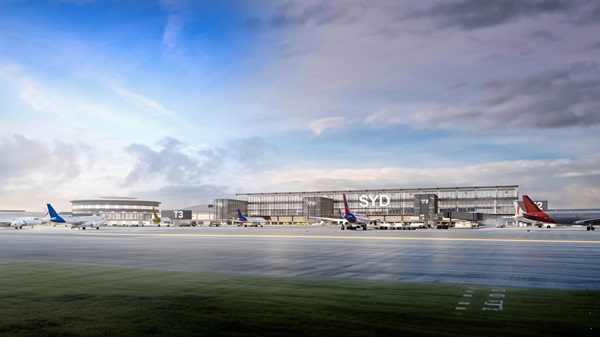
Sydney Airport, the great southern gateway through which the nation comes and goes, has unveiled its preliminary draft Master Plan 2045, and it’s nothing short of a statement of intent. If you think the airport is already busy, buckle up. The plan foresees 72 million passengers annually, $70 billion in annual economic impact, and more than 105,000 direct jobs by 2045. Yes, the numbers are as vast as the airport’s ambitions.
The vision for 2045
By the middle of this century, Sydney Airport expects passenger volumes to swell by 75 per cent from today’s levels. International traffic is forecast to climb to 36.4 million passengers annually, while domestic and regional volumes are tipped to 36.2 million. That means a perfectly even split: half of all Sydney Airport passengers will be travelling internationally.
For the freight world, the Master Plan is equally ambitious. Airfreight volumes are expected to more than double, reaching 1.4 million tonnes annually. Sydney Airport, it seems, is not merely preparing for tomorrow’s travellers but also tomorrow’s exporters and importers.
Jobs, jobs and more jobs
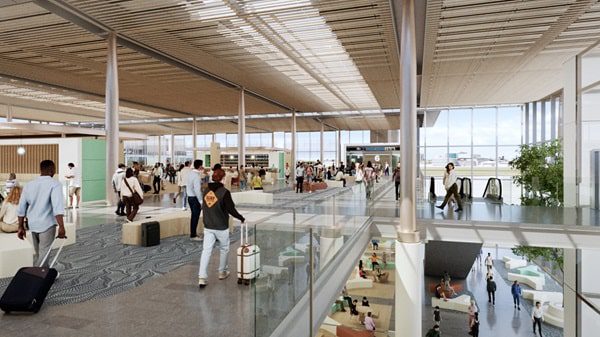
Terminal Expansion internal view
Aviation has long been a great employment multiplier, and Sydney’s latest forecast continues the tradition. The airport’s direct workforce is projected to top 105,000 by 2045, growing by around 1,500 jobs yearly, with much of this growth concentrated in local communities around Mascot. Factor in indirect employment through freight, tourism, and trade, and the tally is expected to soar to 560,000 jobs. That’s half a million livelihoods connected to one airport.
A terminal expansion of Olympic proportions
At the heart of the Master Plan lies what is billed as the most significant terminal expansion since the Sydney Olympics. The proposal would link the existing T2 and T3 domestic terminals, creating a vast new precinct that brings regional, domestic, and international flights together under one roof.
The expansion promises up to 12 new international gates and two additional ones at the existing T1 International Terminal. For passengers, it’s a recipe for smoother transfers, faster boarding, and fewer mad dashes between terminals. For airlines, it offers greater efficiency and capacity. And for the rest of us? Less of the familiar shuffle between terminals when a regional service connects with an international long-haul.

Terminal expansion – aerial view
Sydney Airport CEO Scott Charlton didn’t mince his words when launching the plan:
“We’re pleased to release our preliminary draft Master Plan 2045 and look forward to receiving feedback from our local community, airlines and precinct partners, government at all levels everyone who has a stake in Sydney Airport’s sustainable growth and development.
“When Sydney Airport grows, so does business, trade, tourism and jobs. This plan is about building the future of Australia’s gateway and ensuring we are ready to play our part in NSW’s ambitious visitor economy strategy.
“The proposed major terminal expansion joining the T2 and T3 Terminals will be the most significant development at Sydney Airport since the Olympics, and will unlock greater capacity across all terminals, more efficient use of our runways, and ultimately get passengers from the ground and into the air more quickly.
“We are conscious that growth also brings responsibility. We’re committed to managing aircraft noise, taking steps to reduce our emissions footprint, and working closely with residents, councils and government to make sure the benefits of growth are shared.”
Growth with responsibility
In today’s climate-conscious world, no major infrastructure project can advance without an environmental strategy, and Sydney Airport has duly delivered. Embedded in the Master Plan is a five-year Airport Environment Strategy, outlining commitments to reduce emissions, strengthen climate resilience, and operate more sustainably.
Noise remains a perennial issue for surrounding suburbs, and the airport says it will continue to work with councils, residents, and the government on effective management. The airport insists that growth will not come at the expense of its neighbours’ sleep.
Consultation now open
The preliminary draft of the Master Plan is not set in stone. It is now on public exhibition until 12 December 2025, and Sydneysiders and airlines, government bodies, and industry partners are invited to have their say. The plan can be downloaded at www.masterplan2045.com.au.
All feedback will be considered before the final plan is submitted to the federal Minister for Infrastructure, Transport, Regional Development and Local Government.
Why it matters
For all its boldness, the Master Plan isn’t just about bigger numbers. It’s about the airport’s role as Australia’s front door and a critical driver of economic growth. Each international gate, each additional tonne of freight, and each new job will ripple through the economy, shaping Sydney’s standing as a global city.
Sydney Airport’s last great leap forward came in 2000, when the world’s eyes turned to Sydney for the Olympics. Twenty-five years on, the stage is being set again. Only this time, the prize isn’t a two-week sporting event. It’s the long-term future of Australia’s aviation hub.
By Prae Lee











