
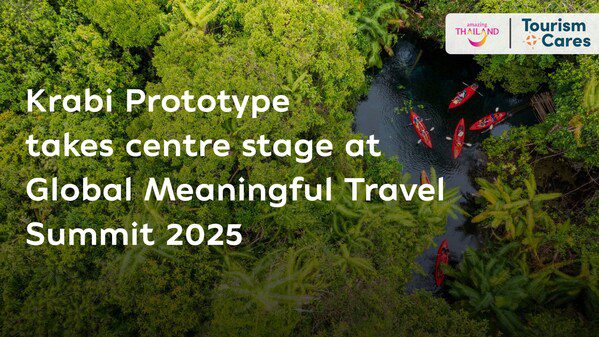
If you were wondering what Thailand would trot out when hosting the Global Meaningful Travel Summit for the first time, the answer is as simple as it is spectacular: Krabi. Yes, that postcard-perfect province of limestone karsts, mangroves, and waters so blue they look Photoshopped.
But this wasn’t just another “aren’t we gorgeous” tourism pitch. No, this was Thailand flexing its muscles with something it calls the Krabi Prototype, a model for sustainable tourism that, if the Tourism Authority of Thailand (TAT) has its way, will one day stretch across the kingdom.
In true Thai fashion, the showcase was part theatre, part earnestness, and part “please take us seriously; we really are doing the sustainability thing.”
Enter the prototype
For years, Krabi has been famous for Maya Bay (The Beach, remember?), Railay Beach (climbers still dream of it), and Phi Phi Islands (Instagram’s favourite). But fame comes at a cost, and Thailand has copped its fair share of criticism for letting paradise get trampled.
Cue the Krabi Prototype: a determined effort to protect nature and culture while welcoming boatloads of tourists. It’s Thailand saying, “Yes, we like visitors. But no, you can’t turn our beaches into a jet-ski car park anymore.”
A governor with conviction
TAT Governor Thapanee Kiatphaibool wasted no time spelling it out:
“Krabi represents the balance we aspire to achieve across Thailand, where natural beauty and local culture are preserved while communities benefit from tourism. Hosting the Global Meaningful Travel Summit here demonstrates to the world that sustainable tourism is not just a vision but a reality that can be experienced today. Through Krabi Prototype, we show that sustainable travel is possible, practical, and rewarding for all.”
In other words: this isn’t greenwashing. It’s tangible, measurable, and happening now.
From PowerPoint to paddies
Summit delegates were spared the usual death-by-PowerPoint. Instead, they were whisked into Krabi’s villages to see the talk turned into action. At Laem Sak and Ban Nai Nang, locals showed off projects like waste management, batik workshops, stingless beekeeping, and tours led by people living there.
You could say it was tourism’s answer to “farm to table,” except this was “village to visitor,” with grassroots running the show.
The eco-stats
Krabi isn’t just waving around a few recycled straws and calling it a day. The numbers are stacking up:
-
16 operators have bagged Thailand Tourism Awards.
-
119 businesses carry STAR certification.
-
65 CF-Hotels are slashing carbon footprints with solar, clean energy, and local sourcing.
That’s not window-dressing. That’s infrastructure.
Villages take the lead.
City bureaucrats don’t dictate Krabi’s sustainability push; it’s led by eight villages, including Koh Klang and Nai Nang. Long-tail boat tours here aren’t gimmicks; they’re lifelines for families. Jet skis? Forget it. Locals banned them years ago. Plastic chairs cluttering the beaches? Not on their watch.
These communities have been quietly writing a sustainability manifesto for over a decade, and now the world’s taking notice.
More than pretty beaches
Lest you think Krabi is all scenery, it’s Thailand’s second-largest palm oil producer, grows Musang King durians that could bankrupt you, and keeps Hollywood happy (recently doubling as a set for Jurassic World: Rebirth).
Agriculture and tourism aren’t competing here; they’re interwoven. You sip a Krabi-grown robusta coffee in the morning, then snorkel over coral reefs in the afternoon. That’s not bad synergy.
The international angle
Partnering with Tourism Cares, TAT has plugged Krabi into a global network of 160+ sustainable tourism partners. Eleven Krabi operators are now part of that club, giving them a ticket into the US market, where “meaningful travel” is more than just a buzzword.
For Thailand, this is smart. Americans love a feel-good story, and Krabi delivers one that can be Instagrammed without guilt.
The final word
As the summit wound down, Governor Thapanee summed it up neatly:
“The Global Meaningful Travel Summit in Krabi is more than a meeting—it is a milestone. By bringing the Krabi Prototype to centre stage, it has given the world a glimpse of Thailand’s future, where tourism safeguards our resources, strengthens our communities, and delivers meaningful value to travellers. Krabi is our prototype, and our goal is to scale this model across the country so that Thailand remains at the forefront of sustainable tourism.”
Strong words. But this time, Thailand might actually mean them.
By Kanda Limw