
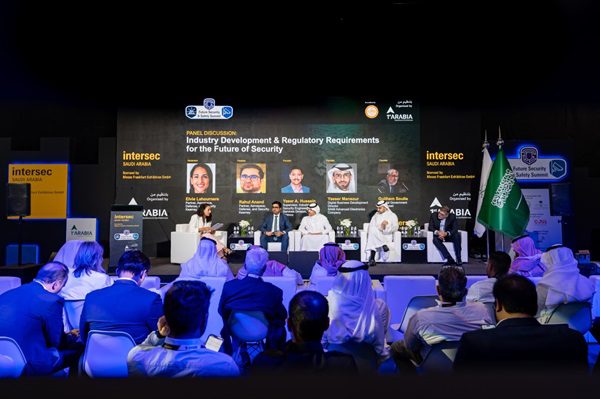
Riyadh is a city in a hurry. As Saudi Arabia pushes full throttle towards Vision 2030, its airports are swelling, its giga projects are rising, and its hotels are filling with a tide of international visitors who want their falafel served hot and their security invisible. Behind the scenes, a quiet revolution is taking shape not with steel gates and grim-faced guards, but with AI, drones, biometrics and the kind of cultural nuance you’d expect when the world’s most ambitious tourism experiment is underway.
This September, Riyadh’s International Convention and Exhibition Centre (RICEC) will again play host to Intersec Saudi Arabia 2025, from 29 September to 1 October. Among the headline acts at the Future Security Summit will be Tawfeeq Alsadoon, Group Head of Security at Red Sea Global, who protects some of the Kingdom’s most valuable hospitality assets.
And in a country that welcomed a staggering 116 million visitors in 2024, according to the Ministry of Tourism, you can bet that keeping everyone safe while maintaining the warm Arabian welcome is no small feat.
AI at the check-in, drones at the beach
Alsadoon’s keynote, pointedly titled “Securing the Tourism Renaissance: Integrated Physical Security Solutions for the Hospitality Sector,” uses strong language.
“In KSA’s rapidly expanding hospitality sector, particularly within Vision 2030 mega-projects like NEOM, the Red Sea Project, Amaala, AlUla, and Diriyah, technology is not just a supporting tool but a critical enabler of proactive and intelligent security,” he said.
Put another way: the days when a sleepy guard with a clipboard could manage a luxury resort are gone. From AI-powered video analytics that spot suspicious behaviour before it escalates, to drones patrolling coastal perimeters, and biometric access systems that decide who gets into the VIP suite, the future of Saudi hospitality security looks more like Silicon Valley than a fortress.
The invisible hand of safety
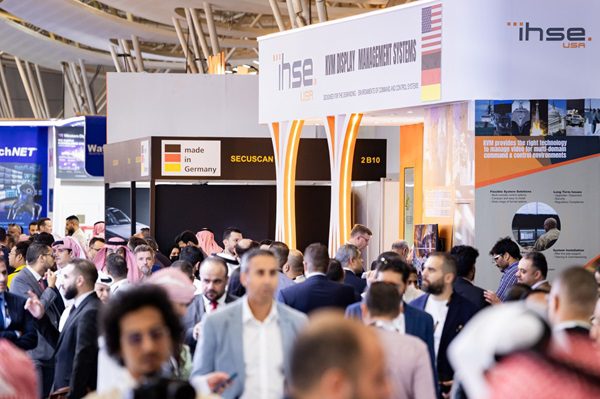
Intersec KSA – 2024
Yet Alsadoon quickly reminds us that technology is not the whole story.
“Technology alone cannot protect guests. The true measure of security in hospitality is its invisibility, ensuring that people feel comfortable, welcomed, and safe without ever sensing they are under surveillance,” he explained.
It’s a point worth savouring. Guests don’t check into a Red Sea resort hoping to admire the CCTV feeds; they want to sip their mocktail while watching the sunset, blissfully unaware that drones are keeping an eye on the shoreline. In Alsadoon’s world, security is not about creating barriers but dissolving them, a human-centred model where cultural sensitivity, empathy, and discretion are just as valuable as any algorithm.
From firefighting to foresight
The Intersec programme suggests that Saudi Arabia is not just firefighting (though it will do that, too, with the concurrent Fire Protection Summit) but actively shaping a new security ecosystem. Alsadoon says future hospitality security models will be sustainable, intelligent, and experience-focused.
Think digital twins that simulate a resort’s vulnerabilities before they’re built, integrated command centres that coordinate responses across vast developments, and predictive analytics that anticipate risks before they unfold. In other words, the move is from reactive defence to predictive foresight.
And it’s not just hotels and resorts in the spotlight. The second day of the Summit will explore aviation resilience in an expanding airspace network. At the same time, the entertainment industry has its own deep dive into “Designing for Experience and Safety: Embedding Security into the DNA of Modern Entertainment Venues.” If anyone thought that stage lighting was the most complex part of a concert, they’re about to learn otherwise.
Big names, big ambitions
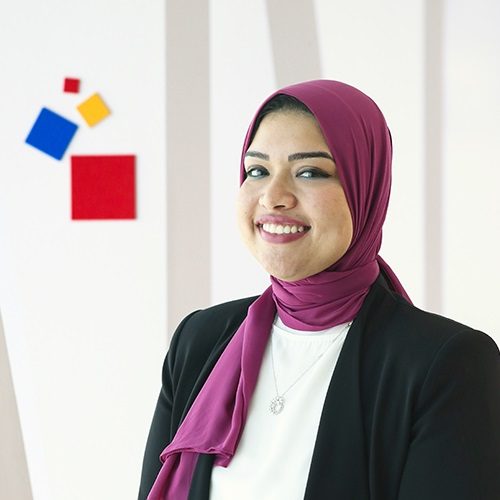
Riham Sedik, Exhibition Director, Intersec-KSA
As if to underscore the global heft of the event, Andrey Reis, FIFA’s Director of Security Operations, will deliver a keynote on security and risk management because if there’s one organisation that knows a thing or two about handling big crowds and bigger expectations, it’s FIFA.
Meanwhile, Bilal Al Barmawi, CEO and Founder of 1st Arabia Trade Shows & Conferences, the organiser of Intersec, says the event is more than just a trade show:
“Intersec Saudi Arabia is where global expertise meets local ambition. This year’s Future Security Summit will showcase the Kingdom’s commitment to innovation, resilience, and human-centric security models that underpin its transformation into a world-leading tourism and business destination.”
The numbers tell the story.
This will be the seventh edition of Intersec Saudi Arabia, organised by 1st Arabia and licensed by Messe Frankfurt. Covering five product categories: Commercial and Perimeter Security, Cybersecurity, Homeland Security and Policing, Fire and Rescue, and Safety and Health, the exhibition will welcome more than 27,000 industry leaders, policymakers, and buyers across a sprawling 30,000 sqm show floor.
As Riham Sedik, Exhibition Director – Intersec Saudi Arabia at Messe Frankfurt Middle East, neatly put it:
“Each edition of Intersec Saudi Arabia reflects the rapid pace of transformation in the country and the wider region, offering unmatched opportunities for knowledge-sharing, collaboration, and business growth. We are delighted to welcome once again leading voices from across the security and fire safety spectrum, safeguarding the Kingdom’s future.”
Saudi Arabia’s balancing act
At its core, Saudi Arabia’s hospitality challenge is a balancing act: ensuring the Kingdom remains open, inviting, and culturally authentic, while delivering the kind of security infrastructure that reassures international travellers, investors, and partners.
It seems the recipe is a fusion of old-world courtesy and new-world technology. In practice, that means a concierge who greets you by name and a biometric system that ensures only you can access your suite. It implies a hotel designed to reflect traditional Arabian warmth, while an invisible layer of AI ensures the warmth doesn’t come with unwelcome surprises.
A tourism renaissance, securely staged
The stakes could not be higher as the Kingdom powers ahead with NEOM’s futuristic cityscapes, the Red Sea’s luxury resorts, and Diriyah’s cultural revival. Every misstep is global news. But if Alsadoon and his peers have their way, every guest’s story will be about the experience — not the security detail that made it possible.
In that sense, Intersec Saudi Arabia is more than a conference. It’s a rehearsal for the next act of Saudi tourism: a stage where technology, culture, and security co-star in the performance of a lifetime.
In the end, good hospitality is like good security; you only notice it when it goes wrong.
By Jason Smith