


With the continuous recovery of China’s inbound tourism market, “Travel to China” is becoming a new choice for global travelers. Driven by multiple favorable factors such as China’s visa-free policy, the footprint of international tourists has extended from traditional gateway cities like Beijing and Shanghai to cultural cities such as Quanzhou and Xi’an, as well as unique destinations like Shantou and Zhangjiajie.
According to Hilton, as of June this year, the proportion of inbound guests in China had fully surpassed that of 2024, demonstrating the sustained attractiveness of the Chinese market to international travelers. To better serve its global guests, Hilton has launched a one-stop service covering multilingual support, cultural experiences, and convenient travel, enabling every traveler to easily enjoy their China journey.
The latest statistics from Beijing, Shanghai, and other cities further confirm this positive trend: As of August 13, the number of foreign nationals entering through Beijing ports reached 1.883 million, a year-on-year increase of 36.6%, while Shanghai received 4.158 million inbound tourists in the first half of this year, a year-on-year increase of 37.73%. Among them, the number of South Korean tourists reached 423,000, a surge of 130.7% year on year, nearly matching the total for the entire previous year and ranking first among inbound source countries.
Technology Empowerment Breaks Language Barriers
To address the language barriers faced by international tourists traveling in China, Hilton has deepened its strategic cooperation with DiDi. In July, an English version of the ride-hailing guide service was launched in Shanghai hotels under Hilton, supporting a full English interface, international credit card binding and payment, real-time bilingual translation between drivers and passengers, and 24-hour English customer service. The service now covers 19 key inbound cities across China.
Simultaneously, Hilton has introduced AI translation technology, upgrading its reservation system to support over 20 languages. It is helping guests easily complete bookings, check-in, concierge inquiries, and local travel needs, thereby enhancing convenience for global users.
Wendy Huang, Senior Vice President and Commercial Director, Hilton Greater China and Mongolia, said: “We are always committed to creating more convenient and comfortable travel experiences for inbound tourists through innovative cooperation and technology empowerment. The deepened cooperation with DiDi is an extension of this philosophy. We will continue to explore more digital solutions, allowing technological innovation to inject new vitality into hotel services.”
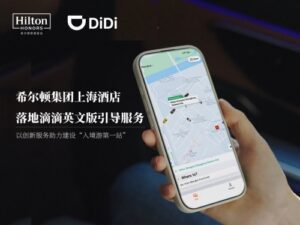
Hilton has provided English version of the DiDi guide service in 19 key inbound cities across China
Multilingual Services Create New Urban Experiences
To meet the needs of international guests for in-depth exploration from the moment they arrive, Hilton’s hotels have meticulously developed a series of city guides while enhancing multilingual services.
Waldorf Astoria Shanghai on the Bund offers one-stop services including airport transfers, translation assistance, ticket booking, and currency exchange, as well as customized itineraries such as night cruises on the Huangpu River and one-day Shanghai tours.
Hilton Shanghai City Center, in addition to introducing bilingual reception, has specially added Japanese-language reception and thoughtfully introduced a multilingual version of the “City in an Hour Exploration Guide,” featuring four themed tour routes: energetic cycling, boat sightseeing, walking excursions, and scenic bus tours. The guide recommends local dining and cultural highlights around the hotel, allowing guests to experience the diverse charm of the city.
Conrad Shanghai has prepared welcome letters in seven languages and bilingual city stroll maps for guests, making every international traveler feel at home.
As a key gateway to the Hongqiao transport hub, Hilton Shanghai Hongqiao International Airport offers multilingual versions of hotel information cards and surrounding area guides in English, Japanese, Korean, and more, helping guests embark on their journeys with ease.
Benny Lee, Vice President of Operations for East China, Hilton Greater China and Mongolia, said: “Taking Shanghai as an example, we are redefining the experiential value of inbound cities for international travelers through innovative hotel services. From multilingual guides to unique exploration routes, these services not only resolve communication challenges upon arrival in China but also allow guests to discover the unique charm of Shanghai as a cultural experience destination. We hope international tourists will extend their stays and deepen their experiences, turning gateway cities into starting points for in-depth exploration.”
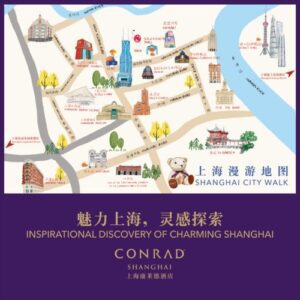
Conrad Shanghai has prepared welcome letters in seven languages and city stroll maps
Helping Guests Immerse Themselves in Cultural Cities
Current travel patterns of international tourists in China are undergoing significant changes, with in-depth cultural experiences gradually replacing traditional sightseeing models.
Quanzhou, a World Cultural Heritage city, is a perfect example. This ancient city, known as “the World Maritime Trade Center of Song and Yuan China,” saw a 135.3% increase in inbound tourists in the first half of 2025, becoming an emerging popular destination.
Hilton Quanzhou Riverside has deeply integrated local traditions, offering a series of customized services. In addition to standard bilingual reception, it innovatively provides a Xunpu (蟳埔) women’s cultural heritage welcome ceremony, allowing guests to experience the local customs of Southern Fujian through reservation. Furthermore, to facilitate guests’ in-depth exploration of Quanzhou’s culture, the hotel has prepared a bilingual Quanzhou travel guide covering cultural experiences, local cuisine, and English-speaking tour guide resources to fully meet international tourists’ desire to explore the city’s ambiance, which has been described as “half bustling life, half divine tranquility.”
Meanwhile, Conrad Beijing introduced a bilingual hand-drawn “Explore Beijing” map this month. It not only includes iconic attractions like the Forbidden City and the Great Wall, but also highlights in-depth cultural experiences such as Guozijian (国子监), the highest educational institution in ancient China, and custom qipao tailoring. The hotel’s concierge can arrange tricycle rickshaw rides for international tourists to travel through hutongs and alleys, allowing them to experience the life and cultural charm of old Beijing in open-air vehicles.
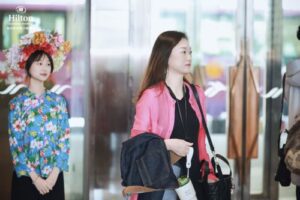
Xunpu (蟳埔) women’s cultural heritage welcome ceremony
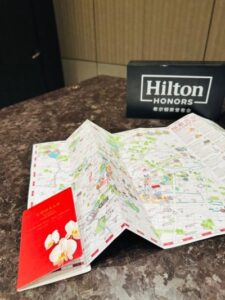
Conrad Beijing introduced a bilingual hand-drawn “Explore Beijing” map
Comprehensive Concierge Services Ensure a Worry-Free Journey
Hilton continues to upgrade its “one-stop” accommodation services, providing comprehensive support for international travelers from check-in to check-out.
Guests staying at Waldorf Astoria Beijing can enjoy bilingual private concierge services covering various needs such as attraction ticket bookings, car arrangements, and local cultural exploration, allowing guests to enjoy the urban style amidst the historical charm.
Driven by the continuous growth of inbound tourists in Beijing and the comprehensive upgrade of hotel services, Hilton Beijing Wangfujing not only offers multilingual support to assist guests with check-in, surrounding area recommendations, transportation connections, and attraction ticket purchases, but also specially introduced a feature set menu blending Beijing tastes in its Chinese restaurant, allowing guests to easily savor authentic Beijing cuisine.
In Shenzhen, Hilton has further expanded its service scenarios: Conrad Shenzhen can connect international guests with professional translation resources for medical or business needs; and Hilton Shenzhen Shekou Nanhai, located near Hong Kong and Macao, specially introduced a “butler-style” service covering attraction bookings, restaurant recommendations, SIM card processing, and more. It innovatively enables direct billing of Hong Kong and Macao ferry tickets to room accounts for convenient payment. Additionally, the hotel provides complimentary shuttle buses to the Shekou Cruise Center on a 24/7 basis and offers cross-border luxury car services (including bilingual drivers and in-car Wi-Fi), ensuring seamless and worry-free cross-border travel for international guests.











