f you’ve ever wondered how to turn a desert into a destination, the answer these days seems to be: build a stadium, stage a festival, and invite the world to come and pay handsomely for the privilege of clapping.
This was the mood music at Arabian Travel Market (ATM) 2025, where the chatter wasn’t just about flights and hotels but about mega-events — football finals, Formula One races, music festivals, global conferences — the kind of extravaganzas that make accountants break into smiles and tourism ministers into poetry.
The numbers alone tell the story: the GCC’s event and exhibition market is on track to reach US$827 million by 2029, with steady annual growth of nearly 4%. Not bad for a region that, just a generation ago, was better known for camel caravans than corporate conferences.
From Doha to Dubai and Beyond
The Gulf’s love affair with big-ticket events is no fling. It’s a carefully orchestrated romance with the global audience, and the courtship is paying off.
First came FIFA World Cup Qatar 2022, which proved that a tiny country with a serious budget could host the world’s biggest sporting spectacle — air-conditioning the stadiums while they were at it. Then came Expo 2020 Dubai, which turned a pandemic-delayed show into a dazzling reminder that this region knows how to put on a party.
And looming on the horizon? Saudi Arabia’s 2034 World Cup is already being polished as the next centrepiece in the Gulf’s showcase of ambition.
The Voices Behind the Curtain
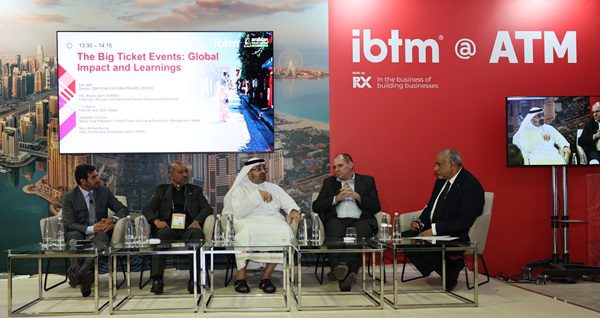
On stage at ATM, a panel of industry grandees took turns explaining why mega-events are not just “nice-to-have” but central to the Middle East’s tourism script.
H.E. Khalid Jassim Al Midfa, Chairman of the Sharjah Commerce and Tourism Development Authority, put it plainly:
“Big-ticket events provide a destination with an opportunity to establish brand positioning and exposure in a competitive global environment. These events play a vital role in supporting broader government objectives, but it is essential to invest in the right product for your destination.”
Translation: Don’t just build shiny things, make the right ones.
Sebastien Doussin, Senior Vice President at dnata, chimed in with a nod to the Abu Dhabi Grand Prix, international golf tournaments, and even the arrival of NBA games in the UAE. The message? If you build it (and livestream it), they will come.
And technology, Doussin reminded us, has made it all smoother:
“All of the ticketing for the FIFA World Cup in Qatar was completely digital through the official event app, offering flexibility and ease of use. Ultimately, technology enables an event to become more seamless, easier and enjoyable.”
Meanwhile, Noor Ahmad Hamid, CEO of PATA, urged everyone not to forget that “big-ticket” doesn’t have to mean just sports and expos. He pointed out that Bangkok’s weekly K-pop concerts keep tourists glued to their hotel rooms for extra nights, proving that screaming fans can be a tourism strategy too.
Bleisure: When the Boardroom Meets the Ballroom
The ATM Travel Trends Report threw another curveball into the conversation: half of industry experts say leisure events are the number one opportunity for tourism growth.
And why not? The pandemic taught us many things, not least that people will pay good money to be entertained in person. Add the rise of remote work, flexible visas, and the curious invention of “bleisure” travel, and suddenly business trips come with a side order of concerts, football matches, or festivals.
Global business travel spending hit US$1.4 trillion in 2024 and is expected to hit US$2 trillion by 2030. The Middle East, sitting conveniently at the crossroads of East and West with a penchant for shiny airports, is poised to nudge its market share upwards — from a modest 2.5% today to over 3% by the decade’s end.
That may not sound like much, but it’s a slice worth fighting for in trillion-dollar terms.
Diversification in Action
Let’s be blunt: behind the fireworks and festivities, there’s a serious strategy at work. Oil may still grease the wheels of Gulf economies, but governments know they can’t pin their futures on hydrocarbons forever. Mega-events are the horse pulling the diversification cart.
Danielle Curtis, Exhibition Director ME at ATM, captured the ambition neatly:
“As big-ticket events continue to gain global prominence, their role in shaping the future of tourism, driving economic diversification and enhancing international reputation has never been more evident. The Middle East, with its strategic vision, world-class infrastructure and focus on innovation, is well-positioned to lead the next era of global event tourism.”
Translation: there’s more at stake than bragging rights. This is about identity, reputation, and the small matter of GDP.
Curtain Up on IBTM@ATM 2026
And if you think the region will rest on its laurels, think again. The spotlight has shifted to IBTM@ATM 2026, slated for 4–7 May at Dubai World Trade Centre.
This won’t be your average trade fair. Hall 3 will transform into a buzzing bazaar of business events — Professional Conference Organisers (PCOs), international associations, hosted buyers — all mingling in an atmosphere that promises more networking than a LinkedIn convention.
Expect the IBTM Stage to deliver heavyweight debate, industry insights, and possibly the odd PowerPoint slide dramatic enough to warrant a standing ovation.
The Final Word
If the world’s stage is the theatre, the Middle East has stopped auditioning and taken the lead role. From Doha’s stadiums to Dubai’s expo halls and Riyadh’s grand ambitions, the curtain has risen on an era where mega-events aren’t sideshows, they’re centre stage.
The message is clear: book your seat, polish your credentials, and don’t be late. Because in this part of the world, the show has only just begun.
By Jason Smith