
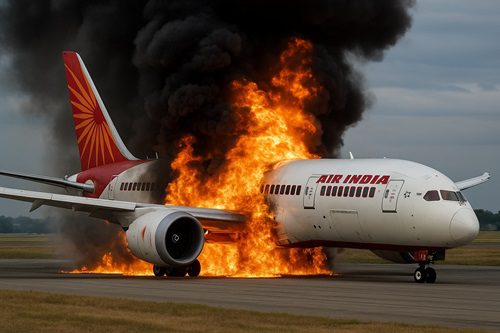
 The aviation world, which usually prides itself on flying through clear skies, is suddenly navigating a central storm front. The tragic crash of Air India flight AI171 on 12 June 2025 has not only left an unfathomable void for 241 families. Still, it has also sent a seismic jolt through the global aviation reinsurance market. It’s not just a humanitarian catastrophe—it’s an insurance earthquake.
This was no ordinary plane, mind you. The ill-fated aircraft was a Boeing 787-8 Dreamliner, that so-called paragon of 21st-century aviation safety. Until now, it had managed to sidestep the fatal crash column in the record books. No longer. As the wreckage smoulders, so too does the reinsurance landscape.
According to London-based data oracle GlobalData, this is a black swan event—only it’s not paddling quietly down the insurance creek. It’s flapping about like a pelican in a panic, upending premium structures and sending actuaries into existential crisis mode.
“The crash could singlehandedly exceed India’s entire annual domestic aviation insurance premium,” says Swarup Kumar Sahoo, Senior Insurance Analyst at GlobalData. “That premium stood at US$127.8 million in 2023. The payout from this single event might burst right through it—and that’s before we get to the legal bill.”
And where does the lion’s share of that premium risk lie? Not in India, surprisingly, but with the global reinsurance bigwigs—Swiss Re, Munich Re, and the rest of the usual suspects.
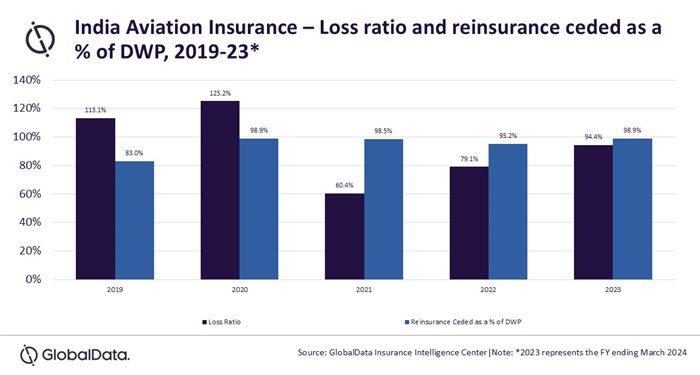
As it turns out, over 95% of India’s aviation risk is parcelled off to international reinsurers like party favours at a royal wedding. That might have seemed clever during peacetime. But now, with a Dreamliner-sized hole in the ground, reinsurers are staring down the barrel of a US$200 million payout, complete with bells, whistles, and liability clauses courtesy of the Montreal Convention.
Tata AIG and New India Assurance, the two Indian insurers involved, are relatively shielded—only 1.1% and 1% of their total premiums are aviation-related, and most of that has been cheerfully offloaded to the reinsurers abroad. As for GIC Re, India’s reinsurance behemoth, it’s carrying around 5% of the load. Hardly ruinous, but certainly more than enough to induce indigestion.
This, says GlobalData, is a grim extension of an already patchy insurance track record in India’s aviation sector. From busted jetliners to battered fighter planes, the Indian skies have been rather unkind to underwriters in recent years. Between 2016 and 2020, claims were bleeding faster than an open-air cabin door.
And the timing, as always, couldn’t be worse. Just as reinsurers were beginning to loosen the purse strings after the pandemic-era squeeze, tentatively, along comes a Dreamliner crash to remind everyone why actuarial tables exist.
The potential grounding of the entire Boeing 787-8 fleet, now being considered by Indian aviation authorities, could further complicate matters. “Grounded planes don’t earn money—but they certainly claim it,” one senior reinsurance executive was overheard muttering into their post-crisis cognac. Business interruption claims are expected to surge, hitting insurers’ profitability like a crosswind on final approach.
Sahoo doesn’t mince words about the road ahead: “Reinsurers are expected to reassess risks associated with wide-body aircraft, recalibrate pricing models, and impose stricter terms.”
In other words, if you’re in the business of insuring aircraft, buckle up—the turbulence is just beginning.
The 2026 renewal season for aviation reinsurance policies, already expected to be choppy, now looks positively volcanic. “This will accelerate the withdrawal of marginal capacity,” says Sahoo. Translation: reinsurers with cold feet will step away from the table, and those that remain will demand a steeper price for their chips.
This hardening of the market is a throwback to the period after 9/11, when reinsurers dramatically reassessed their appetite for aviation risk. Back then, it was terrorism that triggered the rethink. Now, it’s technology, reliability, and perhaps, a touch of hubris.
What once was considered a mechanical marvel—the 787 Dreamliner—is now subject to nervous glances and twitchy underwriters.
In the grand tradition of aviation insurance, shaped by each crash and court ruling like the grooves on a vinyl record, this latest disaster has already started rewriting the script.
And if there’s one thing we’ve learnt from history, it’s that when a single accident reshapes the premiums of an entire planet, the pen that rewrites those numbers is always held by reinsurers—and it’s usually dipped in red ink.
By Jason Smith