
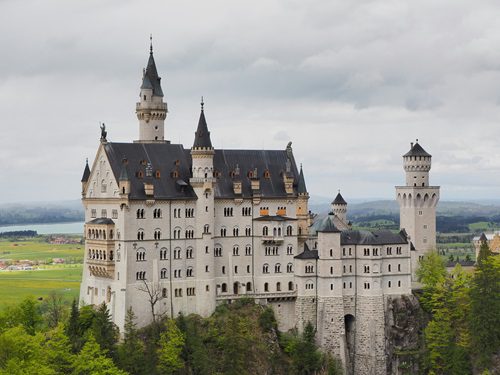
 By the time your rental car wheezes into a crowded carpark near Neuschwanstein Castle—if you’re lucky enough to find one—you’ll have had enough holiday traffic to last a lifetime. But Rail Europe has a much more civilised idea: let the train carry the load while you relax, unwind, and arrive at the castle of your dreams in storybook style.
As summer approaches and Europe’s cobbled jewels brace for another wave of eager tourists, Rail Europe is waving the signal flag for a grand return to the old-fashioned, charming and wonderfully sensible railway journey. It’s not just nostalgia—it’s a savvy travel strategy that pairs practical ease with a lighter footprint on the planet.
Neuschwanstein: Where Dreams Begin (Preferably Without a Car)
If you’ve ever seen a Disney castle and felt a little familiarity, chances are you’ve been unconsciously transported to Bavaria’s Neuschwanstein. Nestled in the foothills of the Bavarian Alps, this dreamlike turreted fortress inspired Walt Disney’s Sleeping Beauty Castle and now hosts upwards of 1.4 million visitors annually. In peak periods, the number swells to 6,000 a day.
But while the castle belongs in a fairy tale, the experience of getting there by car is more like a Grimm’s fable gone wrong. Traffic clogs the approach to Füssen, the nearest town, and cars can’t even scale the final ascent to the castle itself. Parking? Scarce. Tempers? Frayed.
Thankfully, there’s a gentler, more elegant alternative. If you’re feeling adventurous, the train to Füssen from Munich (or Zurich or Salzburg) glides through Alpine meadows and rolling countryside. Once you disembark, a charming shuttle or a gentle walk through forested paths brings you to the castle gates—fresh air, panoramic views, and no gear stick in sight.
Europe’s Hidden Gems (That Are Screaming for a Break From Traffic)
Neuschwanstein isn’t the only destination groaning under the weight of its popularity. Across Europe, beautiful towns are pleading for a break from the combustion engine.
Take Ávila, Spain—an enchanting walled city that feels like stepping into a medieval manuscript. Driving there, however, is like trying to park in a shoebox. The train, by contrast, whisks you in just outside the city walls. From there, it’s a short stroll to ancient ramparts and Renaissance glory.
Then there’s Hallstatt, Austria, a picture-postcard village with a population of just 700 but a daily influx of 10,000 visitors at times. The village has already had to limit car traffic to preserve its serenity. The train from Salzburg offers an unhurried journey and a clear conscience.
And don’t forget Cinque Terre, Italy—a postcard come to life, with precariously perched villages cascading down cliffs. With roads more goat track than thoroughfare, 80% of visitors wisely arrive by train, skipping the sweat and saving the splendour.
Trains: The Heartbeat of Sustainable Wanderlust
Beyond convenience, train travel is the unsung hero of sustainable tourism. Tourism-related emissions are on a sharp incline, predicted to account for 5.3% of all man-made CO₂ emissions by 2030. But here’s the magic: switching from car to rail slashes your carbon footprint by up to 90%.
That’s not just good for the planet—it’s a win for your peace of mind. There’s no idling in traffic, no circling for a spot, no guessing which side the fuel cap’s on. Just seamless transitions, scenery galore, and a soft reminder that the journey can be part of the adventure.
Rail Europe’s platform (quite literally) opens the door to thousands of destinations, with curated routes and easy bookings that take the guesswork out of European travel. Whether you’re visiting storybook castles or sleepy villages, the train ensures your holiday starts when you hear that whistle blow.
So pack light, board early, and let your travels take the scenic route. After all, the tracks laid centuries ago might be the most forward-thinking path into Europe’s timeless charm.
By Bridget Gomez