
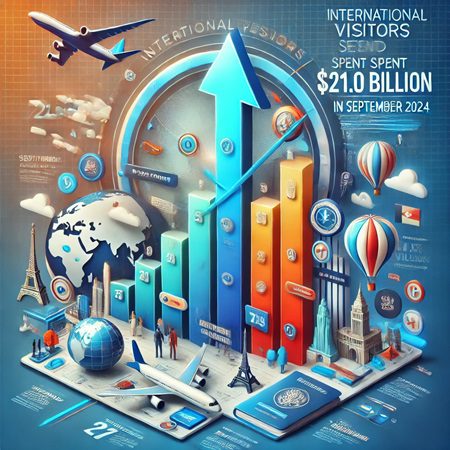
 In a resounding testament to the robust recovery of the travel industry, international visitors contributed a staggering $21 billion to the United States economy in September 2024. This figure, reported by the National Travel and Tourism Office (NTTO), reflects a remarkable 7% year-over-year increase compared to September 2023. The influx of foreign spending has solidified the United States as a premier global destination, showcasing tourism’s critical role in bolstering the nation’s economy.
Tourism Surplus Bolsters Economic Stability
In addition to this significant inbound spending, Americans spent $20.4 billion on international travel during the same period. This resulted in a $608 million trade surplus for the U.S. travel and tourism sector. The sustained growth in international visitor spending has narrowed the trade deficit and underlined the U.S.’s competitive edge in offering unparalleled travel experiences.
Year-to-date, international visitors have spent a cumulative $189.3 billion on U.S. travel and tourism-related goods and services, a 14% increase over the same period in 2023. This averages an impressive $693 million daily, underscoring the travel sector’s resilience and contribution to the broader economic recovery.
Breakdown of Monthly Spending
The NTTO report highlights the components of September’s $21 billion in travel exports, offering insights into the spending patterns of international visitors:
- Travel Spending
Direct purchases of travel and tourism-related goods and services, such as lodging, dining, entertainment, and local transportation, accounted for $11.9 billion, representing a robust 11% increase compared to September 2023. This category alone made up 57% of total U.S. travel and tourism exports, emphasizing enhancing visitor experiences to sustain growth. - Passenger Fare Receipts
Revenue from international visitors purchasing tickets on U.S. airlines totalled $2.9 billion, a 6% decline compared to the previous year. Despite this dip, passenger fares still constituted 14% of total travel exports, highlighting the need for competitive pricing and improved international air connectivity. - Medical, Education, and Short-Term Worker Expenditures
International spending on education, healthcare, and seasonal or short-term workers amounted to $6.2 billion, reflecting a 7% increase year-over-year. This segment represented 29% of total travel exports, showcasing the United States’ appeal as a destination for specialized services and opportunities.

Tourism’s Role in U.S. Exports
Tourism remains a cornerstone of the U.S. export economy, accounting for 22.9% of services exports and 7.8% of all U.S. exports in September 2024. This underscores its integral role in sustaining the country’s global economic competitiveness.
What’s Driving the Growth?
Experts attribute this growth to several key factors:
- Economic Recovery: Increased disposable incomes and pent-up travel demand have fueled international tourism.
- Expanded Offerings: U.S. cities and regions have diversified their tourism attractions, catering to various interests.
- Policy Support: Streamlined visa processes and promotional efforts by tourism boards have enhanced accessibility for global visitors.
Future Outlook
As the travel and tourism industry continues upward, stakeholders must address challenges such as airline capacity, infrastructure modernization, and sustainable tourism practices. Strengthening partnerships between the public and private sectors will be essential to maintaining momentum and capturing a larger share of the global tourism market.
Conclusion
The $21 billion spent by international visitors in September 2024 underscores the enduring appeal of the United States as a global destination. With year-to-date spending nearing $190 billion, the travel and tourism sector is poised to remain a key driver of economic growth, innovation, and cultural exchange. As the nation continues to welcome visitors worldwide, the focus must remain on elevating the visitor experience and ensuring long-term sustainability.
Written by: Jason Smith