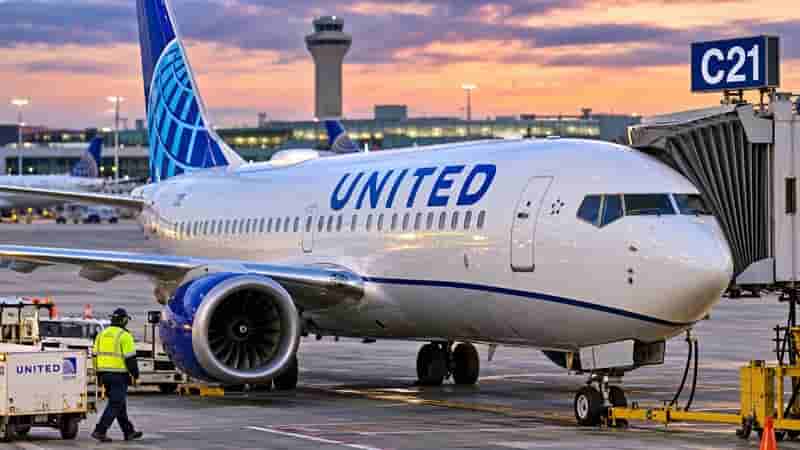
Two US aviation technology failures in four days expose modern departures’ dependence on unseen computer networks.
American aviation has had better weeks. Three days after a telecommunications failure triggered a nationwide ground stop, United Airlines suffered its own computer breakdown. Aircraft and crews were ready. The essential numbers were not.
The Chicago-based carrier confirmed an outage disrupting departures on Monday, 16 November 2026. It was resolved at about 6pm US Eastern Time, after flights were delayed for roughly an hour. Associated Press said the incident lasted about 100 minutes from the first pilots’ reports.
Flights already airborne and those operated by United Express were not affected. United said: “There is no indication that this was a cybersecurity-related issue.”
It was not the airline’s finest advertisement for the digital age. But nor was it evidence of an aircraft safety failure: preventing departures without required information was the correct precaution.
A Vital Number Goes Missing
An internal pilots’ union memo reviewed by Reuters described a company-wide web-based outage affecting several applications, including crew communications. Critically, pilots couldn’t obtain final aircraft weights.
That sounds like an administrative detail until one considers what a crew needs to know before take-off. An aircraft’s final weight and balance, together with runway and weather conditions, influence the calculations used to determine safe departure performance.
These are not figures to be approximated over a hurried cup of airport coffee. When reliable information is unavailable, the aircraft stays put.
Modern airlines distribute operational data through interconnected systems. That brings efficiency, but a failure can spread through schedules, disrupting crews, connections and passengers’ plans.
Hundreds Delayed, But Not All by the Outage
By 6.50 pm Eastern Time on 16 November, flight-tracking service FlightAware had recorded 645 delayed United flights, representing about 20 per cent of its schedule, and 25 cancellations, according to Reuters.
These were the airline’s reported daily totals, not a confirmed count of flights affected specifically by Monday’s malfunction. United and other carriers were still recovering from Friday’s FAA disruption.
United had not publicly established the precise cause of Monday’s failure.
The airline has encountered similar trouble before. In August 2025, a problem involving its Unimatic flight-information system delayed more than 1,000 flights. Unimatic supplies information to other operational systems, including those used for weight-and-balance calculations. Whether it was involved this time remains unconfirmed.
A Separate FAA Shutdown Shakes Confidence
Friday’s crisis was far larger.
On 13 November, the Federal Aviation Administration (FAA) stopped departures nationwide after telecommunications instability disrupted aircraft communications and radar feeds.
According to the FAA’s official account, a flood of roughly 1,000 connection attempts every four to five seconds destabilised legacy equipment. Its preliminary investigation identified possible sources at facilities in Amarillo, Texas, and El Dorado, Arkansas, where contractor L3Harris had been working on network equipment, including installing a new router.
Instability affected 17 of the country’s 22 air-route traffic control centres and some terminal radar facilities. Aircraft already airborne continued operating under established procedures. The FAA said approximately 3,500 aircraft landed safely during the disruption.
The ground stop ended at around 8.15 pm Eastern Time. The FAA reported approximately 12,462 flight cancellations for 13 November, while emphasising that not every cancellation was directly caused by the shutdown.
The root cause remained under investigation. There is no evidence establishing a technical connection between the FAA failure and United’s later outage.
FAA Halts Further Router Installations
The investigation has already prompted a significant operational decision.
By Tuesday, 17 November, the FAA had paused further installation of Juniper routers and disabled the relevant functionality on more than 60 routers already in its network, as a precaution.
According to the Associated Press, the agency is relying on older Cisco equipment while the affected routers undergo testing. The FAA has attributed the instability to its legacy telecommunications system, while examining the circumstances surrounding the newer equipment’s deployment. It would be premature to assign definitive fault to the router manufacturer or the contractor.
This is the uncomfortable problem facing a system being modernised while it continues operating: replacing ageing technology is essential, but the changeover must not become a new source of disruption.
Why Australians Should Pay Attention
There is no verified evidence that United’s 16 November failure directly disrupted an Australia–US service. Nevertheless, the consequences of US domestic delays can travel well beyond American borders.
A passenger arriving from Australia may still miss an onward flight if an aircraft or crew is out of position. The operational fault can disappear long before the knock-on delays do.
For travellers with US connections, the practical advice is familiar but sound: check flight status with the airline, allow sensible connection margins and consult a travel advisor before paying for alternative arrangements.
The bigger issue is resilience. Airlines have made remarkable advances in automation, but an aircraft is only as punctual as the systems that supply its essential operational information.
Two apparently separate failures in four days do not establish a common fault. They do show how essential technology has become to departures.
An airline can move an aircraft to another gate. Rebooting a network is rather less straightforward.
By: Jill Walsh – © 2026.
Read Time: 4 minutes.
Author Bio:
 Jill Walsh has always kept a pen close and a suitcase closer. She started out on media releases, then learned the trade properly by escorting press trips around the world, discovering which stories travel well and which need a sharper edit.
Before long, she wasn’t just promoting destinations; she was representing them, translating civic ambition and local pride into words people actually wanted to read. These days, semi-retired and happily so, Jill has traded departure boards for deadlines, joining old friend and colleague Stephen at EGT Media on a casual basis.
Her patch is the business end of wanderlust: balance sheets, route maps, tender wins and the numbers that quietly decide where travellers go. She writes with dry humour, clean prose and an old-school respect for facts, a steady voice when the market starts shouting.