The Mekong has fed families, carried trade and shaped ways of life for centuries. It has also drawn plenty of outsiders eager to tell its story. Now, a new deal has a fresh idea: give the people who know the river the lead role.
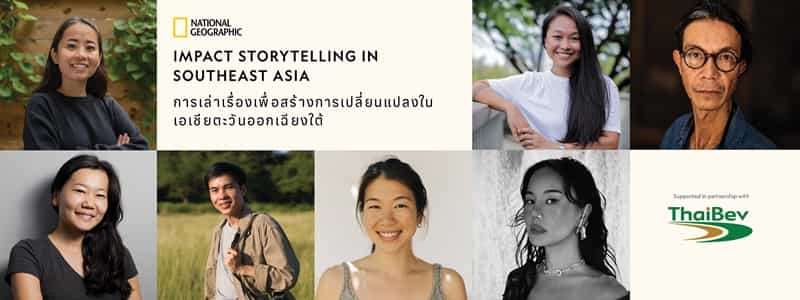
The National Geographic Society and Thai Beverage Public Company Limited (ThaiBev) announced on 16 November 2026 that they will back seven National Geographic Explorers. Their task is to tell stories about nature, culture and change across the Lower Mekong River Basin.
The work will span Laos, Thailand, Cambodia and Vietnam. It will use film, photos, maps, sound and art. The goal is to help local voices reach the wider world, rather than let the world speak for them.
It makes sense. The Mekong looks fine in a travel brochure. Yet the tales that matter most are often found well away from the best camera spot.
A river with much at stake
The Mekong faces real strains. Dams, shifts in water flow, pollution and a changing climate all affect the river. They also affect the people who live beside it.
The Mekong River Commission says more than 65 million people live in the Lower Mekong Basin. Many rely on the river for food, work and trade. Fish, farms, wetlands and local customs are bound to the ebb and flow of its waters.
This also matters to tourism. River cruises, village visits and local markets draw guests to the region. But those trips depend on living cultures and a healthy river, not just a lovely sunset from the top deck.
The Society says the new scheme will help people from the region show that link through their own work.
Kaitlin Yarnall, the Society’s chief storytelling officer, said: “Southeast Asia has a deep and growing network of storytellers telling important stories about nature and community.”
Seven fresh views of the Mekong
The first seven Explorers bring a mix of skills and subjects. That is fitting. The Mekong does not have just one story.
In Vietnam’s delta, landscape architect Tami Banh will look at the loss of local skills in reading and managing water. She will use maps, drawings and photos to help coastal villages plan for climate change with their own knowledge at the centre.
Photographer Jittrapon Kaicome will study pollution tied to mining across borders. His images will give space to people worried about their health, fish stocks and farms. A borderline may suit a map, but dirty water does not tend to respect one.
In Thailand, Cat Lau will work with Tai Lue master weavers. She plans a mobile art display with sound and traditional weaving. The aim is to show how craft can help pass on culture and spur action on climate change. Sometimes a loom can say more than a lecture.
Photographer Huiying Ore will focus on northern Laos. There, major construction projects are changing the river landscape. Her project will show how villagers still use old knowledge to adapt to new demands.
Artist Note Panayanggool will focus on the plight of the Irrawaddy dolphin in the Mekong. Her plans include a public sound archive, a film, artworks and temple listening events. The project will bring the river’s wildlife into the picture and into the ear.
Photographer Ploy Phutpheng will work in northern Laos and Chiang Rai, Thailand. She will follow families facing change to land used by past generations. Her focus will include women who keep food skills, river knowledge and family memories alive.
In southern Laos, documentary photographer Piyavit Thongsa-Ard will turn to fishing families. His work asks a simple, hard question: how can people catch enough fish now without harming the seasonal fish journeys that sustain future catches?
Backing stories, not just telling them
The plan has three main parts. Grants will help pay for projects led by local people. National Geographic’s Storytellers Collective will offer training. A future show using sound, film and other media will take the stories to new audiences.
ThaiBev says the deal fits its Water of Life scheme and wider pledges to protect water. The National Geographic Society brings its Explorer network and skills in teaching people how to tell a strong story.
Some key details have yet to be made public. The announcement gives no grant amounts, no date for the proposed show and no clear yardstick for its effect on river health. Those points will matter once the first work comes to light.
It is also worth keeping the claims in scale. A film cannot clean a stream. A photo cannot restore a fish route blocked by a dam. But a good story can show what is at risk, whose lives may change and why the rest of us should care.
Why the travel trade should take notice
This is not a new drive to sell tours, nor should it be judged by the number of visitors it draws. For travel firms, the value may lie in a deeper view of the people and places they bring guests to see.
For travellers, the work could shed light on a region too often summed up by river cruises and sunset shots. Whether it has that effect will become clearer as the projects take shape.
The Mekong has long linked nations. If this venture works, it might also help people on its banks reach those who have, until now, mostly heard their story from someone else.
By: Kanda Limw – © 2026.
Read Time: 5 minutes.
Author Bio:
 Kanda Limw is one of those rare people every office quietly depends on. She doesn’t fuss or make a fuss her way through the day; she simply notices what needs doing and gets on with it, often before anyone else has drawn breath.
Years behind the scenes have taught her that good administration isn’t about control; it’s about care. Diaries align, tensions soften, loose ends disappear. When the day threatens to tilt, Kanda steadies it without drama.
There’s something reassuringly old-fashioned about her reliability. She listens properly, remembers the small things, and does what she says she will.
Kanda has no appetite for the spotlight. Yet ask anyone who works alongside her, and they’ll tell you that when she’s there, everything runs just a little smoother.