
Thailand’s aviation and hospitality brands are climbing the ASEAN rankings, with Thai Airways gaining 41%, Centara Hotels & Resorts strengthening its position, and Big C proving that customer trust is worth its weight in gold.
Thai Airways is flying high again. This time, the good news is not about a new route or a full cabin. The airline has surged into ASEAN’s 50 most valuable brands for 2026. Centara Hotels & Resorts is also rising. And Thai retail giant Big C is now one of the region’s strongest brands.
The findings come from the ASEAN 500 2026 report, which Brand Finance issued on 30 October. The survey paints a mixed picture of Thailand’s economy. Airlines, hotels, tech firms and household names are gaining ground. The energy sector, by contrast, is finding the going tougher.
Thailand has 74 brands in the regional top 500. Their brand value totals US$46.8 billion, up 2% in 2025. The value of all 500 ASEAN brands rose 8% to US$315.6 billion. That gap may look grim, but it masks a brighter fact: 27 Thai brands grew by at least 10%.
Thai Airways Takes the High Road
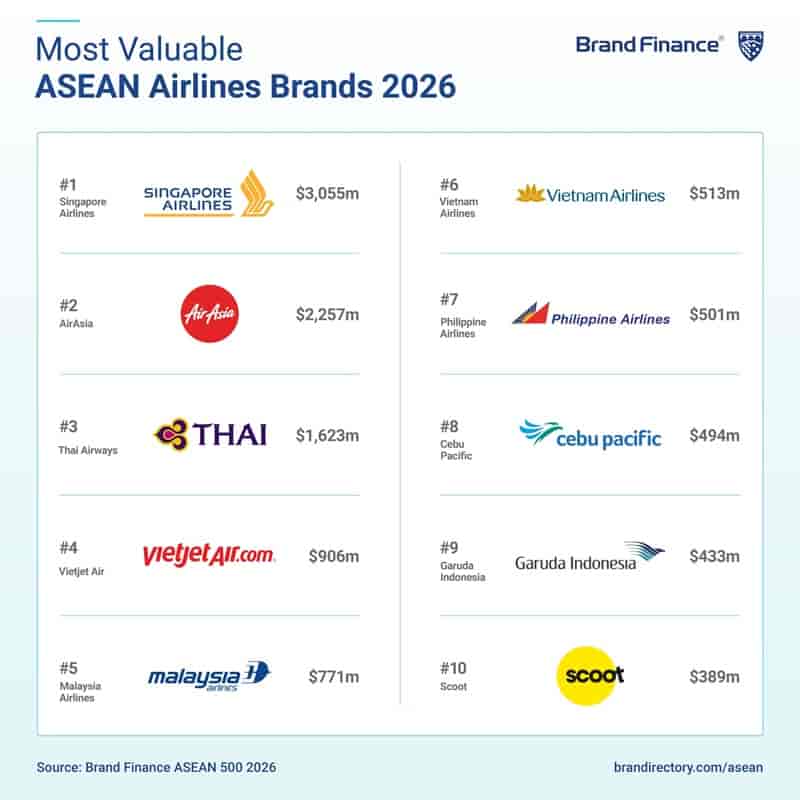
Thai Airways led the charge in travel. Its brand value rose 41% to US$1.6 billion. It jumped 18 places to 48th in ASEAN, entering the region’s top 50.
That is good news for an airline keen to win more premium flyers. But a high place on a brand list is not the same as money in the bank. Nor does it mean the hard work is done. Travellers still want fair fares, sound schedules, good service and bags that reach the same city they do.
The airline’s own accounts show why caution is wise. In the second quarter of 2026, revenue before one-off items rose 8.5% from a year earlier to THB48.6 billion. Costs on the same basis rose 29.7%. Net profit fell to THB1.54 billion, from THB12.13 billion in the same quarter of 2025. The airline cited a sharp rise in jet fuel costs, while unrest in the Middle East hurt demand and led to flight cuts.
Signs of long-term plans are also emerging. Thai Airways had 84 planes at the end of June. It took delivery of nine Airbus and Boeing jets in the first half of 2026. The fleet gives the airline more scope to grow. The task now is to turn stronger appeal into full seats and sound returns.
Centara Makes Its Mark in ASEAN Hotels
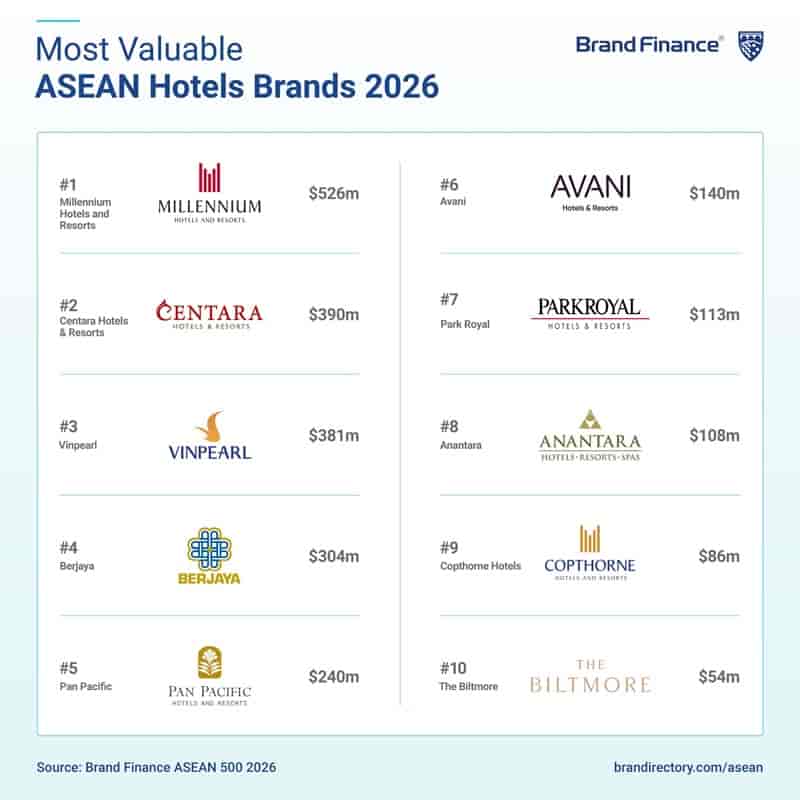
Thailand’s hotel trade has also earned a welcome boost. Centara Hotels & Resorts grew its brand value 21% to US$390 million. Its Brand Strength Index, or BSI, reached 89 points out of 100. That placed Centara second by brand value among hotel brands in the region.
A small but vital point needs clearing up. The most valuable hotel brand in ASEAN is Singapore’s Millennium Hotels and Resorts, worth US$526 million. Vietnam’s Vinpearl is the strongest hotel brand, with a BSI score of 95.4. Centara is a clear success story, but value and strength are two quite different prizes.
For Australian travel advisers, these results are worth more than a framed award. A trusted hotel name can help a client choose where to stay. Yet the real test comes at check-in, at breakfast, and when a guest needs help. Brand fame can sell the first night. Only a good stay will sell the next one.
Big C Shows the Power of Trust
Big C may lack the glamour of a five-star resort or a long-haul flight. It has, however, achieved a rare feat. The retail group scored 95.8 out of 100 for brand strength, up from 90.6 last year. It earned a top AAA+ rating and ranked third across ASEAN, not just in retail.
Only Vietnam’s Bao Viet, on 96, and Indonesia’s BCA, on 95.9, scored higher. This measures brand strength, not a league table of sales or business size. It reflects how Brand Finance weighs factors such as customer views, marketing and business results.
That matters in tourism as well. A guest who knows what to expect is often more keen to book. A catchy slogan may win a glance. Service that works wins a return visit.
Not Every Thai Brand Is on the Up
The nation’s energy giant PTT still ranks third in ASEAN by brand value. At US$8.7 billion, it sits behind Singapore’s DBS and Malaysia’s PETRONAS. But its brand value fell 5%. Brand Finance said PTT’s revenue dropped 14% in 2025, while its operating profit fell 18%.
Other sectors had brighter news. Delta Electronics (Thailand) grew its brand value 56% to US$1.5 billion and jumped 26 places to 51st. Chang rose 50% to US$1.4 billion, with its brand strength score up from 70 to 82. AIS gained 9% to US$3.2 billion. Rival True Dtac fell 6% to US$1.6 billion, while its strength score also dropped.
Brand Finance Asia Pacific managing director Alex Haigh summed up the change:
“The result is a brand economy whose momentum is shifting towards aviation, technology and consumer brands.”
Why This Matters for the Travel Trade
Thai Airways is not rising in a vacuum. Singapore Airlines holds a brand value of US$3.1 billion, up 12%. Vietjet’s brand value leapt 117% to US$906 million. Across ASEAN, airlines are fighting hard for the next booking and for a place in travellers’ minds.
Brand Finance prices a name using a method known as royalty relief. It weighs how much income a brand may help earn, then works out what it might cost to license that name. Its BSI score considers marketing, public perception, and business results. Neither figure measures an airline’s on-time record or a hotel’s room sales.
The message for travel firms is plain. A strong name gets you noticed. A fair deal may get you booked. But good service is what brings people back.
Thailand’s best-known brands have earned a lift in standing. Whether that lift lasts will depend on what they do next. In travel, there is no point in reaching new heights if the customer is left on the ground.
By: May Marclay – © 2026.
Read Time: 6 minutes.
Author Bio:
 May Marclay’s career hasn’t followed a straight line, and she’s better for it. She began in real estate, then moved into hospitality, finding her rhythm with Centara in the Maldives. There, she worked the Asian markets the old-fashioned way: building trust, closing deals, and turning conversations into lasting business.
The UAE sharpened its focus. At IHG, supporting an Area General Manager, she saw the machinery of a major travel hub from the inside, no gloss, just how things actually get done.
Now, with her sights set on healthcare, May brings a broader lens than most. She speaks three languages, reads widely, travels with intent, and writes with the calm assurance of someone who understands both the detail and the bigger picture without needing to say so too loudly.