
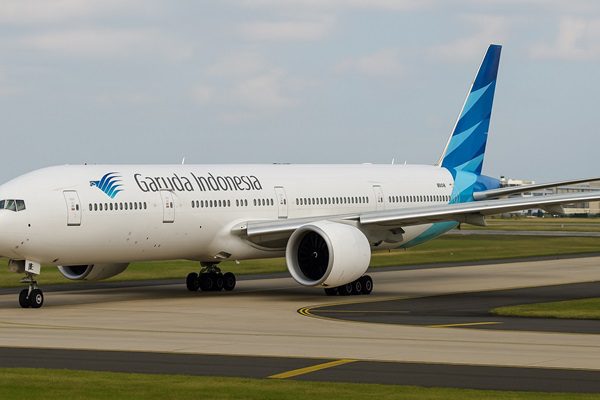
Garuda Indonesia’s US$2.71 billion revenue surge, stronger passenger numbers and fleet revival point to a recovery. Unfortunately, the fuel bill says otherwise.
Garuda Indonesia has delivered a welcome lift in revenue, but the airline group is still pursuing financial recovery, with the fuel bill firmly in the cockpit.
The Indonesian flag carrier and its subsidiaries generated US$2.71 billion in revenue in the nine months to 30 September 2026, up 13.2% from the same period last year. Stronger flying operations, more available aircraft, and expanding businesses outside the passenger cabin all played their part.
Yet the headline growth comes with a substantial qualification. Fuel costs rose 42.9%, and while the group reported an operating profit of US$97.2 million, it remained overall in the red.
Garuda’s latest figures make two things clear: its rebuilding programme is producing commercial gains, but sustainable profitability remains some distance down the runway.
More passengers, more revenue
Scheduled services remain the group’s financial engine, generating about US$2.08 billion in revenue, up 12.6%. That represents an additional US$233.2 million compared with the first nine months of 2025.
Non-scheduled flying contributed about US$305.8 million, up 2.1%, while businesses outside airline operations added another US$322.8 million.
Those figures matter because the recovery no longer rests solely on how many seats Garuda and its low-cost subsidiary Citilink can sell.
The group carried 16.7 million passengers between January and September, compared with 15.6 million a year earlier. Garuda Indonesia accounted for roughly 7.7 million travellers and Citilink for about 8.9 million. The figures are rounded, so the individual totals differ slightly from the group figure.
Combined flight departures rose 7.9% to 117,868, giving the business more opportunities to earn revenue while restoring its role in Indonesia’s domestic and international aviation markets.
For tourism operators and travel advisers, the most useful measure may not be the growth in departures, but whether those departures become more dependable.
The businesses beyond the boarding gate
One of the more telling developments is the 31.3% increase in non-airline revenue, which reached US$322.8 million.
That is US$77 million more than a year earlier and accounts for around one-quarter of the group’s overall revenue increase.
Aircraft maintenance proved particularly valuable. Revenue from external customers at GMF AeroAsia, the group’s maintenance, repair and overhaul business, climbed 42.4%. Travel agency services grew even faster, rising 76.1%, although the company did not provide a corresponding dollar figure for that segment in its announcement.
The strategic attraction is straightforward. Maintenance services and other aviation-related businesses can bring in revenue without relying entirely on passenger ticket sales.
They are not immune to economic pressures, of course. But a broader portfolio gives Garuda more commercial options than simply adding another flight and hoping every seat sells.
President Director and Chief Executive Officer Thomas Oentoro said the group’s future depended on getting more value from the businesses it already operated.
“Strengthening our core airline operations remains essential, but our future growth must also come from making better use of the capabilities and opportunities across the Group. The increasing contribution from our non-airline businesses demonstrates how a more integrated and commercially focused business ecosystem can support our financial recovery,” Thomas said.
Fuel delivers the unwelcome bill
If revenue was the encouraging part of the announcement, jet fuel supplied the reality check.
The group’s fuel expenditure rose by US$309.8 million in the first nine months, a 42.9% increase driven by volatile energy markets and geopolitical tensions in the Middle East.
That increase was almost as large as the group’s entire US$316.4 million rise in reported revenue.
Overall operating expenses rose 15.7%, faster than revenue. Excluding fuel, however, operating costs rose about 3.1%, suggesting management’s broader spending controls are gaining traction.
Those figures deserve to be read together. Progress in managing staffing, aircraft, and other operating costs is significant, but it does not offset an expensive fuel market.
Garuda reported an operating profit of US$97.2 million. Its consolidated loss narrowed 3% to US$179.3 million.
Another accounting distinction is worth noting: the loss attributable to owners of the parent company was about US$195.5 million, up from US$186.8 million a year earlier. The consolidated loss for the period and the shareholder-attributable loss are different measures; confusing the two would make the recovery look tidier than it is.
A fleet returns to work
Garuda has also been returning more aircraft to service, a practical necessity for any airline seeking to rebuild its schedule and reputation.
As of September, the group had 106 serviceable aircraft, comprising 64 operated by Garuda Indonesia and 42 by Citilink. That is 24 more than the 82 available in September 2025.
The improvement follows fleet reactivation efforts supported by shareholder Danantara, Indonesia’s state investment organisation.
Equally noteworthy is the group’s reported on-time performance, which reached 92.01%, up from 86.15% a year earlier. That is a gain of 5.86 percentage points, rather than a 5.86% relative increase.
It is a useful operational indicator, although customers will ultimately judge reliability across the entire journey, including disruptions, missed connections and service recovery.
More aircraft should mean fewer capacity constraints. More dependable departures should help restore confidence. Neither automatically guarantees a profitable route.
That is why the next stage of the transformation will require careful decisions about where aircraft fly, how often they operate and whether each service earns its keep.
Recovery has momentum, not a finish line
For Australian travel advisers selling Indonesia, improved fleet availability and punctuality are encouraging. But travellers and industry partners will look for consistency, not just an impressive quarterly presentation.
Garuda says its next priorities include greater aircraft productivity, tighter network planning, better use of group assets and continued cost control.
The airline can reasonably point to higher traffic, stronger supporting businesses and improving punctuality as evidence that its operational programme is working.
The financial picture remains more complicated. Revenue is rising, but fuel costs are rising faster, and losses have not disappeared.
The task now is to turn returning aircraft and growing passenger numbers into earnings that can withstand a difficult energy market.
Garuda has gained altitude. The challenge is making sure the balance sheet follows.
By: Sandra Jones – © 2026.
Read Time: 5 minutes.
Author Bio:
 Sandra has spent a working lifetime quietly rescuing journeys, one itinerary, one anxious caller, one impossible connection at a time. Years at Australia’s finest travel agencies taught her the art of calm: how to find a flight in a fog of cancellations, soothe a traveller when luggage wanders, and turn nine frantic days in Europe into something resembling sense. Qualified, seasoned, and endlessly patient, she learned that good travel advice is part logistics and part listening.
But the storyteller in her was always waiting its turn. Writing offered a new map, a way to turn experience into reflection, detail into delight. At EGT Media, Sandra now writes the truths only insiders know: the mishaps, the laughter, the grace found between gates and goodbyes. She reminds us that travel, for all its fuss, is still one of life’s better ideas.