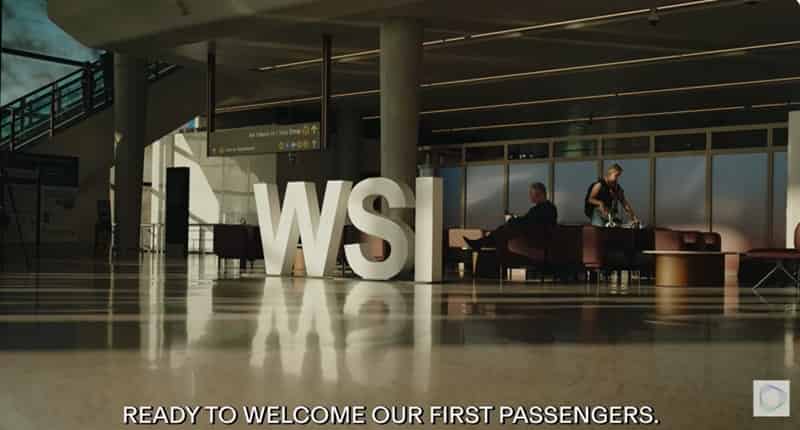
Sydney finally has a second international airport. Jetstar is first off the runway, overseas carriers are lining up, and Mascot has a new rival. But passengers, not politicians, will decide the winner.
Sydney has argued about its second airport for so long that some travellers might have expected the opening ceremony to come with a pension.
On Sunday, 25 October 2026, the talking finally stopped, and the flying began. Western Sydney International (Nancy-Bird Walton) Airport opened to passengers at Badgerys Creek. A sold-out Jetstar flight JQ362 to the Gold Coast, operated by an Airbus A320, became the first scheduled commercial departure, taking off shortly before 11.30 am.
Prime Minister Anthony Albanese and NSW Premier Chris Minns were among those celebrating a project debated for four decades. Yet the most important guests were the passengers. They will decide whether Sydney’s new airport becomes a genuine alternative to Kingsford Smith or simply a very handsome place to park an aircraft.
A home-grown gateway with global ambition
For the millions living in western Sydney and nearby districts, a local airport is not an abstract infrastructure triumph. It could mean less time on motorways, a shorter ride home after a late flight and one fewer small fortune paid to a taxi driver.
The airport puts domestic and international gates under one roof and can handle up to 10 million passengers a year in its initial configuration. That is capacity, not a prediction for the first 12 months. Chief executive Simon Hickey expects traffic to build towards that level during the early to mid-2030s.
The much larger ambition is around 82 million passengers annually by the 2060s, but only after substantial expansion, including more terminal space and a second runway. Even airport dreams must pass through planning, investment, and a few reality checks.
The Commonwealth originally committed up to $5.3 billion in equity to develop the airport. Reuters used an approximately $5.6 billion figure in its opening-day account. These are reported figures with different bases, not proof by themselves of a budget blowout. The wider Western Sydney transport programme, including roads and rail, requires billions more.
Jetstar wins the first round
Jetstar collected the opening-day honours with the Gold Coast flight, followed by Melbourne operations. Its published Western Sydney programme comprises up to 14 weekly flights to Melbourne, daily Gold Coast flights and three weekly flights to Brisbane. The Gold Coast plan began at four a week before demand prompted an increase.
Jetstar chief executive Stephanie Tully put the local appeal neatly in the opening-day media release:
“For many customers, the uber or taxi across the city has been the most expensive part of their trip.”
Quite. When the ground transfer threatens to cost more than the airfare, something has gone wrong with the holiday arithmetic.
The airline has an opportunity to develop new demand rather than merely shuffle travellers from one airport to another. But the early flight schedule is still modest. New runways don’t fill themselves, and low fares need enough passengers to keep seats occupied.
International airlines: arrivals, not an exodus
The first international passenger services are scheduled for Monday, 26 October, when Air New Zealand begins three weekly return flights between Western Sydney and Auckland. The airline will continue to use Sydney Kingsford Smith. For travellers, that means a choice of airports, not a wholesale relocation.
Singapore Airlines follows on 23 November with a daily Airbus A350 service to Singapore, subject to regulatory approvals. Its scheduled Western Sydney departure is at 11.55 pm, neatly demonstrating the value of a curfew-free airport. Singapore Airlines also plans to retain its four daily services to Kingsford Smith.
Vietjet has announced two weekly flights between Ho Chi Minh City and WSI from 9 January 2027, building to three a week in March. Fiji Airways is due to begin three weekly flights to Nadi on 19 March 2027. Qantas plans to add passenger services to Melbourne and Brisbane from 28 March 2027, using QantasLink Embraer E190 aircraft.
Further ahead, Vietjet Thailand proposes four weekly Bangkok flights from November 2027, subject to regulatory approval. Qatar Airways has announced three weekly Doha services from 15 December 2027, with an aspiration to increase frequency later.
Those dates are airline plans as at the time of publication; they should not be mistaken for flights already operating. Schedules and permissions can change between a press release and the first boarding call.
WSI says its partners could put more than 250 destinations within reach during the first 14 months. That is a projection based on direct and connecting flights across airline networks, not a claim that 250 places will have non-stop departures from Badgerys Creek. A change of aircraft in Doha or Singapore still counts as a connection, even if the brochure makes it sound effortless.
Why midnight changes the equation
Sydney Kingsford Smith generally operates under an 11 pm to 6 am curfew, subject to statutory exceptions. Western Sydney operates 24 hours a day. That gives airlines more scope to schedule long-haul flights, make overseas connections, and use aircraft productively instead of waiting for sunrise.
The advantage also reaches beyond people with passports. Freight operations began at WSI in July. From 1 November 2026, under the announced curfew arrangements, regular overnight freight movements currently allowed at Kingsford Smith are intended to shift to WSI or be rescheduled outside the curfew. Emergency and special-dispensation exceptions remain.
That is a significant structural advantage for the new airport and a practical change for logistics operators. Parcels and time-sensitive goods do not observe office hours.
But late-night flexibility is not an unmixed blessing. Communities under flight paths may face noise around the clock, and the airport’s economic success must be measured alongside its impact on residents. A 24-hour timetable is a commercial asset; a good night’s sleep is, too.
Mascot is not packing its bags
Aviation competition is more complicated than counting new logos on an airport wall. Kingsford Smith has established services, airline relationships, a rail station and convenient access to Sydney’s centre and eastern suburbs.
Air New Zealand and Singapore Airlines have confirmed that their Western Sydney flights will supplement their existing Sydney operations. Qatar Airways is likewise presenting WSI as an additional gateway. No verified evidence suggests a mass withdrawal of international airlines from Mascot.
For residents of Penrith, Liverpool or the Blue Mountains, WSI may prove easier. For a visitor staying near Circular Quay, the existing airport could still be the sensible choice. The answer depends on the address, the timetable, the fare and what happens after baggage claim.
The phrase ‘Sydney airport’ now needs a second question: which one? Travellers connecting between WSI and SYD should not assume the terminals are linked or that an airline will protect a self-arranged connection across town.
The train missed the opening party
Here lies the launch’s most obvious weakness: the airport opened before its dedicated metro railway.
The Sydney Metro–Western Sydney Airport line is under construction. Current reporting points to December 2027 at the earliest, while the airport describes a 2027 opening. No firm passenger-service commencement date has been announced, and further delay remains possible.
Until then, Transport for NSW’s free WSI Link shuttle connects St Marys station with the airport every 30 minutes. The service runs from 4.30 am to midnight Sunday to Thursday, and to 1 am on Friday and Saturday. Other public buses, taxis, rideshare, car hire and parking provide alternatives. The toll-free M12 motorway improves road access.
An airport operates through the night, but its free rail-replacement shuttle does not. Anyone booking a very late arrival should check the ground-transfer options before congratulating themselves on a bargain airfare.
When the 23-kilometre metro opens, it is expected to link WSI and St Marys in about 15 minutes. Until then, getting from the runway to the right suburb will remain a central part of the airport’s competitive test.
Tourism dollars will not arrive on autopilot
Western Sydney’s visitor economy now has an opportunity to sell itself as a destination, rather than simply a place to drive through on the way elsewhere.
The area’s food cultures, arts, sports, hotels and events can make a strong case. The Blue Mountains and regional NSW are part of the wider opportunity. Yet an airport alone doesn’t create itineraries, package tours, or hotel stays. Operators must give visitors clear reasons to spend time and money locally.
The NSW Government and WSI have established a $16 million international airline attraction fund, with each partner contributing $8 million. Government forecasts suggest it could help attract more than 162,000 overseas visitors and generate approximately $530 million in visitor spending. Those numbers are projected outcomes, not revenue already earned.
The opening is also important for employment. Federal Government figures put the project’s construction workforce at more than 12,800 jobs, with around half involving local workers. The Government says more than $500 million flowed to over 360 western Sydney businesses during major construction. Longer-term roles in airport operations, hotels and logistics will depend on how traffic grows.
Who really wins the sky war?
Jetstar takes the first round: the carrier can put ‘first flight’ in its history books. International airlines gain another entry point to Australia’s largest city. Western Sydney residents gain a local choice, while tourism and freight businesses get a market worth pursuing.
Kingsford Smith, meanwhile, remains the formidable incumbent. Its established network and city access won’t disappear in a cloud of opening-day confetti.
The likeliest early outcome is not one airport defeating the other. It is a larger, more competitive Sydney aviation market, provided airlines can sustain routes, fares remain attractive, and passengers can reach the terminals without an expedition.
After four decades of argument, Sydney finally has the second airport it kept promising itself. The speeches are over. Now the real voting begins, one boarding pass at a time.
By: Michelle Warner – © 2026.
Read Time: 8 minutes.
Author Bio:
 Michelle Warner has always carried stories the way others carry passports lightly, faithfully, and with purpose. She learned her craft in newsrooms, shaping sentences with care, before swapping deadlines for departures as a flight attendant with some of the world’s great airlines. Years aloft sharpened her eye for character and deepened her fondness for travel’s small, dignified rituals: the quiet kindness of strangers, the poetry of arrival, the patience learned between time zones.
Now grounded by choice, Michelle has come home to writing with the same calm authority she once brought to turbulent cabins. Her prose blends an editor’s discipline with a traveller’s wonder, tinged with humour and reverence for the golden age of travel. Each piece feels like a handwritten boarding pass, gracious, observant, and unmistakably alive.