

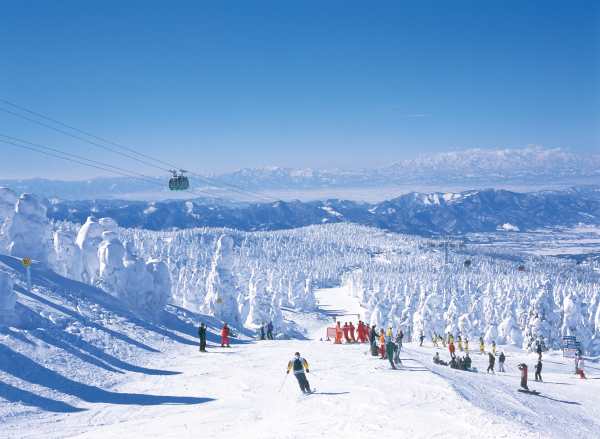
Looking for guaranteed snow this season? Japan’s northern Tohoku region will take the snow plough out of holidays and provide a convenient alternative to the well-skied Japanese resorts. Avoid the lines and discover a more authentic side of Japan with some post-ski touring.
Venturing beyond the crowds to Japan’s northeast allows you to pair world-class skiing with easy access to samurai towns, UNESCO World Heritage sites, centuries old onsen, spectacular temples, dramatic winter landscapes and regional produce and dishes.
Ski resorts Hoshino Resorts NEKOMA Mountain in Fukushima Prefecture, Zao Onsen Ski Resort in Yamagata Prefecture and Appi Kogen Ski Resort in Iwate Prefecture are all located in Japan’s undiscovered ski region, Tohoku.
Appi Kogen Ski Resort is best for first timers with wide groomed runs, an excellent ski school, English-speaking instructors and accommodation to suit couples, families and groups. Hoshino Resorts NEKOMA Mountain combines the former Alts Bandai and Nekoma ski areas into one expansive resort, offering terrain for beginners through to advanced skiers. While Zao Onsen Ski Resort is perfect for those wanting to combine skiing with traditional hot springs and the famous ‘Snow Monsters’ – giant fir trees coated in snow and ice that create an otherworldly winter landscape, unique to Japan.
“Numbers indicate most Australians spend a week skiing in Japan and then a week exploring more culturally focused activities beyond the ski fields. The Tohoku region is an ideal ski destination for Australians as it offers a wealth of historic villages, natural onsen and samurai warrior history – not to mention regional culinary specialities, close to key ski resorts,” said Naoki Kitazawa, Executive Director, Sydney Office, Japan National Tourism Organization (JNTO).
When need a break from skiing, it’s time to begin exploring the region beyond the slopes.
Beyond the Slopes
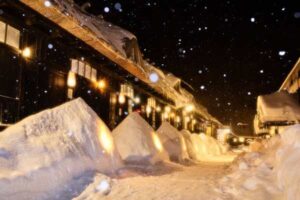
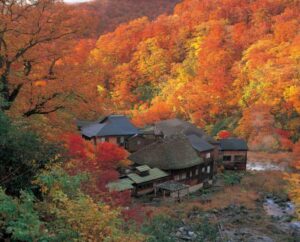
Onsen hoppers will love Nyuto Onsen in Akita Prefecture which is not a single bathhouse but a collection of seven unique hot spring inns each drawing water from their own sources and offering distinct mineral composition and bathing experiences. Popular for their secluded mountain setting, historic architecture, many choose to travel between them to compare the mineral-rich waters, architecture and settings. Many baths are open-air so you can soak amongst the snow in winter.
Higashiyama Onsen is a picturesque historic hot spring town near Aizu-Wakamatsu in Fukushima Prefecture. According to legend, it was discovered about 1,300 years ago by the Buddhist monk Gyoki. For centuries feudal lords and samurai are said to have come to relax in its therapeutic waters, staying in traditional riverside ryokan alongside poets, writers and cultural figures. Nestled in a peaceful valley alongside the Yukawa River, Higashiyama Onsen offers seasonal views of cherry blossoms, lush summer leaves or heavy winter snow. The onsen town is also renowned for performances by the Higashiyama geigi (geisha) who continue a centuries-old tradition of hospitality and entertainment.
Samurai & UNESCO
Tohoku is full of samurai history, home to preserved castle towns, historic battle sites and centuries-old samurai districts. Explore the beautifully preserved Kakunodate Samurai District, which is renowned for its elegant samurai residences and traditional gardens, or visit Tsurugajo Castle, where a reconstructed castle keep and museum showcase samurai armour, swords and the region’s rich military history.
Or, discover two of Japan’s UNESCO treasures in Tohoku, from the serene Buddhist landscapes of Hiraizumi to the 5,000-year-old Jomon settlement of Sannai Maruyama.
Eat Like a Local
Foodies will love trying local favourites, including the wanko soba in Morioka – one of Japan’s most entertaining and uniquely Tohoku dining traditions where a server continuously refills tiny bowls of soba as quickly as you can eat them – a fun activity for all ages.
Tohoku is also considered one of Japan’s finest sake-producing regions thanks to its pure mountain water, premium rice and cold winters. Tour at the Suehiro Sake Brewery in Aizu-Wakamatsu which blends history (founded in 1850), craftsmanship and award-winning sake.
Top Tips
-
Take the train: Trains are the most convenient way to reach resorts from Tokyo and take around 1.5-3.5 hours. Most resorts operate shuttle buses. Reserve seats as the shinkansen can fill quickly during peak ski season and consider the cost of a regional JR EAST rail pass against individual tickets.
-
Forward your ski gear: Travel light, by sending your ski equipment directly from the airport to your accommodation (and back again) with the Yamato Transport Ski TA-Q-BIN service.
-
Book accommodation early: Family rooms, apartments and ski-in/ski-out accommodation are the first to sell out, so book 6-12 months prior.
-
When to go: Late December has a festival atmosphere but is busy; January has reliable powder snow and is quieter after the New Year holidays; February sees peak snow conditions with plenty of events while March has milder weather, longer daylight hours and is great value.
-
Bundle lift tickets: Many resorts bundle lift tickets with additional benefits. Look for packages that include equipment hire, ski lessons, shuttle buses or onsen access, as these can offer excellent value.
-
Rent equipment locally: Save paying airline baggage fees and make travelling on Japan’s trains easier. Major resorts hire skis, snowboards, helmets, boots, ski clothing, sleds and snow play equipment.
-
Ensure you take or hire the right clothing: Don’t underestimate the weather, Tohoku receives some of Japan’s deepest and driest powder snow, with temperatures regularly dropping to below -10°C especially in January and February.
-
Make the most of Japan’s onsen culture: Many family-friendly hotels have private family onsen available to book, children’s bathing areas and indoor and outdoor baths.
-
Book lessons early: Particularly in peak season it is highly recommended to book ski lessons early. Many resorts offer English-speaking instructors, private family lessons, ski school for children from three years of age.
-
Take advantage of the wide variety of snow experiences: Snowshoeing through ancient forests, snowmobiling, sledding parks, winter festivals, seeing the spectacular ‘Snow Monsters’ in the Zao Mountains.











