

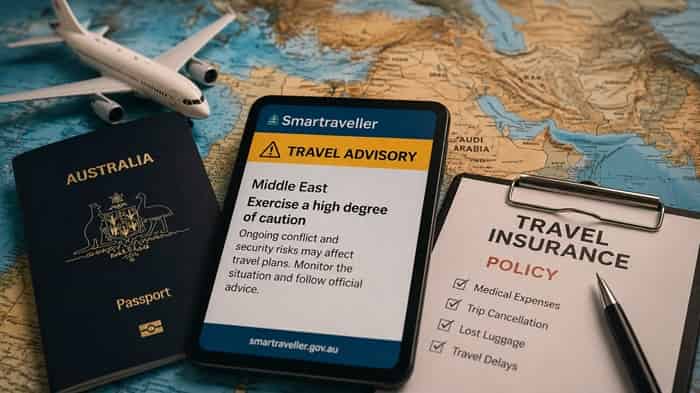
When geopolitical tensions rise, travel advisors can suddenly find themselves wearing the hats of counsellor, crisis manager and, occasionally, amateur fortune teller.
Thankfully, the Australian travel industry’s peak body is ensuring agents won’t have to rely on crystal balls.
With traveller enquiries surging following the Australian Government’s recent adjustment to travel advice affecting parts of the Middle East, the Australian Travel Industry Association (ATIA) is once again stepping into the breach, announcing a dedicated real-time supplier update webinar for members on Wednesday, 24 June.
The webinar comes as many travellers begin asking the inevitable question: “Does this change my travel insurance?”
It’s a simple question with a decidedly complicated answer.
As anyone who has worked behind a travel agency desk knows, insurance policies can vary considerably between providers, particularly when government travel advisories shift or regional conflicts escalate.
Recognising the need for clarity, ATIA has assembled an impressive panel featuring representatives from leading insurers, including Cover-More Travel Insurance, NIB Insurance, PassportCard and Go Insurance, alongside officials from Australia’s Department of Foreign Affairs and Trade (DFAT) and Smartraveller.
The initiative builds on a series of highly regarded live briefings ATIA coordinated in March as conflict in the Middle East intensified. According to ATIA, member feedback overwhelmingly endorsed the value of receiving immediate, practical information directly from suppliers and government experts.
The upcoming session will focus on the practical implications of the Government’s revised travel advisory settings, particularly how different insurers may respond to the changes and what advisors need to communicate to clients travelling through or transiting the Middle East.
For frontline advisors, that information could prove invaluable.
Travel insurance has always been one of the industry’s most nuanced products. Add an evolving geopolitical situation and varying insurer interpretations, and suddenly even seasoned consultants can find themselves navigating a maze worthy of a 1970s-era airport terminal.
ATIA Chief Executive Dean Long said the organisation remained committed to providing members with accurate and timely guidance.
“ATIA’s live updates throughout this conflict have received overwhelmingly positive feedback from our members, and we will continue to deliver clear, timely information across our channels. The webinar will be hosted alongside other industry leaders who will be sharing their insights into what the advisory downgrade means for travel insurance.”
ATIA members will receive registration details directly via email.
For travellers and advisors alike, one thing remains abundantly clear: in an uncertain world, informed advice has never been more valuable.
For official travel advice, travellers should consult the Australian Government’s Smartraveller website.
Industry information is also available via the official Australian Travel Industry Association (ATIA) website.
By: Soo James – © 2026.
Read Time: 3 minutes.
Author Bio:
 There’s nothing rehearsed about Soo James, and that’s precisely the point. Malaysian by heritage, Sydney-schooled, she arrived at UNSW to study Arts, then took a left turn into IT, not out of ambition but out of curiosity. Somewhere among systems and schedules, she worked out what really held her attention: people, language, and the quiet spaces between them.
Writing followed naturally. Travel and lifestyle gave her room to observe, to listen, to notice the details others rush past. Soo writes the way good travellers move, watching the room before admiring the view, catching the gesture before chasing the headline.
At Global Travel Media, her stories don’t shout or sell. They linger. They slow you down, open a door, and gently suggest there’s more to see if you’re willing to look.











