


Airports of Thailand (AoT) says a planned 53% increase in the international passenger service charge (PST) to THB 1,120 from June is unlikely to deter travel demand. Perhaps not individually, but collectively, Thailand’s growing list of tourism-related fees, taxes and surcharges is beginning to send the wrong message at the wrong time.
The Timing is Sensitive
Thailand’s tourism sector is no longer operating in a post-pandemic boom environment where demand automatically overwhelms supply. Competition across Asia is intensifying sharply, especially from Vietnam, which continues to expand aggressively with lower operating costs, strong government support and fewer direct costs imposed on travellers.
At the same time, many tourism businesses in Thailand are fighting simply to maintain last year’s performance. Hotels face rising wage and utility costs, airlines are under pressure from fuel prices and route competition, and smaller tourism operators continue to recover from years of instability.
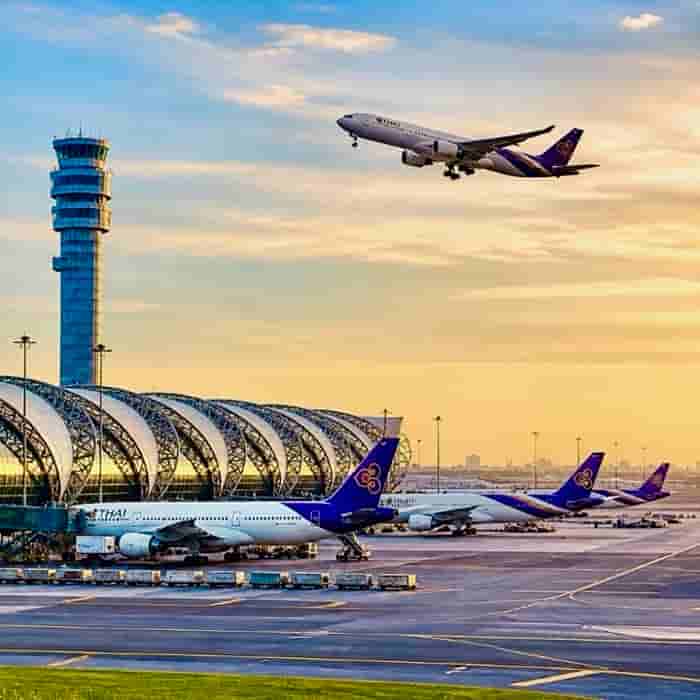
The increased PST is set to take off on June 20, 2026
Against that backdrop, the optics of a 53% increase in the airport charge are difficult to ignore.
A Profitable Airport Authority
AoT reportedly generated profits of around THB 25 billion last year. That naturally raises an important question within the industry: Why increase passenger charges so aggressively now when the airport authority is already highly profitable?
For many in tourism, this is not simply about infrastructure funding. It is about timing, balance and perception. At a moment when airlines, hotels and tour operators are working hard simply to preserve margins, Thailand’s airport authority and the Thai government appear positioned to maximise revenues while much of the industry continues to recover.
A History of Charges and Increases
Thailand’s passenger service charge is not new. The international departure tax system has existed in various forms for decades and was formally integrated into ticketing systems during the mid-2000s modernisation era. Since 2007, travellers have steadily absorbed rising airport-related fees as Thailand expanded and upgraded its aviation infrastructure.
Few would argue against the need for modern airports, improved safety and enhanced passenger facilities. Suvarnabhumi Airport itself was a transformational national project.
However, from my own perspective, having lived and worked in Thailand since 1991, I have seen repeated attempts to increase tourism-related taxes and fees whenever revenues tighten or infrastructure investment is required. Some proposals quietly disappear, while others recur under different names or collection methods. The debate itself is not new.
The Real Issue is Competitiveness
The issue is not merely the fee itself. Most international travellers may barely notice an increase once folded into airline ticket pricing. The deeper concern is the cumulative perception of cost and competitiveness.
Travellers today compare destinations instantly. Airfares, airport charges, hotel taxes and visa costs all contribute to overall value perception. Thailand can no longer assume it will automatically remain the region’s default leisure destination simply because of its historic popularity and goodwill.
Tourism Needs Support, Not Friction
Tourism remains one of Thailand’s most important economic engines, supporting millions of jobs across hotels, restaurants, transport, retail and entertainment. During periods of softer demand, many in the sector believe policy should focus on stimulating travel, improving competitiveness, and reducing friction, rather than increasing traveller costs.
Balancing Investment And Affordability
Airport infrastructure investment is important, and modernisation must continue. However, the tourism industry will increasingly ask whether profitability and passenger convenience are being balanced correctly.
In an intensely competitive regional market, every additional charge matters, even when authorities insist it does not.
by Andrew Wood – (c) 2026.
Read Time: 4 minutes.
About the Author.
 Andrew J. Wood has spent a lifetime in travel, though he’d likely tell you it simply unfolded that way. Born in Yorkshire and trained in Edinburgh, he began in London before heading overseas, first to Hilton Paris, then further afield.
Thailand became home in 1991 when he joined the Shangri-La in Bangkok. What followed was a long run through the upper floors of hospitality, with senior roles across well-known hotel groups and, eventually, general manager posts where the responsibility sat squarely on his shoulders.
Alongside it all, Skål ran, where he gave more time than most, rising through the ranks and earning its highest honours.
These days, Andrew writes and lectures, sharing a lifetime’s worth of experience with a steady voice, thoughtful, measured, and grounded in the realities of the trade.











