


Best Western Hotels & Resorts and WorldHotels are taking a steady, practical approach to global growth—one that many operators in today’s market may find refreshingly realistic. Rather than chasing big pipeline numbers, the focus is on adding the right hotels, in the right places, with the right partners.
That message came through clearly in a recent exclusive interview with Ron Pohl, President of WorldHotels and International Operations and Larry Cuculic, President and CEO of BWH Hotels, when both attended the inaugural Pan APAC Regional Conference at the 5-star Carlton Hotel in Bangkok.
Growth is still a priority, but not at the expense of owner performance or long-term sustainability. In simple terms, more hotels only make sense if those hotels actually succeed.

Mark Bulmer – General Manager Carlton Hotel Sukhumvit Bangkok
Smarter expansion, not faster expansion
One of the key tools behind this strategy is the use of Area Developer Agreements in regions like Japan. These are partnerships with local companies that help source and secure hotel deals in specific markets.
Instead of opening a full office and building relationships from scratch, Best Western works with partners who already understand the local business culture. This is especially important in markets like Japan, where trust and long-term relationships are essential.
While the company has been in Japan for years, growth has been slow. By bringing in a local development partner, they expect to move faster and unlock more opportunities without losing control of brand standards.
The same approach is being used in the Philippines and could be applied in other complex markets.

Olivier Berrivin – Vice President, Asia-Pacific
Australia steady, New Zealand growing
Australia remains a strong and mature market for the group, with around 80 hotels already in operation. A recent deal with Central Apartment Group will add another 25 properties to the Best Western brand, underscoring that conversions remain a key growth channel.
New Zealand is a newer territory, but early momentum is building. It’s a smaller market, but one with clear long-term potential.
Vietnam: strong potential, but watch supply
Vietnam is often described as a “hot” market, and Pohl and Cuculic agree, but with some caution.
There is strong government support for tourism and a large number of hotel projects in development. Best Western currently has a small number of operating hotels and a much larger pipeline, including branded residences.
However, demand is still catching up. Occupancy levels remain relatively low, even if growth percentages look impressive. For hotel operators, the message is clear: Vietnam offers opportunity, but timing and positioning will be critical.

Chad Fletcher – Senior Vice President, Worldwide Sales
India: the long-term growth engine
If one market stands out above the rest, it’s India.
The scale is huge: a population of 1.4 billion, rapid infrastructure development, and a growing middle class that is increasingly travelling. New highways, airports and regional connections are opening up demand beyond the major cities.
Importantly, the hotel model here is different. Many properties are smaller (50–60 rooms), but include food and beverage and meeting space. They serve local and regional travellers rather than international tourists.
Best Western already has a presence, but sees the potential for hundreds more hotels over time. This is not a quick win; it’s a long-term play and one with very strong fundamentals.
New frontiers: Saudi Arabia and Africa
Looking ahead, Saudi Arabia is high on the list. With major government investment in tourism, it is quickly becoming one of the most talked-about hospitality markets globally.
Africa is also on the radar, but with a more selective approach. There is activity in countries such as Egypt, Morocco, and South Africa, but the continent is diverse and not without challenges. Growth here will be gradual and targeted.
Brands that match changing demand
On the brand side, Best Western is adapting to new traveller expectations.
Aiden is a flexible, boutique-style brand designed for experiential travel. There are a few strict design rules that allow each hotel to reflect its local environment. This makes it attractive in markets where guests want something unique rather than a standardised experience.
@Home, on the other hand, focuses on extended stays. These properties are designed for guests staying for a week or more, often for work, training, or medical reasons. Features like kitchens and laundry make them practical and cost-effective.
For operators, this segment is growing and can deliver strong returns when located correctly.
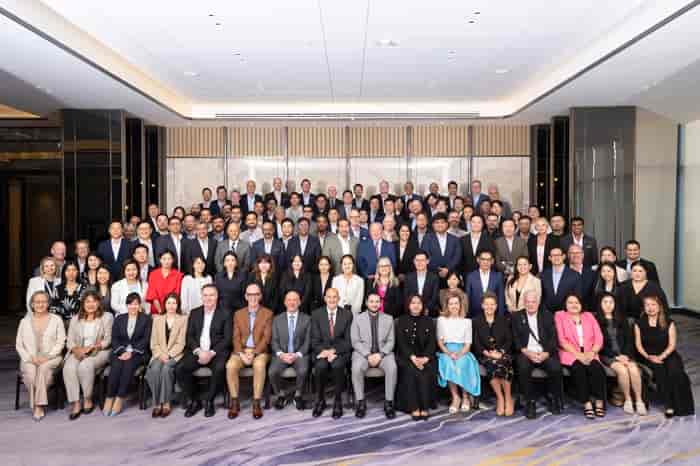
2026 Pan APAC Group
Loyalty programmes that actually work
The company is also updating its loyalty programme, focusing on simplicity and usability.
One standout feature is the ability for guests to use points to partially pay for a stay, instead of waiting to earn enough for a free night. This keeps members engaged and makes the programme more useful.
Just as important, hotels are properly compensated for loyalty bookings. This encourages them to accept reward stays and solve a common problem seen in airline and hotel programmes, where points are hard to redeem.
The bigger picture
Overall, the strategy is clear and easy to understand:
- Grow where it makes sense
- Work with local partners
- Focus on owner success
- Match brands to real demand
- Keep loyalty simple and valuable
For middle managers and operators, the takeaway is practical. Success in today’s hospitality market is less about rapid expansion and more about smart decisions, strong partnerships and understanding local demand.
In a competitive and often unpredictable global environment, that kind of disciplined approach may prove to be the real advantage.
by Roderick Eime – (c) 2026.
Read Time: 4 minutes.
About the Author.
 Widely published, multiple award-winning specialty travel and tourism journalist and photographer with a broad general knowledge.
Rod’s experience in professional media spans four decades, giving him a firm grounding in traditional media as well as an insight into the evolution of digital and online communications.
A natural storyteller, Rod seeks to entertain, inspire and engage readers as well as inform and educate. Whether it is an adventure travel story amongst reindeer herders in Siberia or a potentially stodgy end-user account for an industrial lubricant manufacturer, Rod believes a reader should be enriched and motivated.
His photography has won several awards, including a rare double ‘Travel Photographer of the Year’ gong from the Australian Society of Travel Writers in 2011 and 2013.
An early adopter of digital and online publishing, he first published web pages in 1994.
Learn more at www.traveloscopy.com or contact him at [email protected].











