

For a very long time, Africa had a public relations problem.
Not because the continent lacked stories worth telling far from it, but because someone else was usually telling them.
The headlines were depressingly predictable. Conflict. Crisis. Poverty. The same tired script repeated often enough that it hardened into global perception.
But quietly, steadily, Africa has been rewriting the narrative, and now the travel world is beginning to notice.
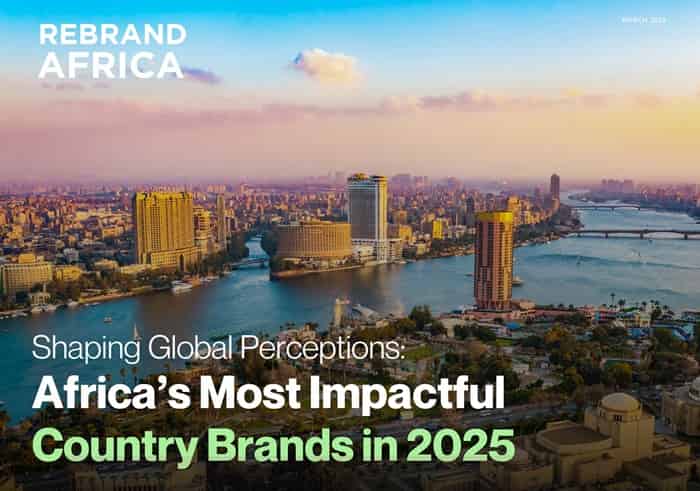
A new international analysis titled “Shaping Global Perceptions: Africa’s Most Impactful Country Brands in 2025” suggests the continent’s influence is expanding rapidly through what strategists call soft power culture, diplomacy, tourism, sport and reputation.
Put simply, countries don’t just compete for tourists anymore. They compete for attention.
And Africa is starting to win some of that battle.
Why Image Now Matters As Much As Infrastructure
Travel professionals know this instinctively.
A destination’s success today isn’t just about beaches or wildlife. It’s about how a country is perceived by the outside world.
Soft power, the ability to attract rather than persuade, has become a crucial economic asset.
When travellers trust a country’s reputation, airlines open routes, investors build hotels and conference organisers book convention centres.
Perception becomes opportunity.
And across Africa, governments have begun treating their national image not as an afterthought, but as a strategic resource.
Côte d’Ivoire: From Football Shirts to Boardrooms
Take Côte d’Ivoire.
Not long ago, the country was rarely mentioned in global tourism conversations. Today, it is pushing its brand with surprising confidence.
Under the “Sublime Côte d’Ivoire” tourism campaign, the country has planted its name in front of millions of European sports fans through sponsorships with Olympique de Marseille and Stade Français Paris.
It’s clever marketing. Football fans may not know much about West Africa, but they certainly know their clubs.
Meanwhile, Abidjan has quietly become one of the cultural capitals of Francophone Africa. Artists such as Himra and Didi B are pulling Ivorian music onto European playlists and festival stages.
And then there is business.
The Africa CEO Forum, held annually in Abidjan, now attracts thousands of executives and political leaders, turning the city into something of a Davos for African commerce.
Tourism, culture and commerce are not a bad trio if you’re trying to get the world’s attention.
Ghana: Turning Diaspora Into Tourism Gold
If Côte d’Ivoire is building momentum through culture, Ghana has found a different lever.
Emotion.
The country has spent several years positioning itself as a spiritual and cultural home for the African diaspora.
What started with the Year of Return campaign has evolved into something much bigger.
Every December, Accra becomes the centre of what locals affectionately call “Detty December”, a season of concerts, festivals and family reunions that draws visitors from London, New York and Toronto.
Events such as AfroFuture transform the capital into a global cultural playground.
For the tourism industry, it’s a masterstroke.
Instead of selling beaches or landmarks, Ghana sells something far more powerful: belonging.
Kenya: The Safari Giant Expands Its Story
Kenya, of course, hardly needs help in the tourism department.
The Masai Mara remains one of the world’s great wildlife spectacles, and safari operators have long known the country’s appeal.
But Kenya’s story is evolving beyond safari trucks and acacia trees.
Tourism authorities are now marketing Nairobi as a regional hub for meetings, business travel and digital nomads, while new visa policies are making it easier to enter the country for both African travellers and remote workers.
The strategy is simple enough.
Keep the wildlife, but add the modern city.
Meanwhile, Kenyan icons such as Faith Kipyegon, Eliud Kipchoge and Lupita Nyong’o continue to project the country’s image across global sport and cinema.
Not bad ambassadors to have.
Rwanda’s Branding Playbook
Then there is Rwanda, which may well be the most deliberate brand-builder on the continent.
Through the Visit Rwanda campaign, the country has placed its tourism message in places few African destinations have dared to go, including NBA basketball jerseys and major American sports arenas.
It’s an audacious strategy, but Rwanda backs the marketing with events.
Kigali now regularly hosts global conferences, major cycling championships and international concerts, projecting an image of organisation and modernity.
For a country once defined by tragedy, the shift in perception has been remarkable.
Ethiopia’s Quiet Influence
Meanwhile, Ethiopia is leveraging infrastructure and aviation as instruments of national influence.
The completion of the Grand Ethiopian Renaissance Dam has become a powerful national symbol and increasingly a tourist attraction.
But the country’s most effective global ambassador may still be Ethiopian Airlines, now Africa’s largest carrier.
With routes stretching across Europe, Asia and the Middle East, the airline has turned Addis Ababa into a major aviation crossroads.
Sometimes the strongest branding doesn’t come from advertising.
It comes from aircraft schedules.
The Lion Is Learning to Tell Its Story
There is an old African proverb that appears early in the report.
“Until the lion learns to write, every story will glorify the hunter.”
For decades, Africa’s story was written largely by outsiders.
Today, that is changing.
Music, fashion, sport, tourism and diplomacy are carrying a different image of the continent into the world, one that is far more complex, ambitious and confident.
And if the travel industry has learned anything over the past decade, it’s this:
When perception shifts, travellers follow.
Africa’s moment, it seems, is no longer on the horizon.
It has already begun.












