When Japan quietly steps back from something, it rarely makes a fuss. It simply adjusts the rhythm.
So the decision to shelve the cherry blossom festival at Arakurayama Sengen Park, that famous Mount Fuji vantage point adored by every camera phone on Earth, feels less like a cancellation and more like a reset. Overtourism finally caught up with one of Japan’s most photographed spring scenes.
But here’s the thing seasoned Japan travellers already know: sakura was never about one mountain.
Cherry blossom season doesn’t live in postcards. It lives in neighbourhood parks, castle moats, temple paths and places most visitors have never heard of yet remember long after they leave.
And this year, with Fuji briefly stepping out of the spotlight, those quieter corners are having their moment.
Niigata’s Sakura That Glow After Dark
Ask anyone who’s spent more than five minutes exploring regional Japan, and they’ll likely whisper the same name: Takada.
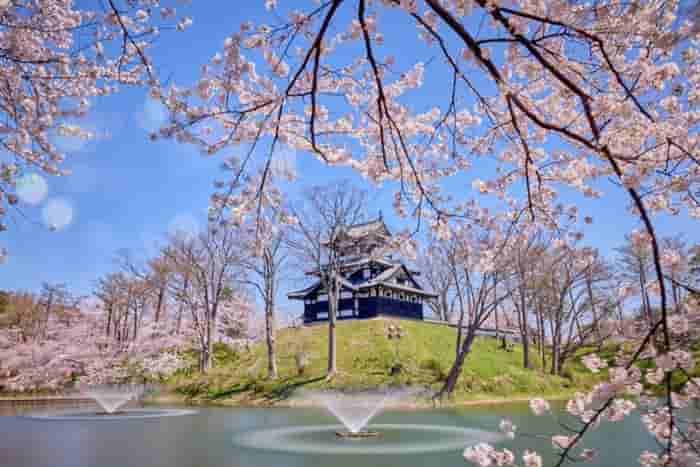
The Takada Castle Sakura Festival in Niigata Prefecture has long been a favourite among locals who prefer their hanami without the jostling. By day, thousands of cherry trees trace the old castle ruins and surrounding moat in soft pastel loops. But linger until evening, and Takada reveals its real personality.
Lantern-lit blossoms reflect across the water in slow ripples, turning a simple stroll into something unexpectedly cinematic. It’s not grand. It’s not loud. It just quietly delivers, which, in Japan, often means it’s doing things exactly right.

Himeji Castle, Hyogo Prefecture – Photo by Caspar Wai on Unsplash
Mount Yoshino: Sakura With Layers
If Fuji is the icon, Mount Yoshino is the elder statesman.
Perched in Nara Prefecture on the Kii Peninsula, Yoshino has been growing cherry trees since before mass tourism was a concept. Tens of thousands of them climb the mountain in tiers, planted over centuries with almost stubborn patience.
What makes Yoshino special isn’t one perfect viewing platform. It’s the journey. Blossoms emerge gradually as you ascend a slow, unfurling spring that rewards travellers willing to swap schedules for curiosity.
You don’t conquer Yoshino. You drift through it.
Ise-Shima’s Quiet, Sacred Sakura
Not every sakura moment needs applause.
In Ise-Shima, cherry blossoms form a soft frame around Ise Jingu, Japan’s most sacred Shinto shrine. Along the Isuzu River, petals hover above clear water and weathered timber bridges, creating a scene that feels less like sightseeing and more like witnessing a seasonal ritual.
There are no booming loudspeakers or festival stalls here. Just footsteps, birdsong and the occasional intake of breath as petals fall.
For many repeat visitors, this is the Japan they come back for.
Himeji: Where History Meets Petals
Then there’s Himeji, unapologetically photogenic and entirely aware of it.
Japan’s most elegant castle wears the cherry blossom season well. The white walls of Himeji Castle, a UNESCO World Heritage-listed treasure, seem to glow when framed by pale pink petals. It’s theatrical, yes, but never gaudy.
Evenings bring a different mood. As light fades and illuminations flicker on, the castle softens, trading grandeur for something closer to nostalgia.
It’s one of the few places where crowds feel justified.
A Gentle Sakura Send-Off Near Narita
For travellers who prefer their magic conveniently timed between flights, Narita offers a small but satisfying surprise.
Naritasan Park and nearby Sakura Castle Ruins Park sit just beyond the airport’s orbit, providing a final brush with spring without the Tokyo intensity. Temple gardens, quiet ponds and castle remnants combine in a way that feels almost like a farewell note.
Not dramatic. Not headline-grabbing. Just quietly lovely.
Timing Still Matters
As always, sakura keeps its own calendar.
Central Japan typically peaks from late March into early April, with northern pockets such as Niigata stretching the season into mid-April. Those chasing the bloom would be wise to keep an eye on forecasts from the Japan National Tourism Organisation or the Japan Meteorological Corporation, both of which track bloom lines with near-obsessive precision.
Because in Japan, timing isn’t everything. It’s the only thing.
Beyond the Postcard
The pause at Arakurayama might disappoint first-time visitors chasing the classic Fuji shot. But for travellers willing to look sideways instead of straight ahead, it opens something richer.
A chance to see cherry blossom season not as a checklist item, but as a living, breathing tradition woven through everyday Japan.
And perhaps that’s the quiet lesson here.
Sakura was never meant to be collected like souvenirs. It was meant to catch you off guard around a temple corner, across a still moat, or drifting silently down a mountain path.
The best cherry blossom moments usually do.
by Prae Lee – (c) 2026.
Read Time: 4 minutes.
About the Writer.
 You can tell a great deal about a person by how they meet a Bangkok morning. Prae Lee doesn’t charge into it; she glides, unhurried, as if time itself has agreed to behave. There is a calm assurance about her, the sort earned by knowing both your roots and your destination.
A graduate of Chulalongkorn University, she earned her business degree with quiet pride, then further polished it in Singapore and Australia. Travel didn’t change her. It refined what was already there: curiosity, discipline, grace.
Back in Bangkok, she slipped modern life into the family business, mastering social media with an instinct for listening and selling with Thai gentleness.
Prae never seeks attention, yet everything she touches grows brighter.
Now with Global Travel Media, she writes with authenticity, drawing on culture, travel and a rare, steady confidence.