If travel had a dress code, 2026 would be the year Australians stopped wearing the uniform.
According to the WTF: What the Future Travel Report 2026 from KAYAK, the coming year will mark a decisive break from the copy-paste itineraries, overcrowded hotspots and rigid spending habits that defined the post-pandemic rebound. This is not about travelling less. Quite the opposite. It’s about travelling smarter, more quietly, and with a sharper eye on value, wellbeing, and authenticity.
The message from travellers is unmistakable: the old rules no longer apply.
Travel may still be a discretionary spend, but it remains one of the last things Australians are willing to sacrifice. Instead, they are rewriting how, where and why they travel, adjusting to economic uncertainty by seeking destinations with traveller-friendly policies, fewer crowds and better value for money.
As Steve Hafner puts it:
“Travel is a discretionary spend but remains a high priority for consumers. They’re adjusting to economic uncertainty by favoring off-beat destinations with traveler-friendly policies, and great value in price, services and amenities.”
In other words, Australians aren’t cancelling holidays. They’re cancelling hype.
Not-Yet-TikTok’d: The Rise of the Anti-Viral Destination
After years of chasing the same Instagram sunsets and TikTok-famous cafés, travellers, particularly Gen Z and Millennials, have had enough. The next “it” destination, it turns out, is the one that hasn’t appeared in your feed yet.
KAYAK’s data shows that 69 per cent of Gen Z and 66 per cent of Millennials want to visit places they’ve never been before. On TikTok, posts tagged #hiddengems surged by more than 50 per cent, while more than one in five travellers are actively seeking destinations well outside the algorithm’s comfort zone.
This shift is less about digital detox and more about credibility. Travel is no longer a performance. It’s a personal project.
“Travelers are craving confidence – they want to know they are choosing amazing destinations, at the least crowded times, for the best price, because that’s winning,” says Carolina Montenegro.
Money and safety still top the decision-making hierarchy, but close behind is a growing hunger for novelty. If a place hasn’t gone viral yet, that’s no longer a warning sign. It’s the pitch.
Booked Now, Paid Later: How Aussies Are Financing Freedom
If there’s a defining financial trend shaping travel in 2026, it’s flexibility.
Travellers aren’t cutting back on trips; they’re getting creative about how they pay for them. KAYAK’s report shows that 35 per cent of Gen Z and 31 per cent of Millennials say credit or instalment plans will directly determine how many trips they take next year.
Buy now, pay later has graduated from checkout novelty to travel enabler.
“When budgets are tight, travelers lean on the payment method that gives them the most flexibility. And they expect travel companies to support those options,” says Annie Wilson.
Timing helps. Based on KAYAK flight searches, international airfares from the US are down about 10 per cent year-on-year, making long-haul travel feel achievable again. At the same time, deal-hunting behaviour is becoming more sophisticated. Flight price alert usage is up four per cent, while car rental alerts have jumped a remarkable 60 per cent.
Seventy per cent of younger travellers say cost will be the biggest factor shaping their 2026 plans, but they’re not staying home. They’re gaming the system, and platforms like KAYAK are becoming essential tools rather than optional extras.
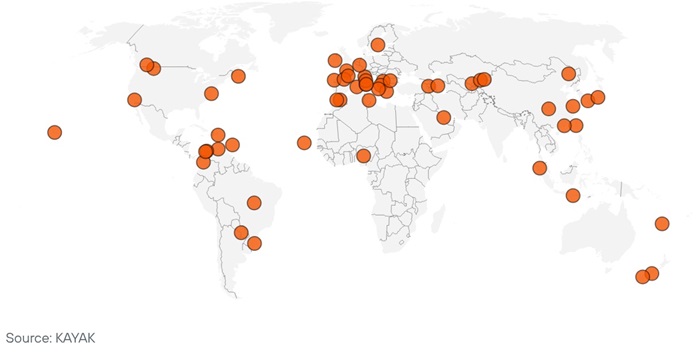
Top emerging destinations
Gasp-Aways: Chasing Goosebumps, Not Souvenirs
Forget fridge magnets. In 2026, travellers are chasing moments that make them stop, stare and quietly swear under their breath.
So-called “gasp-aways” trips built around awe-inspiring experiences are surging. Forty-one per cent of travellers say these moments are a top priority next year, while 63 per cent say natural wonders will guide their travel plans. Among Gen Z, nature-based trips are now a top-three choice for holidays.
On TikTok, #glamping posts rose 20 per cent, signalling a return to the outdoors, albeit with decent bedding and reliable coffee.
Solar eclipses. Bioluminescent beaches. Remote wilderness. These are experiences that can’t be staged, filtered or replicated. Awe may be free, but savvy travellers still appreciate a good deal when they see one.
Your New Travel Mate Is AI, and It Knows Its Stuff
Once upon a time, you asked your friends for travel tips. In 2026, that feels almost quaint.
Artificial intelligence has officially joined the travel group chat, and for many Australians, it’s the most reliable voice in the room. Among Gen Z and Millennials, 41 per cent trust AI recommendations because they draw from millions of sources, while 34 per cent say the advice feels more accurate and current than anything arriving via a DM.
Nearly six in ten travellers say they’d change destinations if AI suggested somewhere better. Half would do it for a better deal.
“Travelers are using KAYAK.ai for identifying travel deals not just for making itineraries. Metasearch’s unique value of comparing prices remains the best strategy for deal seekers,” says Matthias Keller.
What are travellers actually asking AI to do?
-
31 per cent want it to sniff out deals
-
29 per cent want on-the-go travel tips
-
18 per cent want help decoding visas and local rules
In short, AI has evolved from a helpful assistant to a friend who plans everything and somehow gets the upgrade.
Wellth Trips: When Luxury Meets a Good Night’s Sleep
Luxury travel hasn’t disappeared. It’s simply been redefined.
For younger travellers, “wellth” is the new wealth. Sixty-six per cent say a mental reset is their primary reason for travelling, while 70 per cent plan to spend more on luxury trips in the future, just not in the way their parents did.
Fine dining still matters. According to OpenTable, high-end dining rose 12 per cent in 2025, while experiential dining jumped 47 per cent. But so do spa treatments, exclusive experiences and perhaps most tellingly, sleep.
One in five travellers says it’s the small comforts that define luxury: quiet mornings, better coffee, the perfect pillow. KAYAK’s “Sleepcations” filter reflects this shift, helping travellers find destinations designed for rest rather than bragging rights.
Supporting the trend, TikTok saw a 150 per cent surge in #wellnesstravel content, while KAYAK searches for premium economy flights rose 18 per cent and luxury-style hotels climbed 128 per cent year-on-year.
Status is out. Serenity is in.
Little Big Trips: Why Small Towns Are Having a Moment
The final twist in 2026’s travel story is scale.
The big-city rush is fading, replaced by an appetite for small towns, rural escapes and slower travel. Eighty-four per cent of Gen Z and Millennial travellers say they’d rather visit a rural area or smaller city than a major urban hub.
Lower prices and lighter crowds help, but the real attraction is authenticity. Thirty-four per cent want experiences rooted in local life, bakeries, quiet harbours, and family-run diners. Social media still plays a role, but now it’s about discovery rather than domination.
KAYAK’s AI tools are increasingly being used to surface these lesser-known destinations that travellers didn’t know they were looking for until the data suggested them.
The Bottom Line
The WTF 2026 report reads less like a trend forecast and more like a quiet revolution. Australians aren’t travelling less. They’re travelling with intention, sidestepping crowds, stretching budgets, chasing awe and trusting technology to help them get it right.
The rulebook hasn’t just been rewritten. It’s been politely ignored.
And for an industry built on habit and heritage, that might just be the most exciting journey of all.