


Hotel groups always sound most confident just before the cycle tests them.
Minor Hotels is no exception.
After signing a record 40 new hotel contracts and master agreements in 2025, the Bangkok-based owner and operator is preparing for what it calls a “new phase of growth” in 2026, a year it expects to begin with another 25 signings in the first quarter alone.
It is an ambitious projection. It is also a familiar one.

Anantara Kafue River Tented Camp
Every major hotel group, at roughly this point in the global travel upswing, starts talking about portfolio diversification, asset-light expansion and disciplined franchising. The language is always the same. The confidence is always high. The memory of downturns is always surprisingly short.
Still, Minor’s numbers are real enough. Its portfolio now tops 640 properties worldwide. Its development pipeline is the largest in its history. And owner demand, at least for now, appears robust.
“The pace of recent signings reflects strong owner confidence in our brands and platform,” said Dillip Rajakarier, Group CEO of Minor International (SET: MINT), the parent company of Minor Hotels. “Driving growth through a higher mix of HMAs and franchising allows us to scale with discipline, while our continued role as owners keeps us closely aligned to hotel performance and brand standards. As we add depth to our brand portfolio in 2026, this combination of global reach and an owner’s mindset gives us the insight needed to really tailor solutions to different assets and owner ambitions.”
It is a well-crafted line. It is also exactly what every hotel chief executive says at the top of a growth cycle.
A Pivot Toward Asset-Light, Whether the Market Likes It or Not
Minor’s 2026 agenda rests on a strategic shift that has become orthodoxy across global hospitality: move capital out of bricks-and-mortar, expand through management contracts and franchising, and recycle mature assets into fresh growth.

Dukes The Palm, which was signed last year by Minor Hotels.
In Minor’s case, 87 per cent of its extended pipeline opportunities are now asset-light, up from 70 per cent last year. That is not a marginal change. It is a structural bet on a model that looks elegant in investor presentations and harder in practice when brand standards collide with owner cost-cutting.
Franchising, in particular, will be pushed hard across Europe, the United States and Africa, where brands such as NH Hotels & Resorts and iStay Hotels are positioned for conversion-led growth.
The logic is sound enough. Franchising delivers faster scale, better capital efficiency and steadier fee income. It also introduces a perennial risk that hotel groups prefer not to dwell on: loss of operational control.
The industry has been here before. Asset-light strategies looked unassailable before the global financial crisis, too. What followed was a decade of brand-dilution complaints, under-maintained properties, and messy renegotiations.
Minor insists this time is different, pointing to investment in systems, brand standards and owner support. It may be right. It may also be saying what every hotel group says at this stage of the cycle.
Betting on the Middle East, Asia and a Second Run at North America
Geographically, Minor’s growth push is both predictable and revealing.
More than 60 per cent of its expected first-quarter 2026 signings will be in the Middle East and Asia, a deliberate effort to balance a portfolio still heavily weighted toward Europe, which accounts for more than half of its global footprint.

NH Hua Hin Lobby
North America is the more interesting play.
Minor will debut multiple brands in the United States in 2026, including in New York and Miami, as well as in the Caribbean, with several projects in the luxury segment. It is a long-delayed return to a market where Minor has historically struggled for traction against deeply entrenched domestic brands.
Luxury expansion will also extend into Australia, where Minor already operates more than 60 properties, largely under the Oaks and Avani banners. It is a sensible bet on a market that has shown unusual resilience in domestic travel demand and continues to command international pricing power.
London, meanwhile, remains a quiet priority, with growth to be shaped through The Wolseley Hospitality Group, which Minor acquired in 2022. It is a reminder that buying an operating platform often delivers faster market penetration than building one.
In North Africa, Minor is leaning into geography and history. Its long-standing European presence, one of the region’s most important source markets, underpins its push into Egypt and Morocco. In Egypt, it has already formed a joint venture with SUNRISE Resorts & Cruises to develop 50 properties over the next decade.
Asia continues to carry the growth narrative. Japan is a priority following a joint venture with Royal Holdings to develop 21 properties. India remains firmly in focus, supported by the performance of Anantara Jewel Bagh Jaipur and a pipeline of more than a dozen projects.
Even Europe is being re-shaped. Minor plans to broaden beyond city hotels into Mediterranean resort destinations, a hedge against the volatility of urban travel demand if global economic conditions tighten.
New Brands, Old Risks
Minor will launch several new brands in 2026.
At the centre of this push are two collection brands, Minor Reserve Collection and Colbert Collection, designed to attract independent hotel owners who want brand distribution without surrendering their personality.
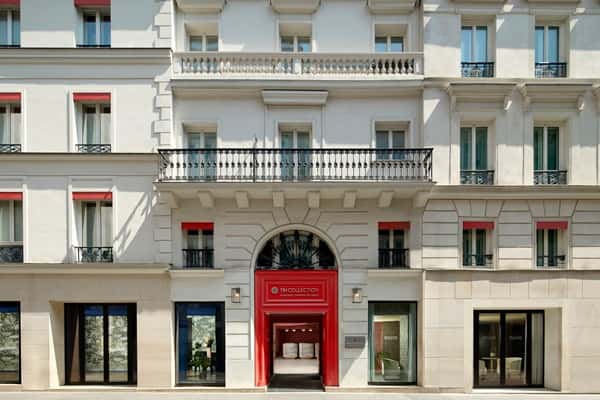
NH Collection Paris Ponthieu Champs-Élysées.
It is a clever positioning. It is also a crowded one.
Every major hotel group now offers a “soft brand” collection pitched at the same pool of conversion-minded owners. The differentiation challenge is real. The pricing power is uncertain.
At the luxury end, The Wolseley Hotels is being positioned as a deliberately rare proposition, with only a handful of projects planned in global gateway cities. Scarcity is a powerful marketing tool, provided it remains intentional rather than accidental.
At the value end, iStay Hotels will underpin franchise-led growth in the Select segment, targeting travellers who want reliable accommodation without luxury pricing.
Taken together, the new brands reflect Minor’s attempt to cover more segments without overstretching its brand architecture, a balancing act that has undone more than one ambitious hotel group.
Branded Residences Move from Sideshow to Strategy
Once dismissed as a luxury curiosity, branded residences have become a serious business line.
Minor was an early mover. Around 20 per cent of its total hotel pipeline now includes a residential component. In 2026, it will launch its first standalone branded residence project.
Luxury brands such as Anantara and Tivoli dominate this space, with 50 per cent of their pipelines including residences. Avani and NH Collection are also being positioned to attract premium buyers seeking lifestyle flexibility and long-term value.
Projects are underway in the UAE, Spain and India markets where residential-led developments have historically weathered downturns better than pure hotel plays.
For Minor, branded residences offer high margins, early cash flow and a way to monetise brand equity beyond nightly room rates. For buyers, they offer hotel services wrapped around property ownership. It is a marriage of convenience that works well until the market cools.
The REIT That Will Test the Timing
Perhaps the most revealing part of Minor’s 2026 agenda is not a hotel opening at all, but a financial instrument.
Minor International is pushing ahead with plans to launch a hotel real estate investment trust, expected to list in mid-2026. The REIT will include a selection of European and Asian hotel assets, allowing Minor to recycle capital from mature properties while retaining operating relationships.
In theory, it is textbook capital optimisation. In practice, REIT listings tend to occur at times of peak confidence.
Separating asset ownership from hotel operations will accelerate Minor’s shift toward an asset-right model. It will also expose the group to market sentiment at a time when interest rates remain elevated and global growth is uneven.
The question is not whether a REIT makes strategic sense. It does. The question is whether mid-2026 is the right moment to test investor appetite for hotel real estate exposure.
A Confident Strategy, at a Familiar Moment
Minor Hotels enters 2026 with momentum, scale and a clearly articulated growth narrative.
It also enters it at a point in the global travel cycle that has historically punished overconfidence.
Asset-light strategies look best before demand softens. Franchising works best before brand standards become negotiable. Luxury pipelines look safest before discretionary spending tightens. REITs list most easily before investors rediscover caution.
None of this means Minor’s strategy is wrong. It means it is a bet-one that assumes demand resilience, owner discipline, and investor patience.
The group is right about one thing: it is building depth, diversification and optionality into its portfolio. Whether that proves to be resilience or simply another version of expansion, optimism will become clear soon enough.
Hotel cycles have a way of doing that.
by Prae Lee – (c) 2026.
Read Time: 6 minutes.
About the Writer.
 You can tell a lot about a person by how they handle a busy Bangkok morning. Prae Lee doesn’t rush; she glides through it. There’s a calm certainty about her, the sort that comes from knowing where you come from and where you’re going.
Educated at Chulalongkorn University, she took her business degree with the quiet pride of someone who believes in doing things correctly. Her travels for further study in Singapore and Australia didn’t change her; they polished what was already there: curiosity, discipline, and grace.
She returned to her family business in Bangkok, breathing a little modern life into it. She handled social media with the intuition of someone who listens and sells with the gentle persistence the Thais do so well.
Prae doesn’t make a fuss, but everything she touches shines brighter.
Now part of the Global Travel Media family, Prae brings authenticity and quiet confidence to her writing, drawing from a life steeped in culture, travel, and connection.













