

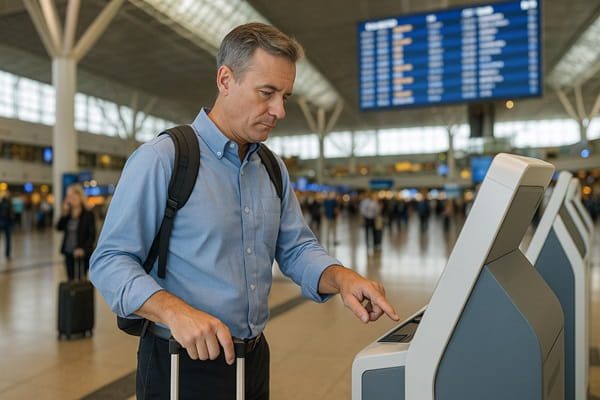
Once upon a time, travel began with a dog-eared guidebook and a paper boarding pass folded carefully into a passport wallet. These days, it starts with a group chat, a price alert and a handful of apps that quietly choreograph the entire journey long before a suitcase is packed.
The modern traveller moves through airports, hotel lobbies and border queues with a phone in hand and an expectation that everything, somehow, will work. What most never see is the heavy digital machinery beneath the surface that makes that promise possible.
At the centre of that machinery sits Information Technology and Business Process Management, IT-BPM in industry shorthand, an engine room of outsourcing, automation and data integration that is now reshaping how the global travel industry operates.
The pandemic, for all its devastation, forced the sector into its fastest technological transformation in history. Borders closed. Flights vanished. Call centres collapsed under the weight of cancellations, refunds and fearful passengers desperate for answers. Legacy systems proved painfully fragile.

Richard Valente, Executive VP
In that crisis, travel providers had no choice but to modernise at speed.
Airlines, hotels, cruise lines and online booking platforms turned sharply toward outsourced customer experience services and IT-BPM specialists to stabilise operations. Automated rebooking, real-time disruption management and intelligent self-service portals moved from boardroom ambition to operational necessity almost overnight.
Richard Valente, Vice President of Customer Experience Strategy at TP in Australia, says the shift permanently changed how travel businesses think about service.
“Travellers now expect immediate answers, seamless problem-solving and personal recognition across every channel,” he says. “That level of responsiveness simply isn’t possible without deep integration of data and automation behind the scenes.”
The End of One-Size-Fits-All Travel
Today’s traveller has little patience for generic service. Personalisation is no longer a luxury — it is assumed. The same expectation that Netflix will suggest the next show or a bank app will predict spending habits has followed passengers into the skies.
Customer Experience Management now spans the entire travel lifecycle: from first enquiry and booking to post-trip follow-up and loyalty retention. By linking Customer Relationship Management systems with AI-driven analytics and predictive modelling, travel brands are learning to anticipate needs rather than merely react to them.
A delayed flight might now automatically trigger a hotel voucher, dinner credit or loyalty upgrade before the passenger even approaches the service desk. A frequent flyer’s preferences for seating, meals, and accessibility needs follow them invisibly across touchpoints.
These moments feel effortless to the traveller. In truth, they rely on complex orchestration across multiple data systems, most of it handled by IT-BPM providers who operate quietly out of sight.
High Tech, Still Human
For all the talk of artificial intelligence, the travel industry has learnt an old truth anew: distressed passengers do not want to speak to algorithms. They want reassurance. They want understanding.
The most successful operators are those who blend high-speed automation with unmistakably human empathy. Intelligent systems increasingly handle routine tasks, such as booking changes, check-in queries, and schedule updates. That frees skilled agents to focus on the situations that actually require human judgment.
Reuniting a family scattered by cancellations, calming a nervous first-time international traveller, and recovering a ruined itinerary after a cascade of delays. These moments still belong to people, not machines.
In this model, technology does not replace staff. It equips them.
When Efficiency Becomes Environmental
The digital refit of travel has delivered more than smoother journeys. It has also quietly pushed the industry toward sustainability.
Paper boarding passes have all but disappeared. Manual logistics are giving way to digital documentation. AI-enabled route optimisation trims fuel use. Back-office automation reduces waste, duplication and energy demand. What began as a search for efficiency is now reshaping environmental performance.
For an industry under increasing scrutiny for its carbon footprint, these gains matter not only to regulators and investors but also to travellers themselves.
A Different Kind of Race Ahead
The race now underway in global travel is not simply for routes and aircraft. It is a race for relevance in an era of rising digital expectations.
IT-BPM and outsourcing providers are helping travel companies move from firefighting to foresight — from reacting to complaints to designing experiences before problems arise. The work is invisible when it succeeds, which is precisely the point.
The next chapter of travel will belong to those who understand that data alone is not enough. Nor is automation. The winners will be the brands that marry intelligence with empathy at scale.
Because for all the software now guiding the journey, the truth remains stubbornly human: people do not remember systems. They remember how they were treated when things went wrong.
And in travel, things always go wrong eventually.
by Yves Thomas – (c) 2025
Read Time: 4 minutes
About the Writer
 Something quietly magnetic about Yves Thomas is the poised calm of someone who’s seen the world from both sides of the reception desk. A graduate of Bangkok University International, Yves earned her Bachelor of Arts in International Tourism and Hospitality Management and stepped straight into the beating heart of Thailand’s travel industry.
She worked with some of the country’s finest destination management companies, mastering the art of making other people’s holidays unforgettable.
In time, the call of the open road grew louder than boardroom meetings. Yves packed her bags, swapped conference calls for compass points, and set off to rediscover the joy of travel on her own terms. Somewhere between Chiang Mai and Copenhagen, she began to write small reflections that soon became her travel blog, a journal full of warmth and insight.
Now calling Hua Hin home, Yves has joined Global Travel Media to share those reflections with a broader audience, not as a publicist, but as a storyteller with a traveller’s soul and a professional’s eye for detail.











