For International Day of People with Disability (3rd December), Guide Dogs Australia is challenging the Aviation sector to remove access barriers nationwide for people living with low vision or blindness and position Australia as the global leader in accessibility.
Guide Dogs’ latest Destination 2030 Campaign is encouraging airlines and airports to implement consistent and transparent processes, clear ways of asking for support, and provide more specialised training for staff to deliver a seamless end-to-end journey.
Research from Guide Dogs Australia shows that over eight in ten people with blindness or low vision repeatedly experience
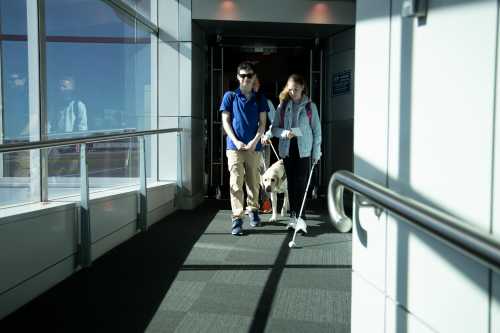
From the moment a traveller attempts to book a ticket through to boarding, landing and collecting their luggage, barriers are common and severe. People report:
- Inaccessible online booking platforms that are difficultor impossibleto use withassistive technology.
- Inconsistent or unclear processes tobook on with aGuide Dog.
- Inaccessibilityacrossairportsi
gnage, boarding informationor navigation support. - Discriminatory practices, includingmobility aidssuch as white canes being removed at security.
In response, Guide Dogs Australia is launching the Destination 2030 campaign at the Airport Association Australia National Conference at the Gold Coast (3rd December) to encourage the industry to apply a collaborative, whole sector approach to inclusive and accessible travel.
Sydney based Sibylla, and her Guide Dog Velvet took their first flight together a year ago, an experience that has completely put her off: “It took a long time and a lot of courage to regain my confidence after losing my sight.
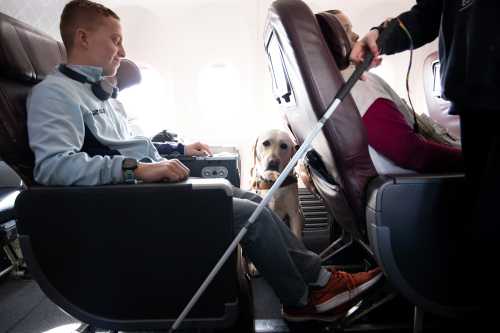
It felt like a final milestone to be able to travel independently again with the help of my amazing Guide Dog. However, my experience was terrible, and I have not attempted to travel since.
Sibylla reports booking platforms that were impossible to use, phone staff that did not seem to know how to book a person with a Guide dog on a flight and confusing and contradictory instructions.
“When I did arrive to take my flight, the staff were rude and made me feel exposed and humiliated like I was an inconvenience that they did not want to deal with, complaining in loud voices while asking me to stand to the side of the boarding line and wait for everyone else to board first. What should have been an exciting experience turned out to be a nightmare.”
Lee Kumutat, Guide Dogs National Advocacy and Policy Manager said: “Destination 2030 is our roadmap to an aviation system that works for everyone. People with blindness or low vision should be able to book a flight, navigate an airport, and travel with confidence and dignity. Right now, too many are facing barriers that are completely preventable.
We’re grateful for the vital support of the Airport Association Australia in helping pioneer this change. With the Australian Federal Government currently reforming both the Disability Discrimination Act and the aviation sector through an Aviation White Paper, there is a real opportunity to embed disability inclusion across every stage of air travel, through whole sector collaboration, we believe we can make tangible improvements.”