
Douglas Quinby, CEO and Co-founder of Arival, opened Arival 360 Washington with a data-rich keynote that laid bare the trends reshaping the travel experiences sector. Leading with a compelling stat from Arival’s proprietary research, Quinby revealed: “The top 10% of income earners in the United States account for nearly half of all spend… and within our industry, that 1/5 cohort of affluent travelers drives nearly half of all experiences spend.”
The keynote, delivered at the Gaylord National Resort & Convention Center, focused on the intersection of economic shifts, generational change, and exponential tech disruption. Drawing from Arival’s Global Operator Landscape Survey, Quinby highlighted regional performance trends: “Asia is doing relatively well, with a majority of operators reporting growth. But in the U.S. and Latin America, 60% of operators told us their business is flat or down this year.”
Quinby urged operators to rethink customer segmentation and product strategy. “Younger travelers are trading down, pulling back, and using buy now, pay later: even for $500 experiences. One in five travelers now pays this way, and nearly all of them are Gen Z or younger millennials.”
He also spotlighted the rise of immersive travel: “There’s a generational shift underway. Younger travelers want to taste, touch, feel. They want to be co-creators of the experience, not passive listeners.”
On the tech front, Quinby warned of rapid disruption: “AI Overviews now appear in more than half of all U.S. travel searches. SEMrush says LLM traffic will overtake traditional search by 2028, but I’d bet on the second half of next year.”
The keynote closed with a call to action: “If 2025 hasn’t lived up to your expectations, you’re not alone. But you’re in the best possible place, surrounded by the people who can help you plan, adapt, and grow.”
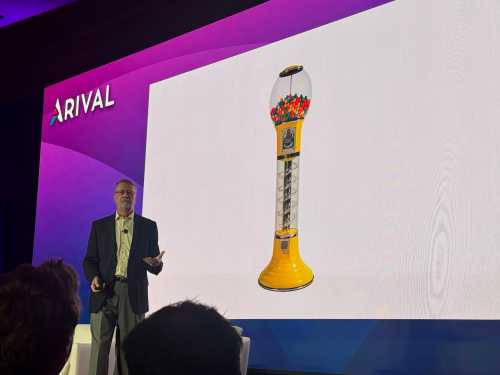
Welcome to the Transformation Economy: B. Joseph Pine II on turning travel into lasting change
In a keynote that redefined the purpose of travel experiences, B. Joseph Pine II – author of The Experience Economy – called on operators to embrace a new paradigm: the transformation economy. “Transformations are the fifth and final economic offering,” he declared. “They happen from the inside out – and they begin with you.”
Pine urged travel leaders to shift from staging experiences to guiding personal change. “You don’t transform people, they transform themselves. You’re their guide.” He introduced the concept of time well invested, arguing that transformational experiences offer the highest form of value: helping guests become who they aspire to be.
He spotlighted The Guide School in Denmark, which offers a “transformation guarantee” to aspiring tour guides. “If graduates don’t land a job within four months, they get a full refund. Twenty-five years. Never had to pay it.”
Pine also addressed pricing: “The money you charge equals the value you create. And with transformations, that value includes core functionality plus the net value of time.” He warned against commoditization: “If people are buying you based on price and convenience, it’s time to shift up.”
In a lively Q&A, Pine affirmed that fun and transformation can coexist. “It’s absolutely okay to just offer a great experience. But if you want to guide change, do it intentionally, and train your guides to recognize the moments when transformation is possible.”
He closed with a practical framework: encapsulation, a three-phase model of preparation, reflection, and integration.
“Transformations are all about helping customers become who they want to become. And when you guide that journey, you create the greatest value of all.”
“You Can’t Copy Reputation”: GetYourGuide’s Tao Tao on curation, commission and scaling quality
In a data-rich session at Arival 360 Washington, Tao Tao, Co-founder and COO of GetYourGuide, offered rare transparency into the platform’s commission structure, growth strategy, and evolving approach to quality. With over 35,000 operators now on the platform – up from 15,000 just a few years ago – Tao emphasized that scale must be matched by curation.
“The primary purpose of commission rates is to power growth and reach for operators,” Tao explained. “We localize into more than 30 languages, offer 24/7 customer support, and invest heavily in marketing. That’s what commission fuels.” Rates vary by category and destination, with “category floors” designed to create a level playing field. “A helicopter ride in the Grand Canyon has very different structural costs than a walking tour,” he noted.
Tao acknowledged that rollout timing during high season wasn’t ideal, but reaffirmed GetYourGuide’s commitment to working one-on-one with operators: “We tailor commission rates to individual business objectives. Some operators even choose higher commission to differentiate on the marketplace.”
Quality, he stressed, is the platform’s north star. “Early this year, we moved to a more curated approach. It’s an open platform, but with high standards on compliance, safety, and quality.” Tao addressed the rise of copycat itineraries head-on: “You can maybe copy a route. You can maybe copy an itinerary. But you cannot copy world-class operations. And you cannot copy reputation.”
He added, “If a customer sees 10,000 reviews and a 4.8 rating, that’s what they’ll choose. Our job is to immortalize the quality that operators deliver.”
Tao also highlighted the importance of welcoming innovation. “Half the operators I met in Japan last year started their business during COVID. They’re creating manga tours, voice actor tours, experiences that didn’t exist 15 years ago. We want those, as long as they add uniqueness and quality.”
With over 150,000 activities currently listed, Tao sees room to grow, especially in tier-two and tier-three destinations. “We’re still scratching the surface. Our goal is to answer the question: What can I do in DC? In Phoenix? In Hudson Valley?”
He acknowledged the need for better consumer-facing tools to help travelers filter and discover experiences, while also refining the curation process to avoid duplication. “If listings are too similar, we don’t live up to our value proposition to operators, which is to deliver reach and bookings.”
Tao also addressed concerns about review manipulation and platform integrity. “We take review manipulation extremely seriously. We’ve deactivated operators and removed listings because of it. Trust is everything.”
To help operators stand out, GetYourGuide is investing in AI-powered tools that surface customer insights and highlight what makes each experience unique. “Over 60% of our operators already use our AI tools to create content and analyze reviews. And over 90% of reviews mention the guide; that’s what makes an experience transformative.”
On overtourism, Tao emphasized the importance of distribution. “We’re working to spread demand across time and space, so travelers don’t just show up at 10 a.m. in one spot, but discover the full breadth of what a place has to offer.
Multi-day momentum: TourRadar, KimKim, and El Camino on the future of travel discovery and distribution
The next session at Arival 360 Washington, hosted by Travel Trends’ Dan Christian, spotlighted the fast-evolving multi-day tour sector, with Travis Pittman, Co-founder of TourRadar, leading with a dynamic presentation on digital transformation, social commerce, and the power of AI. “We’re at an inflection point,” Pittman declared. “You can’t just plug in a day tour model and expect it to work, multi-day is a different beast.”
Traditionally dominated by B2B sales and travel agents, the multi-day space is shifting rapidly toward direct digital distribution. “Before COVID, 70% of multi-day tours were sold offline,” Pittman explained. “Now, we’re seeing a real shift to digital, and it’s being driven by technology, social media, and AI.”
He emphasized the complexity of the customer journey: “It takes 15 days from first touch to conversion, across 2.1 devices. And the average booking is made 95 days before departure.” TourRadar’s mobile app now touches 35% of bookings, with 15% completed in-app.
Social commerce is emerging as a major force. “TikTok is launching booking features. These apps want to become super apps, with e-commerce, travel, and discovery all in one place,” Pittman said. TourRadar is already integrating with LLMs like ChatGPT via MCP servers, enabling users to discover and book tours directly from reels, DMs, and AI-powered search.
Joost Schreve, CEO of KimKim shared a contrasting model focused on custom, high-touch travel. “We don’t do group tours. We do individual custom trips,” he explained. “Travelers spend an average of $10,000 on 10-day itineraries. We reach out within four hours and tailor everything to their needs. It’s a deeply personal, transformative experience.”
Katalina Mayorga, CEO of female tour company El Camino added her perspective on small group trips for bold women travelers. “We’re not for all women travelers, and that’s okay,” she said. “We niche down to serve bold women with a passion for culture. We want to be the lighthouse they come to, that reflects back who they are and who they aspire to be.”
El Camino’s brand marketing strategy includes a paid membership community, offering travel tips for 140+ destinations and fostering connection between trips. “Your Instagram following is not a community,” Katalina said. “We build real relationships with our travelers, online and offline.”
Katalina closed with a powerful stat: “By 2030, one in two women in the U.S. will be childless and single, with significant disposable income. The solo female traveler segment is exploding.”
The session wrapped with a reflection on loyalty, connection, and the human need for belonging. “It takes 72 hours to become good friends with someone,” Katalina noted. “Multi-day tours create space for that, and that’s why they’re so powerful.”
Tech, Trust, and Transformation: Easol, Lemax, Tourseta, and ResPax on solving multi-day complexity
Session 5 at Arival 360 Washington brought together four tech leaders to tackle one of the industry’s thorniest challenges: how to build scalable, integrated solutions for the multi-day tour sector. The panel featured Susan DeBottis (Easol), Mate Kostoviski (Lemax), Alex Ragin (Tourseta), and Steve Farrelly (ResPax), each offering a unique lens on digital transformation.
Susan DeBottis, VP of Adventure and Entertainment at Easol, opened with a clear diagnosis: “Multi-day is the most complex set of challenges I’ve ever come across in my career.” Easol, originally built for destination music festivals, now powers operators like Girls Guide to the World and Surf Yoga Beer. “Whether it’s a seven-day yoga retreat or a three-week European itinerary, the tech needs are wildly different,” she said. “Our job is to ease operational pain, enable demand generation, and help operators reach profitability.”
Mate Kostoviski, CEO of Lemax, pointed to the structural barriers holding the sector back. “Digital transformation is sluggish because the market is inherently complex, and the tech solutions available are often unaffordable or too generic.” He proposed consolidation as a path forward: “If we had more investment in tour operators and tech providers, we could scale innovation. Consolidation is the key to moving the market at a much higher pace.”
Alex Ragin, founder of Tourseta, shared why he built a platform specifically for multi-day operators. “We built five custom booking platforms before realizing the similarities across travel businesses. That’s why we created Tourseta, to cover 80–90% of group travel needs without the cost of custom builds.” He advised: “If your business is under $10 million in annual revenue, buy, don’t build. Maintenance alone can cost 10–15% of your initial spend every year.”
Steve Farrelly, now with ResPax (rebranded as Copper), described the company’s evolution into a unified tech stack. “We’ve consolidated brands like ResBook and Livn under Copper to offer a single platform for buying, selling, and operating travel. Our goal is to drive efficiencies across sales, operations, and finance, and help operators grow through B2C, OTA, and trade distribution.”
In their closing remarks, each speaker offered a key takeaway:
-
Susan: “Be open-minded. Tech is evolving rapidly. You no longer need to stitch together five systems. Don’t settle, explore what’s out there.”
-
Alex: “Choose software that grows with your business, but isn’t too complex. And make sure it fits your specific model, whether it’s group departures, tailored travel, or flexible itineraries.”
-
Mate: “Digital transformation should be tied to a strategic goal, like profitability or market expansion. Otherwise, it’s hard to justify the investment or find the right partner.”
-
Steve: “Don’t make tech decisions in isolation. Collaborate across departments, sales, ops, finance, and choose tools that enhance the customer experience and drive efficiency.”
From “Things Near Me” to “Things That Fit Me”: Brand USA’s Janette Roush on AI and the Transformation Economy
In a compelling keynote at Arival 360 Washington, Janette Roush, EVP of Marketing at Brand USA, explored how artificial intelligence is reshaping not just travel discovery, but the very purpose of travel itself. “We’re not just transforming travel,” she said. “We’re transforming the transformation process.”
Building on themes introduced by B. Joseph Pine II, Roush argued that travelers are moving beyond checklist tourism and Instagram validation. “Travel is becoming a tool for self-definition, for becoming who we want to be,” she said. “It’s less about proving you were there, and more about discovering who you are.”
She identified three key areas where AI will shape this transformation economy:
-
Discovery: “We’re shifting from ‘things near me’ to ‘things that fit me.’ AI will personalize the decision-making process, not reduce touchpoints, but redefine them.”
-
Decision: “Search is changing. Google’s AI Overviews now answer questions directly, scraping your content without sending traffic to your site. We need to rethink how we create content, not just for humans, but for AI agents.”
-
Definition: “Post-trip reflection will shift from TripAdvisor ratings to personal resonance. What version of yourself did this experience help you become?”
Roush introduced the concept of Model Context Protocol (MCP), a new framework that allows travel products to be discoverable and bookable directly within AI platforms like ChatGPT, Claude, and Gemini. “Think of MCP servers as an app store for AI,” she explained. “They allow structured data and tools, like booking engines or live crowd feeds, to plug directly into a traveler’s personal AI environment.”
She painted a vivid picture of how this could work: “Imagine asking your AI whether to visit the Empire State Building or take the Staten Island Ferry. It could pull live crowd data, weather forecasts, and historical wait times to guide your decision, all without leaving the chat.”
Persistent memory and personalization will make these AI environments feel indispensable. “Soon, it’ll feel disruptive to leave your AI to do travel research elsewhere,” Roush said. “These tools will know you, and help you transform.”
“This is an opportunity for brands to win. If your product can be discovered and booked inside someone’s personal AI, you’re not just part of their itinerary, you’re part of their transformation.”
Search is changing, Fast: Propellic’s Brennan Bliss on AI ode, Google Business Profiles, and messy middle
In a fast-paced and data-rich session at Arival 360 Washington, Brennan Bliss, Founder and CEO of Propellic, unpacked the seismic shifts AI is bringing to search advertising and travel discovery. “The industry is addicted to bottom-of-funnel search,” he said. “But AI is rewriting the rules, and we need to adapt.”
Bliss opened with a staggering stat: Booking.com and Expedia spent $5.7 billion on search advertising in Q2 alone. “That’s one of Google’s top 10 ad categories,” he noted. “But the landscape is changing. AI Overviews, powered by Google’s Gemini model, are increasingly replacing traditional search results. And they’re not sending traffic to your website.”
He explained the rise of AI Mode, Google’s new conversational interface that’s already live in 180 countries. “Sundar Pichai said anything that works in AI Mode will become the primary search experience. That’s a massive pivot, and it’s happening fast.”
Bliss shared findings from a user experience study involving 50 participants and 71,000 words of transcripts. “We watched people plan and book travel entirely inside AI Mode. The traditional funnel, research, plan, book, collapsed into a tangled ball of hair. We call it the messy middle.”
One surprising insight: operator websites showed up more frequently than OTAs in AI Mode. “It’s not the case in every LLM, but in Google’s AI Mode, operators were often prioritized. That’s huge for this room.”
He urged operators to optimize their Google Business Profiles. “In AI Mode, users aren’t clicking through to your website, they’re landing on your Google listing. That’s what Google retrieves and displays. Make sure it’s accurate, complete, and compelling.”
Bliss emphasized the importance of managing visuals and reviews: “Customers can post any photo to your profile. Monitor it. Curate it. Your Google Business Profile is now your storefront.”
He also clarified how LLMs retrieve current information: “When ChatGPT gives you a recent answer, that’s not the model, it’s a tool pulling live search data. Google’s Gemini uses its own index, which powers 90% of global search traffic. So yes, SEO still matters.”
The paradigm for SEO is shifting. “We’re no longer optimizing pages for keywords,” Bliss explained. “LLMs deliver self-contained paragraphs, not entire pages. So structure your content in digestible chunks, and make sure every platform represents you well.”
He closed with a challenge: “If someone clicks through from AI Mode and lands on your homepage, that’s a broken experience. Structured content and better handoff tools are coming, but start preparing now.”
Bliss invited attendees to explore the full findings in the “From Search to Purchase” study, developed in collaboration with Arival, Phocuswright, and other partners. “This is the future of travel search. If you’re not showing up in AI Mode, you’re not in the conversation.”
Unexpected stories, unforgettable impact: Akila McConnell on storytelling, AI, and transformative tourism
In one of the most emotionally resonant sessions at Arival 360 Washington, Akila McConnell, founder of Unexpected Tours and Training, challenged the audience to rethink what makes a story powerful, and what makes a tour transformative. “Our customers aren’t looking for the probable,” she said. “They’re looking for the profound.”
McConnell introduced the concept of transformative learning theory, a model developed by Jack Mezirow in the 1970s and adapted by her team into four stages: disorientation, reflection, exploration, and transformation. “Disorientation is the spark,” she explained. “It activates the amygdala, releases dopamine and adrenaline, and makes us sit up and take notice. That’s the neuroscience behind repeat customers.”
She illustrated this with the story of Harriet Tubman’s Combahee River raid, a moment of historical disorientation that reframes assumptions and ignites curiosity. “Expecting George Washington and getting Harriet Tubman, that’s the kind of story that transforms.”
McConnell emphasized that all tourism professionals are in the adult learning business. “Adults are hard to teach. We rely on cognitive shortcuts, biases, that shape how we interpret the world. AI does the same. It amplifies bias because it’s trained on human data. That’s why we must be intentional with the stories we tell.”
Her company’s pivot to virtual tours in 2020 was built on this foundation. “We launched one-hour cultural consciousness sessions with immersive storytelling and gamification. Last year, we hosted 27,000 guests. It’s now a multimillion-dollar vertical, and I believe it’s because we design for transformation.”
She offered four practical tips for harnessing disorientation in storytelling:
-
Use AI thoughtfully: “AI delivers the probable. You must disrupt it.”
-
Watch for bias: “AI leans into stereotypes. Challenge them.”
-
Never rely on a single source: “Transformation requires detail. Detail requires research.”
-
Don’t flinch: “Frame your stories to challenge expectations. Train your guides to tackle hard topics, because your guests are already thinking about them.”
McConnell also addressed how to navigate divisive topics on tours. “We train our guides in emotional intelligence, empathy building, and how to create common humanity,” she said. “If a disagreement erupts, de-escalate by recognizing everyone’s shared humanity. You’re not there to win an argument, you’re there to guide reflection.”
She shared a poignant story from a tour in Atlanta, where an older white guest was shocked to learn about Jim Crow laws. “He had lived through that era but never encountered the truth. Meanwhile, a young Black family on the same tour was deeply aware. That moment sparked real dialogue, and real learning.”
She ended: “We live in insular communities. Our tours are rare opportunities to connect across difference. What a gift we have.”