


Tourism Falters as Tensions Flare Along the Thai–Cambodian Border.
Dawn usually breaks gently across the Thai–Cambodian frontier. The jungle hums awake, monks pad barefoot along mist-veiled paths, and the majestic silhouettes of Preah Vihear and Ta Moan Thom temples rise stoically over centuries-old battlegrounds turned heritage sites. But in late July 2025, the stillness was shattered.
For five harrowing days, the borderlands transformed from sites of spiritual calm into modern flashpoints. Mortars screamed overhead, temples quivered from artillery shockwaves, and over 135,000 residents fled into uncertainty. In an age defined by peace-through-tourism, this violent rupture stunned the region—and the world.
From Calm to Crisis: A Timeline of the Thai–Cambodian Conflict
24–30 July 2025
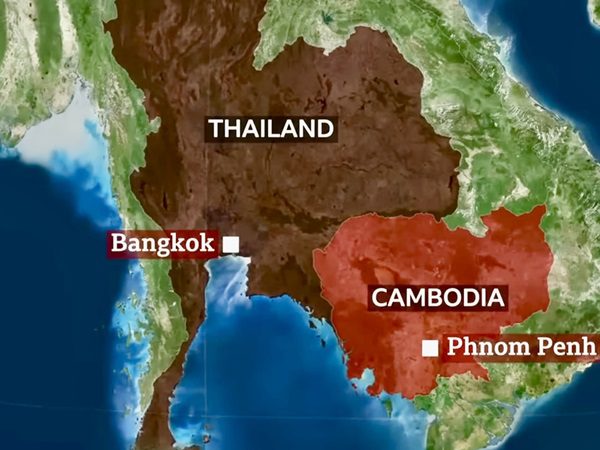
Tensions simmer as Thailand and Cambodia clash over ancient temple frontiers.
- 24 July, 06:30 hrs – Tensions boil over as Thai soldiers report small-arms fire near Ta Moan Thom temple, triggering retaliatory strikes and panic evacuations.
- 25 July – Escalation ensues. Thai jets allegedly target Cambodian positions in the Choam Khsant district. Both governments issue blame-laden statements.
- 26 July – Humanitarian crisis unfolds. With displacement topping 135,000, UNICEF and other agencies call for urgent child protection.
- 27 July, 19:00 hrs (NYC) – The UN Security Council convenes an emergency session, warning of “grave regional destabilisation.”
- 28 July, 21:00 hrs – ASEAN, flanked by the US and China, brokers a ceasefire in Kuala Lumpur, to commence at midnight.
Ceasefire on Shaky Ground: Immediate Violations
- 29 July, 01:15 hrs – Cambodian officials accuse Thailand of renewed firing in Oddar Meanchey. Thailand firmly denies involvement.
- 29 July, 09:45 hrs – Thailand reports incoming mortar fire near Ta Krabey temple. Each side blames the other.
- 30 July, 03:00 hrs – ASEAN monitors in Sa Kaeo detect small-arms fire on the Cambodian side. Fighting appears to abate, though the truce remains fragile.
Conflict Zones in Cambodia
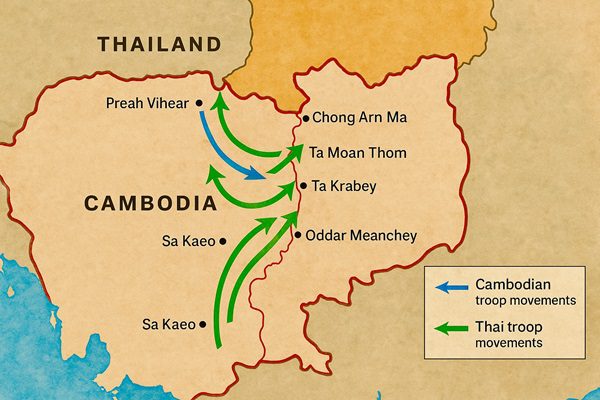
Confirmed Conflict Zones in Cambodia
- Ta Moan Thom and Ta Krabey temples lie inside Cambodia but are adjacent to the Thai border. Both sites saw artillery exchanges, airstrikes, and rocket fire.
- Oddar Meanchey Province— Cambodian officials reported that Thai airstrikes and shelling reached Cambodian positions here, prompting claims of Thai incursions.
- Choam Khsant District (Preah Vihear Province)— Cambodian territory, struck by Thai forces targeting artillery emplacements.
Thai Territory Skirmishes
- Sa Kaeo and Surin Provinces— Thai border areas experienced incoming Cambodian rocket fire and mortar shells. Civilian casualties and evacuations were reported in some Thai border towns.
- Ubon Ratchathani (Nam Yuen District)— The site of a deadly landmine incident on 23 July that injured Thai soldiers, located close to the Cambodian frontier.
Tourism in Retreat: The Economic Undercurrent
In the crosshairs of the conflict lies one of Southeast Asia’s most ambitious post-COVID recovery projects: cross-border cultural tourism. Just weeks ago, regional operators were gearing up for a new season of Thai–Cambodian “Temple Trail” packages. Today, that vision lies scorched.
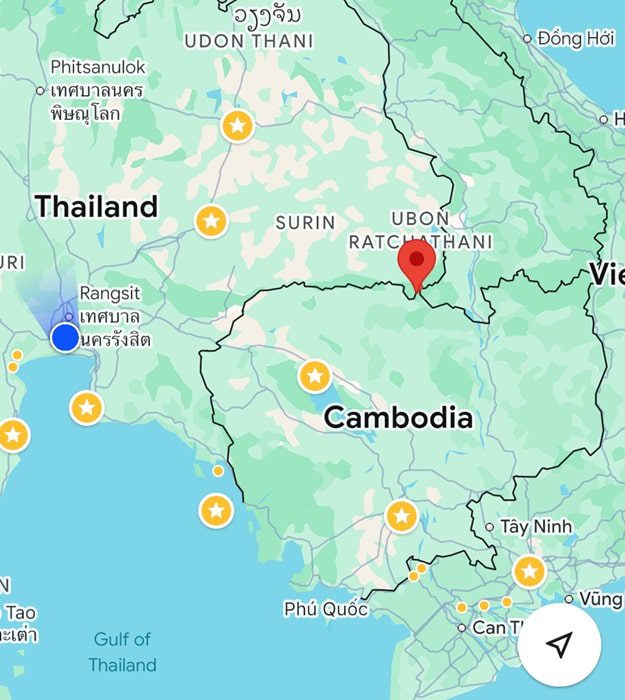
Flashpoint pinpointed Ubon Ratchathani as bearing the brunt of cross-border hostilities.
Thailand’s Sa Kaeo, Trat, and Chanthaburi provinces—gateway districts once bustling with minivans and market stalls—have fallen silent. Hotel bookings have plummeted. Flights to Siem Reap and Battambang are down sharply, and local guides are left with little but stories of cancellations and silence.
The president of Skål International Bangkok, James Thurlby, summed it up succinctly: “This conflict is devastating for border communities still struggling to recover from the pandemic. When borders close, it’s the tuk-tuk drivers, market traders, and family-run guesthouses who get hit first and hardest.”
Tourism Takes a Hit
Before the conflict, both countries had been celebrating post-pandemic recovery. Direct travel between Angkor Wat and northeastern Thailand had just resumed. Joint tour packages, heritage rail routes, and ASEAN cross-border visas were gaining momentum. All now suspended.
Bookings have plummeted by 38% in conflict-adjacent provinces. Border towns like Sa Kaeo, Surin, and Oddar Meanchey—many reliant on cultural tourism—report mass cancellations.
This latest flare-up reopens old wounds, particularly over ownership and sovereignty of UNESCO-listed Preah Vihear, Ta Moan Thom, and Ta Krabey—temples that straddle the cultural and geopolitical frontier. Each site embodies Khmer and Thai identities in stone, their disputed status a simmering fuse in every bilateral negotiation.
Preah Vihear, perched atop a dramatic cliff with sweeping views across Cambodia, is perhaps the most iconic—and most contested. Though the International Court of Justice awarded sovereignty to Cambodia in 1962, Thai nationalists have never fully accepted the ruling.
When border lines remain unclear, temples—intended as monuments to peace—too often become catalysts for conflict.
What Next? Rebuilding Trust Along the Silk Border
Despite the ceasefire, sporadic breaches and mutual recriminations underscore the deep-rooted nature of the dispute. So what now?
A few bold steps could help realign this delicate region:

Ceasefire line flickers as Ubon Ratchathani stands watch over Cambodia’s frontier.
- Establish a permanent demilitarised zone around key temple areas, jointly patrolled under ASEAN supervision.
- Launch a bilateral Heritage Peace Initiative—with UNESCO and cultural NGOs promoting temple diplomacy through joint festivals, restoration work, and educational exchange.
- Reopen tourism dialogues to focus on peace-first marketing, reinstating traveller confidence via cross-border Buddhist circuits and “Peace Trails”.
- Create a Rapid Response Diplomatic Cell—a task force for future flashpoints to be de-escalated within 24 hours, not five days of warfare.
A Call for Long-Term Peace
If Southeast Asia has taught the world anything, recovery follows even the darkest chapters. From the 2004 tsunami to COVID-19, and now this border flare-up, the region’s resilience endures.
Yet peace, unlike tourism, does not rebuild itself. It requires vision, commitment, and trust—not just in treaties but in people.
As we watch the ceasefire hold—or unravel—what’s needed most is not blame but bold steps forward. The next chapter in Thai–Cambodian relations could still be written in the language of peace, hospitality, shared heritage, and mutual respect.
By Andrew Wood












