
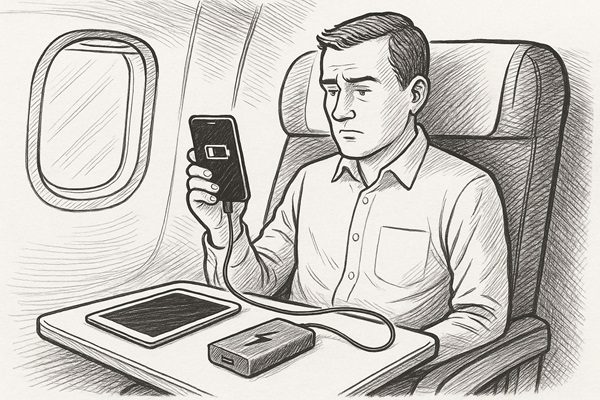
In this golden era of travel, there’s little more panic-inducing than watching your phone’s battery plummet to single digits somewhere above the Indian Ocean. But before you reach for that trusty power bank, be warned: a quiet but determined shake-up is underway in airline battery policies.
Yes, dear reader, the age of carefree carry-on charging is under threat.
Singapore Airlines, Scoot, China Airlines, Thai Airways, Korean Air, Asiana Airlines and EVA Air have all begun enforcing stricter regulations around onboard battery packs. Virgin Australia is now hot on their heels with its policy review.
In short, airlines are cracking down on how and when portable chargers (also known as power banks) can be used in flight. Like many policy changes, this one is being rolled out with all the subtlety of a feather landing on a doona.
The Spark That Lit the Fuse
The concern, of course, is safety. Lithium-ion batteries, the same ones nestled inside your power bank, have been known—very rarely, mind you—to overheat or combust. On the ground, it’s a nasty inconvenience. At 35,000 feet, it’s a cabin crew’s worst nightmare.
FCM Travel, the corporate travel heavyweight under the Flight Centre Travel Group umbrella, urges travellers—especially businesspeople who depend on their devices more than coffee—to pay close attention to each airline’s updated requirements.
Renos Rologas, General Manager of FCM Travel ANZ, gave us a frank reality check.
“A lot of Asian carriers are introducing the new requirements, and it includes many that Australians know and frequent, so it’s important that travellers understand these new restrictions and the impact they will have on them.”
Indeed. While we might have once boarded a flight with half a dozen devices, three power banks and a tangled mess of cables, it’s time for a rethink.
Staying Powered in the Air: Tips From the Experts
Fortunately, it’s not all doom and gloom and dimming screens. FCM Travel has offered some practical, old-fashioned wisdom for keeping your digital lifeline charged without violating aviation rules.

Renos Rologas
1. Know Before You Go
Policies differ by airline—and in true bureaucratic fashion, they’re subject to change. Before you fly, check your airline’s website for the latest battery rules. They’re usually buried beneath “dangerous goods” or “carry-on guidelines”, but they’re worth the hunt.
2. Board Fully Charged
This one’s a classic: Charge your devices to 100% before departure. If you’re loitering at the airport, sniff out a charging port near your gate. Lounges, cafés, and even gate-side walls are often discreetly equipped with power points if you know where to look.
3. Bring a USB Charging Cable
Many aircraft, especially on long-haul routes, have USB charging outlets right in the seatback. It’s not always lightning fast, but it’ll keep your phone alive for Spotify playlists or mid-flight emails.
4. Pick the Right Device
Mr Rologas makes an excellent point that’s worth repeating:
“Laptops are hard to charge on the go, and are a bulky, heavier option. I prefer to have a tablet in my carry-on that has similar functionalities to a laptop, but it’s easier to charge onboard and travel with.”
A tablet, it turns out, is the Goldilocks solution—lightweight, functional, and easier to recharge.
5. Use the Airline’s Entertainment System
Why drain your battery watching The Godfather Part II on your tablet when it’s playing on the in-flight screen? Airline entertainment systems have come a long way—and most won’t use a single volt of your precious power.
6. Watch Where You Plug In
Cyber crooks lurk even in USB ports as the digital world becomes murkier. “Juice jacking”—a nasty little trick where malware is installed via compromised public charging stations—has become a real risk. Using your own wall charger is safer than a mysterious airport kiosk.
7. Buy Quality Power Banks
Not all power banks are created equal. Dodgy knock-offs from shady marketplaces may save you a buck now, but they’ll cost you dearly if they fail mid-flight or trigger a smoke alarm at altitude. Stick with certified brands and reputable retailers.
8. Carry-on Only—No Exceptions
This one’s not optional. Per global aviation standards, portable chargers must travel with you in the cabin. Never, under any circumstance, toss them in checked baggage. It’s not just a suggestion—it’s a regulation.
A Glimpse Into the Battery-Powered Future
While inconvenient for some, these rule changes are part of a broader trend towards safer skies. As lithium technology evolves, we’ll likely see even more fine-tuning of what’s allowed, when, and where.
Rologas believes this is just the beginning:
“We’ve seen at least several airlines begin introducing restrictions on using and charging portable charging devices in the aircraft, and I expect we will see others follow suit within time.”
And he’s probably right. In the future, your in-flight power strategy may need to be as carefully considered as your seat selection or meal preference.
So, the next time you’re packing for a trip, think not just about what you’re bringing—but how you’re charging it. Planning on the ground can mean much less scrambling in the skies.
After all, as every seasoned traveller knows, the only thing worse than being stuck in a middle seat is being stuck in one with a dead phone and no way to fix it.
FINAL THOUGHT:
Jet engines and onboard Wi-Fi may power modern air travel, but it still pays to follow the old-school traveller’s advice—plan ahead, pack smart, and always read the fine print.
Because in the friendly skies, even your power bank now comes with baggage.
By Bridget Gomez