

In a stern reminder that honesty is still the best policy—even in cyberspace—Australian travel giant Webjet has been hit with a $9 million penalty after the Federal Court found it had misled consumers about airfare pricing and booking confirmations.
The Federal Court’s ruling, announced today, follows a comprehensive investigation by the Australian Competition and Consumer Commission (ACCC), which found that Webjet engaged in misleading or deceptive conduct as far back as 2018.
Let’s be clear: this wasn’t a clerical hiccup or an innocent minor omission. Webjet admitted to advertising flight prices that excluded essential compulsory fees—effectively dangling irresistibly cheap fares like a shiny bauble, only to jack up the cost with hidden charges at the checkout.
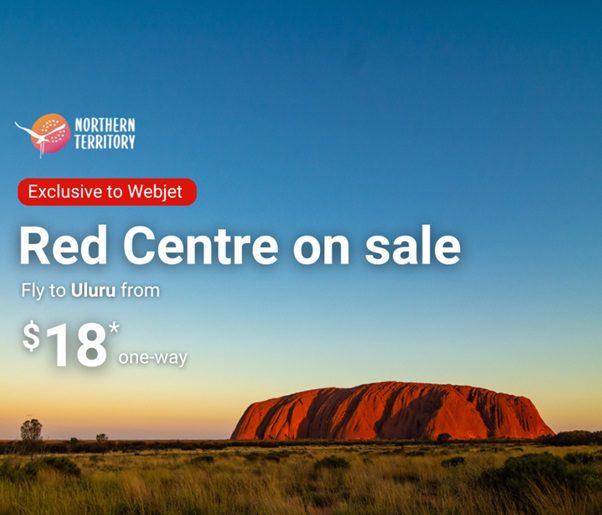
“From $18” — until it isn’t
The ACCC’s investigation began with a single consumer complaint about a fare promoted as “from $18” that ballooned to nearly three times that price once the dreaded “Webjet servicing fee” and “booking price guarantee” were added.
According to ACCC Chair Gina Cass-Gottlieb, the watchdog was not amused.
“Seeking to lure in customers with prices that don’t tell the whole story is a serious breach of the Australian Consumer Law,” Ms Cass-Gottlieb stated, rather diplomatically for a body that just saw fit to drop a $9 million hammer.
And one can hardly blame them. Between 2018 and 2023, Webjet allegedly played this little pricing shell game across its website, promotional emails, and social media channels. While its website and app disclosed the fees—albeit buried in fine print—its social media posts did not mention them. Consumers were left to connect the dots, squinting at the bottom of the screen like they were deciphering ancient runes.
Flight bookings that weren’t quite booked
It didn’t end with fuzzy pricing either. In another misstep, Webjet admitted to sending 118 consumers booking confirmations for flights that were, quite simply, never confirmed. Between 2019 and 2024, these customers received what they believed were sealed deals—only to be later told they’d need to fork out more cash, sometimes up to $2,120, to complete the booking.
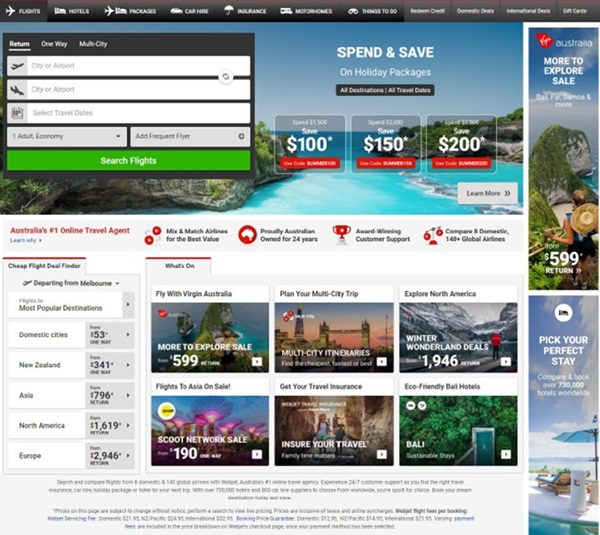
Example of website showing promoted prices for airfares advertised as “from $xx” – Image supplied by ACCC
To its credit, Webjet did refund those affected. But the damage, both reputational and financial, had already taken wing.
The case also highlights the eye-popping role these hidden fees played in Webjet’s bottom line. According to figures revealed in court, Webjet servicing and guarantee fees accounted for a staggering 36 per cent of the company’s total revenue between November 2018 and November 2023.
In an era when consumers are growing increasingly sensitive to pricing transparency—particularly after years of pandemic-era uncertainty—such revelations could hit harder than a surprise red-eye via Tullamarine.
“Clickbait-style pricing” is no longer tolerated.
The ACCC’s crackdown on Webjet dovetails with its broader 2025 enforcement priorities, which include targeting misleading surcharges and deceptive retail practices across supermarkets and the travel sector. This case sets a clear precedent that clickbait-style pricing is ending.
Retailers must ensure their advertised prices are accurate. They should clearly disclose additional fees and charges,” said Ms Cass-Gottlieb, reinforcing what most consumers would consider common sense—but which needed some rather expensive judicial clarification.
Cooperation… but with consequences
In fairness, Webjet didn’t dig in its heels. The company cooperated with the regulator throughout the process, admitted liability, and joined the ACCC in submitting proposed orders to the Federal Court. Alongside the hefty financial penalty, Webjet has also agreed to review its internal compliance programs and contribute to the ACCC’s costs.
Now operating as a wholly owned subsidiary of Webjet Group Limited—an ASX-listed entity—Webjet’s online travel agency arm will need to polish its public image quickly if it hopes to regain the confidence of Australia’s travel-hungry public.
Lessons for the industry—and the travelling public
There’s a larger lesson here for online retailers and travel providers: you can’t dazzle customers with rock-bottom prices and then tack on extras like you’re upselling popcorn at the cinema. Consumers expect clarity, and increasingly, the law does too.
For travellers, the message is simple. If a deal seems too good to be true, it probably involves scrolling to the bottom of the screen—past the pop-ups, banner ads, and sunny disclaimers—to uncover the real cost.
In the grand scheme, $9 million might be a blip for a company the size of Webjet, but it’s a headline-grabbing blip that reinforces a broader truth: trust in the digital marketplace is hard-won and easily lost.
In the age of comparison sites and price-scraping bots, transparency isn’t just good ethics—it’s good business.
By Susan Ng











