
They used to say the house always wins, but the entire neighbourhood does these days.
As integrated resorts bloom across the Middle East and Asia Pacific like well-irrigated date palms, they’re not merely stacking the deck in favour of a flutter on the roulette table—they’re reshaping tourism as we know it. Call it what you like—urban utopia, culture-cloaked casino, or the grown-up’s version of Disneyland—but one thing’s clear: it’s no longer just about the gaming. It’s about storytelling, soul, and seriously stylish stays.
Take the UAE’s Ras Al Khaimah, for example. Once famous for its rugged mountains and fishing villages, it is now preparing to welcome the Wynn Al Marjan Island integrated resort in 2027—a landmark development poised to elevate the emirate from a side note to centre stage. Over in Sri Lanka, Cinnamon Life’s City of Dreams in Colombo is laying the foundations for its immersive experience, complete with a regulated casino tucked respectfully into a broader cultural and lifestyle narrative.

ATM 2025
Both projects were front and centre at Arabian Travel Market (ATM) 2025, where the conversation shifted beyond high rollers and into high purpose. The message? The casino is not the show—just a colourful act in a much grander play.
Betting on Culture Over Chips
Forget the flashing lights and whirring machines for a moment. Resorts that reflect their locale, not just exploit it, truly win hearts (and return visitors). Industry heavyweights like Judith Cartwright (Black Coral Consulting), Darren Bishop (Heart+Mind Strategies), and Edward Batrouni (Zenitech) shared that sentiment, joining the ATM 2025 panel to discuss the future of hospitality.
“The next generation of travellers wants to connect—not just consume,” said Cartwright. “Integrated resorts need to be living, breathing stories that guests become part of—not just venues for play and pay.”
The emphasis? Personalisation. Local culture. Art. Music. And cuisine that doesn’t come straight from a buffet line, but straight from the village.

Cinnamon Life City of Dreams Sri Lanka
Cinnamon with a Touch of Soul
Over in Colombo, Sanjiv Hulugalle, CEO of Cinnamon Life Hotel & Mall, quickly reminded delegates that an integrated resort must respect its setting—or risk alienating the audience it hopes to entice.
“You’ve got to really tap into the surrounding destination,” Hulugalle said. “It makes the fabric, the texture, and the soulfulness far more impactful than just saying: ‘I’ve got a casino.’ It’s far beyond the positioning.”
Sri Lanka’s City of Dreams has been a slow burn—perhaps wisely—ensuring local community support and robust regulatory frameworks were firmly in place before chips hit tables.
The UAE’s Calculated Gamble
Meanwhile, Ras Al Khaimah is preparing to play its hand in a big way. The Wynn Al Marjan Island project isn’t just a splashy resort—it’s part of the emirate’s ambition to attract 3.5 million overnight tourists by 2030.
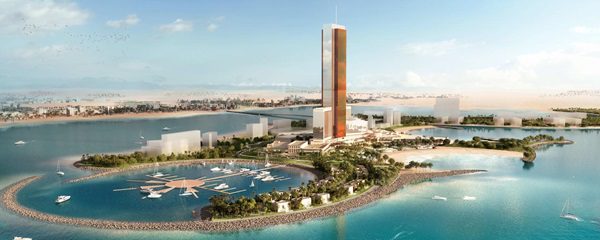
Wynn Al Marjan Island
Early projections suggest the UAE’s annual gross gaming revenues could hit US$3–5 billion once its integrated resort sector hits stride. With thousands of employment opportunities and tourism diversification front and centre, this bet seems less risky by the minute.
Critically, the creation of the General Commercial Gaming Regulatory Authority (GCGRA) in 2023 reflects the UAE’s commitment to managing this growth responsibly. It’s not a free-for-all; it’s a meticulously regulated expansion. And that, say experts, is precisely what sets this model apart.
It’s Not All About the Gaming
“Gaming might get them in the door, but it’s the rest that gets them to stay,” said Danielle Curtis, Exhibition Director ME at ATM.
She’s not wrong. Wellness, gastronomy, immersive theatre, art installations, and heritage-focused storytelling are quickly becoming the actual anchors of these resorts. Gaming? That’s just the cherry atop a multi-layered mille-feuille.
New research presented at ATM backed this shift in perception. While gaming ranks lower in priority for many potential guests, its status as a high-yield activity—particularly among older, wealthier visitors—remains undeniable. Resorts that incorporate gaming typically see a 30% uplift in visitor spend.
It’s the halo effect of indulgence—gambling or otherwise. You come for the blackjack, but stay for the spa, the gallery tour, and the Michelin-starred biryani.
Who’s Coming to the Party?
Key feeder markets are looking promising. India, Saudi Arabia, and the UAE’s cosmopolitan expat base show high interest levels. Add to that an influx of European travellers searching for luxury escapes with a dash of storytelling, and it’s little wonder the region’s integrated resort pipeline is heating up faster than a desert sunset.
At this point, it’s not just a trend—it’s a full-scale transformation.
Arabian Travel Market 2026: All Eyes on the Future
If ATM 2025 was any indication, 2026 promises even greater momentum. The 2025 event welcomed over 55,000 industry professionals from 166 countries, a 16% year-on-year leap. Of the 2,800+ exhibitors, nearly one-fifth hailed from the Middle East—proof that the region isn’t just participating in global tourism trends, but setting them.
So, what comes next? More resorts. More regulation. There are more reasons to believe that the Middle East is crafting a new identity—not as a pitstop for glitzy excess, but as a hub for meaningful, multi-sensory travel experiences.
While the casino floor might have the lights and the lure, what surrounds it—culture, care, and community—has the future.
For more information on Arabian Travel Market, visit https://www.wtm.com/atm/en-gb.html.
By Jason Smith