

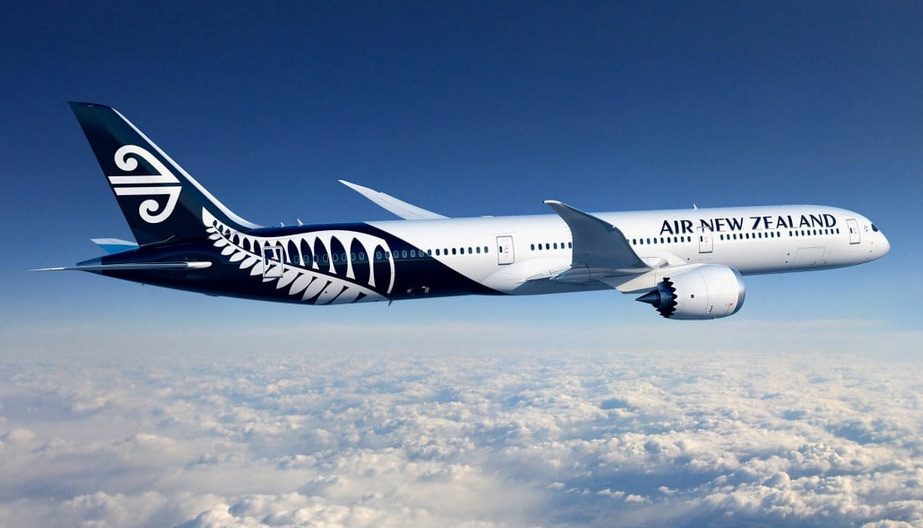
 There’s something quietly romantic in this story—Air New Zealand, Air China and Tourism New Zealand meeting at the table with coffee stains and a shared dream: luring Chinese travellers back to our rugged shores. These aren’t just spreadsheets and guest counts; there’s hope, nostalgia—and dare I say it—a bit of Kiwiana swagger.
A Strategic Pow-Wow With Heart
Let’s not beat around the bush: the trio have pulled together nearly $1.5 million in marketing muscle. Air NZ alone is throwing in an extra $700,000 on top of what they already invest in China. The other two partners also contribute—Tourism NZ with its robust campaigns, and Air China, which provides key access to Beijing and beyond.
But this isn’t some bland corporate pizza—with extra cheese and no flavour. This is a gourmet pie baked with care: targeted storytelling, local influencers who’ve spent their holidays skiing in Queenstown, and seat upgrades that feel less like airline economics and more like a personal invitation.
You might ask: why put so much in? Here’s where the soul seeps in. China was our most significant market before Covid-19, full stop. Currently, it sits third, with tourists accounting for 8 per cent of arrivals—but these are no ordinary numbers. In the year to March 2025, Chinese arrivals increased by 18 per cent to 248,000, according to official statistics. That’s a robust rebound, but still shy of pre-pandemic glory.
More Than Just Seats—It’s About Feeling Welcome
Greg Foran, Air NZ’s boss with the calm confidence of a bloke who’s spent too many hours in airport lounges, looked right into the camera and said: “China is an incredibly important market for us.” But here’s the part that warmed the heart: talking about the Shanghai–Auckland lane, he didn’t mention revenue or load factors first—he said it “connects people, cargo and cultures.”
From October, there’ll be 33 percent more premium seats on that route. That means more room to stretch, more space for a cheeky pre-flight wine, and more opportunity to impress that first-time visitor—show them the gentle power of NZ hospitality before we even touch down.
If you’re wondering why premium matters, let me tell you: it’s a subtle art. A well-rested, well-fed tourist is far more likely to take that boat cruise, linger in a luxury lodge, tip well and bring her friends next summer. It’s the ripple effect from Airlines, through lodges, across regional economies.
Warm Words From Beijing
Then we have Ma Chongxian, chairman of Air China, leaning forward in the video call, earnest and perhaps a tad proud. “New Zealand has always been a key focus in our Asia‑Pacific network,” he said, with that quiet gravity you expect. He spoke of trust, optimisation, shared culture—and yes, the economic lift that stronger routes bring.
He spoke of celebrating a decade of Beijing–Auckland service, and a second decade of what he called “China–New Zealand Comprehensive Strategic Partnership.” At that moment, I thought: there’s diplomacy here, yes, but there’s also something more personal—an admiration for our mountains and lakes, and a wish to see our welcome mat staying open.
Tourism NZ Wants Them Now
René de Monchy, Tourism NZ’s chief with the easy smile of someone who’s met too many tourists to count, keyed in on the audience: about 60 million Chinese with NZ near the top of their holiday shortlist. That’s not spin—it’s data, it’s intent, and it’s potential.
But here’s where it gets interesting: they’re staying longer, wandering further, exploring deeper. We’re not talking Auckland stopovers anymore. Visitors are seeking tramping tracks, local vineyards, and Maori cultural tours with knowledgeable guides. They’re asking for authenticity, and to be honest, we have that in spades.
I love stories like that. A family from Shanghai choosing a Coromandel bach over a city high-rise. A couple from Guangzhou booked into Stewart Island because they heard about the stars. These choices are what turn tourism from commerce into connection.
Words From the PM—and Why It Matters
Of course, there’s a political dimension. Prime Minister Christopher Luxon stood by the partnership and said it would “turbocharge New Zealand’s tourism recovery.” That phrasing’s unmistakably modern—but I couldn’t help thinking of old rallying cries. Turbocharge? Really? I’d call it more of a “steady hand on the tiller,” but hey, politics needs its soundbites.
His real message was broader: tourism equals real jobs—guides, vineyards, cafés, cleaners, kids working their first shift. Plus it deepens cross-border warmth. The PM stressed “people and cultures,” and I smiled—because that’s precisely what we locals know. A visitor who laughs at the same jokes, learns a haka or two, and heads home with a heart full of mountains—that’s what brings people back. That’s our international reputation in action.
Editorial Take – This Is a Keeper
Let me put it this way: it’s rare to see airlines, tourism bodies and government dollars tied to a single purpose with such unity. It smacks of old-school, purpose-driven journalism—long-form, enduring, and properly human. We’re not spinning a debt bubble here; we’re telling travellers: “We missed you, we’re ready, and here’s why you belong.”
It’s got all the makings of a feature story in Sunday magazines—strategic, yes, but emotional too. And for the first time since 2020, I feel that genuine tingle: there’s something alive here. It’s not just recovery—it’s revival. It’s the air getting clean back in it. I feel it.
The Take-Away (But Done With Feeling)
-
Almost $1.5 million is riding on the promise of reconnecting with Chinese travellers.
-
Premium seat bump of 33 percent is more than comfort—it’s an invitation.
-
Cultural exchange, not empty platitudes—just real stories, genuine connections.
-
Backed by the PM—packed with political weight, yes, but also community heart.
-
They’re staying longer, visiting regions, and deepening economic value.
-
It matters—it matters to iwi guides, vineyard owners, ski instructors and teenage café staff longing for busy summers.
Final Word
Think of it this way: we’re rolling out more than a campaign—we’re rolling out our shores. We’re saying to Chinese travellers: we’ve polished the paths, tuned the welcome, and raised the curtains. We mean it, we’re doing it, and we can’t wait to see you.
If the following story is about how the Milford boats are full, boutique farm stays are booked solid, and tourists are sharing selfies under Mt Cook, then we’ll know it worked. That’s tourism with a beating heart. And that’s the story Peter Needham would’ve told—with a grin, a gasp, and a genuine belief that travel still makes the world better.
By Soo James











