
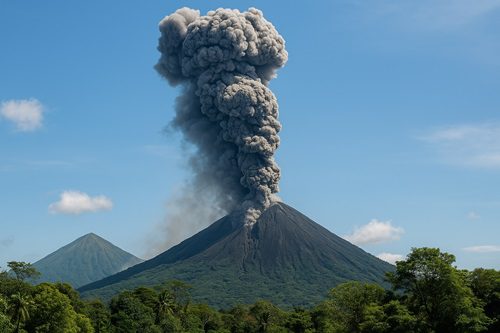
 In true tropical drama, Mount Lewotobi Laki-Laki—try saying that after your third duty-free mojito—has roared to life on Indonesia’s Flores Island, sending thick ash plumes skyward and flight schedules into a tailspin. And if you’re one of the many Aussies escaping to Bali’s bliss or Flores’ lesser-known charms this winter, here’s a question worth asking: Is your travel insurance as active as the volcano?
The eruption, which occurred late Tuesday, 18 June, prompted the Indonesian government to establish a strict exclusion zone around the fiery peak. Several flights were cancelled or delayed, with ash clouds drifting dangerously close to well-worn tourist air routes. The message is clear: Mother Nature doesn’t give two coconuts about your pre-booked villa.
But while the skies are smoky, one insurer is keen to keep things crystal clear. nib Travel—part of the nib health insurance family—is stepping up with a timely reminder for travellers to dust off their policies and take a closer look.
“Volcanic activity like this can bring air travel to a standstill with little notice, leaving people stranded for days,” said Dylan Wilkinson, nib Travel’s Head of APAC & Travel Marketing.
And he’s not exaggerating. Anyone who’s been caught mid-escape during a natural hiccup knows it’s less ‘Eat Pray Love’ and more ‘Wait Pay Stress’.
Wilkinson continued, with the calm of someone who’s seen more than one airport meltdown:
“It’s a timely reminder that travel insurance is important. You may be covered for unexpected delays, cancellations, or additional accommodation expenses. Most insurers offer some level of cover if you’re unable to return home as planned.”
The good news? If you snapped up your travel policy before the big blow-up on 18 June, you might be in luck. Policies issued before the eruption may provide cover for the ash-fuelled chaos—depending on the fine print, of course.
But here’s the rub: many travellers don’t read the fine print until they’re three airport meals and a missed connection deep into the ordeal.
“While many travel insurance policies include a 48-hour extension when flights are delayed, we know the impacts of volcanic eruptions can last longer,” Wilkinson explained.
In other words, it’s not just a question of whether your flight will go, but when—and if—you’ll make it home with both your dignity and your receipts intact.
Wilkinson’s advice? It’s classic, it’s practical, and it’s got a whiff of the Scout’s motto: be prepared. Whether your insurer is nib Travel or another mob, follow these three golden rules:
-
Check your policy – Dust it off, read the PDS (yes, that thing you ignored), and see what’s covered.
-
Keep your receipts – If you splurge on an extra night, a cab to nowhere, or five overpriced club sandwiches, save the proof.
-
Lodge your claim online – It’s 2025—no need for smoke signals. Use your insurer’s portal for faster claims processing.
“We urge travellers not to wait,” Wilkinson concluded. “Check your policy, understand your entitlements, and if you need help, get in touch with your travel insurer as soon as possible.”
It’s solid advice from a man who doesn’t want to see your Instagram story end in disaster.
For nib Travel customers, claims can be filed directly at: www.nibtravelinsurance.com.au/claims.
As always, if your journey hasn’t yet begun and flights are looking shaky, make your airline, cruise line or travel agent your first port of call. They may not be magicians, but they’ll help pull your plans back together—or at least give you the next best departure date.
Because when volcanoes throw tantrums, it’s best to have a solid plan—and a policy that isn’t just for show.
By Christine Nguyen