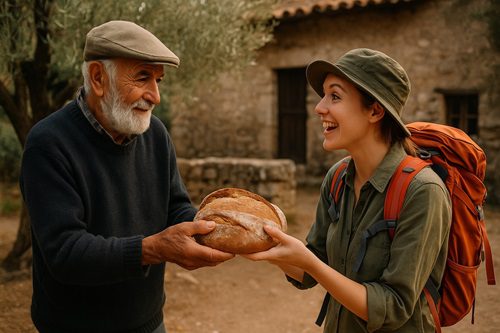
 When you thought tourism couldn’t possibly serve up anything other than another soggy hotel pancake, along comes a partnership with a bit of bite. UN Tourism has joined forces with the international flavour crusaders at Slow Food, and the result is something that might restore your faith in the idea of travel with taste.
The pact — signed, sealed, and sautéed on Sustainable Gastronomy Day, no less — aims to blend tourism with local food in a way that leaves neither overcooked nor underfunded. Think of it as a marriage between the world’s most enormous bureaucratic behemoth and a sprightly Italian-born movement that believes good food shouldn’t taste like it came from a boardroom.
And thank heavens for that.
“Tourism must bring opportunity to everyone — especially those traditionally left behind,” declared UN Tourism Secretary-General Zurab Pololikashvili, speaking like a man who’s had one too many conference croissants. But he’s not wrong. In too many parts of the world, tourism has meant five-star resorts fenced off from five-dollar-a-day farmers. This initiative wants to tear down that fence, pull up a few rustic chairs, and serve something far more satisfying.
Slow Food’s Director General Paolo Di Croce chimed in, saying, “Tourism can be a powerful force for strengthening sustainable local food systems.” Which is another way of saying: let the tourists eat cheese — preferably raw-milk, hand-pressed and aged in a cave, not shrink-wrapped at a service station.
You see, at its core, this is about celebrating what’s truly local — not the sort of ‘local’ that’s been air-freighted from a continent away and labelled ‘artisanal’ by someone in marketing. It’s about proper connection: between a traveller and the person who kneaded the bread, tended the sheep, stirred the ragu. And yes, there may even be a glass of the local red involved. Or three.
The Memorandum of Understanding — a term that rarely quickens the pulse — actually has some savoury details. It promises joint research, shared case studies (hopefully with more truffles than bullet points), skills training, and a full-strength network of gastronomic enthusiasts across the globe. If they get this right, you’ll have tourism that doesn’t just leave footprints and take selfies, but one that boosts local economies, respects culinary traditions, and lets a few Nonnas and goat farmers retire in dignity.
The absolute brilliance here is in its simplicity. Tourists want real stories and real flavours. Locals want to share what they’ve been perfecting for generations. It doesn’t take a UN summit to know that watching your polenta stirred by someone’s Nonno in the Dolomites beats the pants off another limp buffet with cold hash browns and indifferent staff.
And yet, it has taken years for the two worlds — tourism and agriculture — to sit down at the same table finally. But now that they have, there’s real potential to stir something special. If done right, this could breathe life back into rural towns, empower women and young people, preserve heritage that supermarkets have tried so hard to sanitise, and gently remind the globe that travel isn’t just about ticking off landmarks — it’s about savouring moments.
So, here’s to more menus printed on recycled paper, fewer laminated “international options”, and travel that tastes of place. You might not see it in the in-flight magazine just yet, but give it time — this one could age as well as a bottle of Barolo.
By Susan Ng