

 By all accounts, 2025 is shaping up to be a bonanza year for Australia’s travel and tourism industry, with the World Travel & Tourism Council (WTTC) predicting an eye-watering $314.4 billion injection into the national economy. Yes, that’s billion with a ‘B’ — a complete 11.4% of Australia’s GDP, for those keeping track at home.
According to the WTTC’s newly released Economic Impact Research (EIR), this marks a near one-third leap from pre-pandemic levels, putting the tourism industry not only back on its feet but sprinting ahead at full throttle. It’s a comeback story worthy of a standing ovation, or at least a cheeky glass of local shiraz.
Jobs Galore and Wallets Wide Open
It’s not just the economy that’s cashing in. The sector is expected to support 1.7 million jobs in 2025, an increase of 100,000 from last year, representing 11.5% of all employment nationwide. That’s a hefty slice of the job pie, from baristas in Bondi to reef guides in Cairns.
International visitor spending is also set to shatter records, soaring to $39 billion – a 22% jump from 2024. As overseas travellers come flooding back, wallets in hand, Australia is expected to welcome them with open arms, better broadband, and (hopefully) fewer airport queues.
Meanwhile, domestic travel isn’t just holding the fort; it’s setting it ablaze. Aussies exploring their own backyard are projected to spend nearly $173 billion, from beachside getaways and wine region wanderings to sacred red centre adventures.
Australia: A Global Darling Once More
This resurgence confirms what many in the industry have long championed: Australia is more than just a pretty face with a great coastline. From ancient Aboriginal culture and UNESCO World Heritage sites to world-leading hospitality, infrastructure, and a penchant for punching above its weight, Australia has regained its position as a heavyweight in the global travel ring.
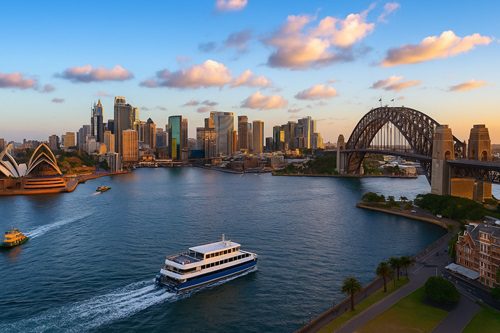
WTTC President & CEO Julia Simpson, beaming like a Sydney Harbour ferry skipper on a sunny day, put it plainly:
Australia is proving once again to be a powerhouse in Travel & Tourism. This record contribution to the economy and workforce reflects years of collaboration between industry and government.”
She added, “I was delighted to see this momentum firsthand in Perth last year when Tourism Western Australia hosted WTTC’s Global Summit – a clear signal of the country’s leadership in the global tourism sector. From the cities to the outback, and coast to coast, Australia offers unforgettable experiences. With continued investment in connectivity, sustainability, and experience design, the outlook for the next decade is incredibly promising.”
A Look in the Rear-View Mirror: 2024
It’s worth remembering just how far we’ve come. In 2024, the travel and tourism sector chipped in $297 billion to the economy and supported 1.6 million jobs. International visitor spending reached $32.1 billion, while domestic tourism held strong at $123.7 billion. The recovery was real, and evidently, only just beginning.
The Road Ahead: 2035 and Beyond
Looking beyond the horizon, the WTTC forecasts that by 2035, tourism will pour over $406 billion into Australia’s economy, claiming a 12% GDP share and propping up 2.1 million jobs. International visitor spending is projected to surpass $52 billion, while domestic travel could reach nearly $221 billion.
These projections are not merely numbers on a page; they represent the real people and places that make Australia so richly unique, from rainforests in Queensland and vineyards in the Barossa, to Indigenous-led cultural tours and luxury rail journeys across the Nullarbor.
What Next for Industry and Government?
For policymakers and tourism operators, the message is crystal clear: keep the foot on the accelerator. Investment in sustainability, regional dispersal, and digital infrastructure will be key to converting these forecasts into lived reality. The baton is now in the hands of federal and state authorities, tourism boards, airlines, and accommodation providers to steer this wave wisely.
For the full Economic Impact Research report and the latest Environmental Social Research (ESR) findings, visit the WTTC’s official Research Hub.
By Bridget Gomez











