Offering much more than an adventure, a Marine Safari at Islas Secas is an opportunity to explore one of the world’s most biodiverse marine ecosystems while helping conserve the fragile ecosystem.
Timed to launch with the thrilling return of a significant population of migrating humpback whales that feed, nurse and shelter around the archipelago, this May-through-September experience promotes marine conservation while offering extraordinary, immersive adventures to guests.
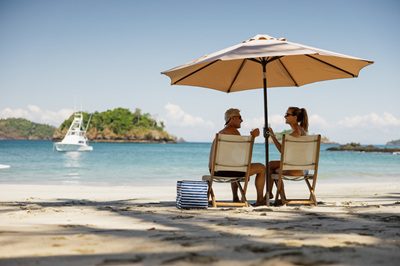
Based in Panama’s Gulf of Chiriquí, Islas Secas’ Marine Safaris are completely personalised, combining meaningful adventure with barefoot luxury in a remote private island setting. Offering the chance to see the “Big Blue Five”—whale sharks, hammerheads, humpback whales, sea turtles, and manta rays—guests are provided expert guides, best-in-class equipment, and new optional luxury add-ons, such as surfing excursions and private catamaran island-hopping.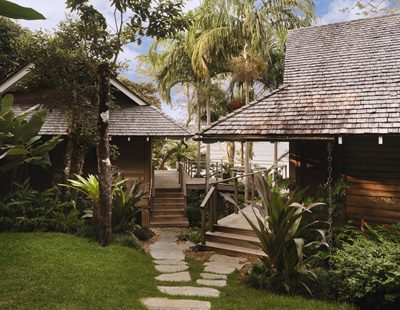
Islas Secas’s extraordinary ocean setting is enhanced further by the establishment of the Gulf of Chiriquí Marine Biological Corridor. This nutrient-rich area is a critical area of the Eastern Tropical Pacific Marine Corridor, a marine protected area jointly established by Colombia, Costa Rica, Ecuador and Panama. The Chiriquí corridor connects eleven protected areas, from the Manglares de David to Coiba National Park. Islas Secas, the luxe private island resort and a protected area itself, is a central “pit stop” in this vital migration route for marine life.
“We believe in the power of conservation, education, and responsible tourism to protect our oceans,” said Director of Conservation and Sustainability Beny Wilson. “The Gulf of Chiriquí Marine Biological Corridor is a globally significant biodiversity hotspot. It is our responsibility to support sustainable fisheries and conservation to protect this extraordinary and connected ecosystem for generations to come.”
The Gulf of Chiriquí Marine Biological Corridor covers eleven key marine protected areas, including:
- Manglares de David Wildlife Refuge – Conserving crucial mangrove ecosystems
- Islas Secas Reserve – A privately-managed archipelago
- Coiba National Park – A UNESCO World Heritage Site
- Gulf of Chiriquí National Marine Park – Encompassing 150 square kilometres of coral reefs, mangroves and seagrass beds
- Gulf of Montijo Ramsar Site – A wetland of international importance
- Playa Boca Vieja Wildlife Refuge – Sea turtle nesting beach
- Playa la Barqueta Wildlife Refuge – Sea turtle nesting beach
- Montuosa Island Wildlife Refuge – a 136-hectare island 50 miles away from shore
- Hannibal Bank Especial Marine Protected Zone – An Underwater mountain 120 feet from the surface
- Southern Veraguas Special Management Zone – Marine and coastal management for sustainable fishing
- Isla Canales de Tierra Reserve – A private reserve with primary forests, mangroves, and coral reefs.
All Connected
The Manglares de David is significant for safeguarding the health of the entire Chiriquí Gulf, explained Mayllely Cabrera, from Wetlands International. “These vital ecosystems serve as sanctuaries for marine biodiversity, providing essential breeding and feeding grounds for numerous species. Protecting these wetlands is key to maintaining the Gulf as a thriving haven for marine life—it’s also essential for the resilience and wellbeing of surrounding communities, now and for future generations.”
“The connectivity between protected areas like the Gulf of Chiriquí Marine Park, Coiba National Park, and the mangroves of David is vital for sustaining the region’s biodiversity,” said Professor Angel Vega, Founder of The University of Panama CCMBIO Lab, which is evaluating and monitoring the health of the coral reefs in Pacific Panama. “Species such as snappers, sea bass, and sharks migrate to the Gulf to reproduce, returning as juveniles to the mangroves. Our work with Islas Secas Foundation (ISF) and other partners is crucial in protecting ecosystems along the corridor from overfishing and climate change, ensuring their continued role in marine biodiversity.”
The Gulf of Chiriquí is a crucial habitat for humpback whales, particularly mothers and calves during breeding season, according to Panacetacea, a marine mammal research organisation. Nineteen years of research funded by ISF shows that the Gulf’s warm, shallow waters serve as a sanctuary for these whales migrating from Antarctica and Alaska. Marine mammals, such as pantropical spotted dolphins and Bryde’s whales, rely on the region.
The Smithsonian Tropical Research Institute (STRI) has played a key role in studying the Gulf’s ecosystems. In collaboration with ISF, STRI is expanding the Coibita Research Station on Coiba Island to enhance research on marine biodiversity and climate change in one of the world’s most pristine tropical environments. “Our research is vital for informing conservation strategies and safeguarding biodiversity in the ETP Swimway,” said Dr. Matt Leray of STRI.
Fishing Enforcement & Local Support
Earthrace, in partnership with the Costa Rican and Panamanian governments, has expanded fishing enforcement in the Gulf of Chiriquí. A recent Presidential Executive Decree restricts damaging commercial fishing activities around Islas Secas while protecting local pole-and-line and recreational fishing. In March 2025, thanks to ISF’s support of the international ocean governance organisation Global Fishing Watch, Panama adopted new guidelines to improve vessel monitoring and oversight for better compliance with national and international regulations.
ISF also supports marine advocate MarViva’s ongoing work to promote eco-friendly fishing practices. “Enforcing regulations against illegal fishing safeguards livelihoods and ecosystems,” said Wilson, emphasising the importance of supporting local fishers.
At a Glance: Islas Secas Marine Safari (May – September 2025)
Starting at $3,000 per night, based on two people sharing, three-night minimum stay
- Exceptional marine biodiversity
- Completely personalised itineraries
- Luxury accommodation on an “exclusive all-inclusive” basis
- Thrilling water and land experiences, including scuba diving, boat excursions and nature hikes
- Best-in-class equipment, from binoculars to boats
- Expert guides
- Family-friendly activities
- Hands-on citizen science and conservation opportunities
- Interactions with visiting researchers
- Added new excursions beyond the private