

 Australia’s breathtaking landscapes lure adventurers from around the globe, but the wilderness is as unforgiving as stunning. Every year, unprepared explorers face dire consequences, from injuries to getting lost—or worse. In a recent incident, a hiker lost in the Snowy Mountains for 13 days highlighted how crucial survival knowledge and proper gear are to staying safe in remote areas. Enter Gordon Dedman, renowned bushcraft consultant, Alone Australia’s survival expert, and Bushcraft Survival Australia’s founder.
Dedman’s mission is clear: equip adventurers with the skills and tools to navigate the wild safely. Drawing from his extensive expertise, Dedman shares 14 essential gear tips that could mean the difference between life and death when exploring the great outdoors.
The PLAN for Survival: Priorities and Preparedness

Gordo Dedman.
Dedman emphasizes the importance of survival priorities, encapsulated in the acronym PLAN:
- Protection: First aid, clothing, shelter, and fire.
- Location: Attracting and directing attention for rescue.
- Acquisition: Securing water and food.
- Navigation: Orientation and travel techniques.
“Survival isn’t just about having the gear,” Dedman explains. “It’s about knowing how to use it and adapting when the unexpected happens. Over-reliance on equipment often leads to failure in critical moments.”
1. Clothing: Your First Line of Defense
Appropriate clothing is critical for protecting against extreme temperatures, wind, rain, and injuries. Dedman advises layering with moisture-wicking, quick-drying materials and managing sweat to avoid hypothermia or heat exhaustion.
“Insects, sunburn, and minor cuts can become life-threatening in survival scenarios if left untreated,” he cautions.
2. Cutting Tool: The Ultimate Multi-Use Gear
“A sturdy knife or multitool is indispensable,” says Dedman. “It’s vital for carving wood, stripping bark, making fire, and more.” Opt for a fixed-blade knife or Swiss Army-style multitool that’s easy to sharpen in the field.
3. Combustion Device: Fire-Making Essentials
A reliable fire starter is non-negotiable. Dedman recommends carrying waterproof matches, a lighter, or a Ferro rod. “Learning how to collect and process tinder and safely manage fire in any condition is crucial,” he stresses.
4. Covering: Versatile Shelter Options
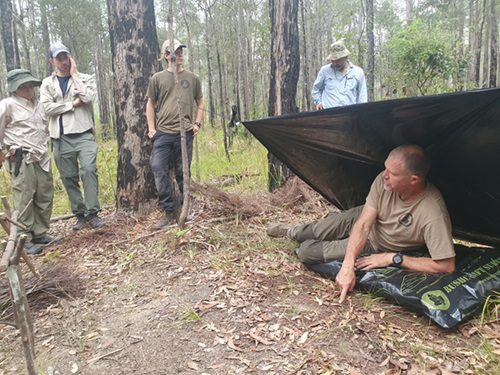
Dedman highlights the importance of versatile coverings, from military-style ponchos to emergency blankets and even large garbage bags.
“These can be used for shelter, rain protection, insulation, or even water collection,” he explains. “Building a natural shelter is resource-intensive; multi-purpose gear saves time and energy.”
5. Metal Container: Hydration and Heat
Boiling water is the safest purification method, and a durable metal container is essential. Dedman recommends a metal nesting cup for its portability and dual-purpose functionality.
6. Cordage: Paracord’s Many Uses
A 15-meter parachute cord, or paracord, is invaluable for survival. Its inner strands can be separated for fishing, trap-making, or repairs. “Paracord’s versatility makes it indispensable in the field,” says Dedman.
7. Cloth Bandanna: The Lightweight MVP
A 100% cotton bandanna serves countless purposes, from filtering water to creating a makeshift sling. Bright colours can double as emergency signals. “Compact, practical, and essential,” Dedman affirms.
8. Compass: Navigate with Confidence
“Good map and compass skills are non-negotiable,” Dedman asserts. A sighting compass with a mirror is a navigation and signalling tool. He also encourages practising natural navigation using stars, the sun, or environmental cues.
9. Cloth Tape: The Fix-It-All Tool
High-strength cloth tape, like Gorilla Tape, can repair gear and waterproof items and even serve first-aid purposes. Dedman describes it as “a compact and reliable solution for outdoor emergencies.”
10. Head Torch: Hands-Free Illumination
A quality head torch ensures visibility in low light. Dedman adds, “Combine its batteries with steel wool for emergency fire-starting.” Brands like Ledlenser are his go-to for reliability and durability.
11. Dry Bag: Waterproof Versatility
A 5-10 litre dry bag protects gear from water damage and doubles as a flotation device or extra water carrier. Dedman highlights its value as a multi-use survival tool.
12. First Aid: Be Prepared for Emergencies
Dedman emphasizes comprehensive first-aid training and a well-stocked kit. Key items include tourniquets, emergency bandages, antiseptic wipes, and potassium permanganate for wound care or water purification. “Preparation is everything,” he states.
13. Personal Locator Beacon (PLB): Your Lifeline
For remote expeditions, a PLB like Garmin’s InReach device is indispensable. It provides GPS tracking, SOS functionality, and two-way communication with rescue services.
14. Emergency Food Rations: Sustenance in a Crisis
While food is a lower priority in short-term survival, compact, high-calorie emergency bars are invaluable. “They’re lightweight and provide essential energy,” Dedman advises.
Education is Survival
Dedman’s expertise will be showcased in the upcoming season of Alone Australia on SBS, premiering in March 2025. His organization, Bushcraft Survival Australia, offers courses to teach both traditional and modern survival skills.
For more information, visit Bushcraft Survival Australia.
Written by: Michelle Warner











